16kWh Energy Storage Battery Pack Supplier: Key Factors for Choosing the Right Partner
2026-10-29
When a 16kWh energy storage battery pack sits at the heart of your project, the supplier you choose can either accelerate your deployment or unravel it. Price tags and datasheets only tell part of the story. The real differentiators—cell sourcing, cycle life under real loads, thermal management, and after-sales responsiveness—often surface only after installation. That's why narrowing down a shortlist demands more than a spec comparison. It takes a clear-eyed look at how a supplier handles the details that don't appear on a brochure. Throughout this guide, we'll unpack the factors that separate dependable partners from costly gambles, and show how UNC approaches these challenges differently.
Don't Let a Perfect Spec Sheet Hide Real-World Flaws
A spec sheet can read like a love letter to engineers — every number rounded up, every tolerance tightened, every material chosen for lab conditions rather than daily abuse. But the moment that component hits your assembly line, you may discover the plating wears thin after fifty cycles, the IP rating assumes a flat surface that doesn't exist on your product, and the operating temperature range ignores the heat soak from nearby motors. The flawless datasheet becomes a liability because nobody tested it the way your customers actually use it.
Buyers often chase the best printed metrics and end up overpaying for precision they cannot perceive, while missing the dull, unglamorous failure modes that matter most: connector wobble, adhesive creep, micro-cracks from vibration, or a tolerance stack that only appears when three parts meet at once. If you only validate from the paper, you validate nothing. Pull a sample, bend it, drop it, run it hot and cold, and watch where it fails before you trust the marketing numbers.
The real-world flaw rarely announces itself on page one. It hides in the footnote about test conditions, the asterisk on lifespan, or the assumption that your environment matches the lab's. So before you sign off on a spec, ask the uncomfortable question: what did they leave out? The answer usually costs less to find on a bench than on a warranty return.
The Safety Conversation Should Start with Thermal Runaway
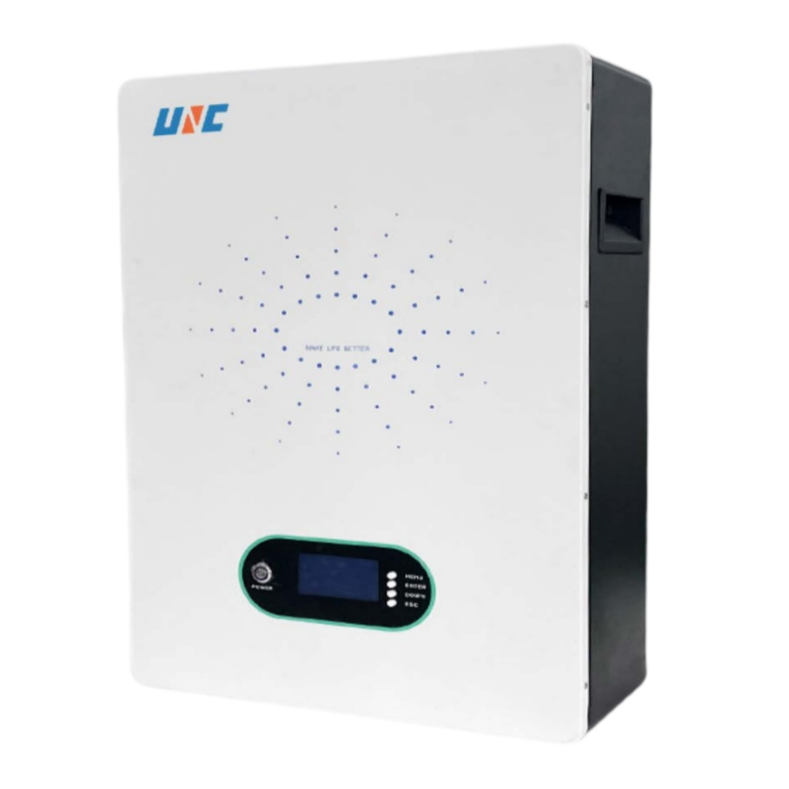
Most battery safety discussions jump straight to cycle life, energy density, or fast-charge capabilities. But those metrics mean very little if a cell can't handle abuse without spiraling into thermal runaway. The conversation needs to shift: before we talk about squeezing out another five percent range, we should ask what happens when the separator fails or an internal short develops. Thermal runaway isn't just a worst-case scenario; it's the failure mode that turns a benign defect into a fire.
Starting with thermal runaway forces engineers to think about containment, venting, and propagation delays from the first design review. It changes material choices, cell spacing, pack architecture, and even the way battery management systems are programmed. When safety is treated as a foundational constraint rather than a final test hurdle, the resulting products are not only safer but often more predictable under stress.
That's why the earliest conversations about any battery system should center on how it fails, not just how it performs. If you don't understand the thermal runaway pathway for a given chemistry and format, you don't yet understand the battery.
Custom Battery Packs Need More Than a Modular Design
A modular battery design promises flexibility, but it rarely solves the real-world constraints of custom packs. Standard cells snapped into standard frames might work for a bench prototype, yet the moment a pack must fit a curved enclosure, survive vibration, or manage heat in a sealed compartment, those off-the-shelf modules become a liability. Engineers quickly learn that the module is not the product.
Thermal behavior is one area where a purely modular approach falls short. Cells packed tightly into rectangular blocks may look efficient on paper, but uneven heat buildup shortens cycle life and can trigger protection circuits at the worst time. Custom packs often need bespoke cooling channels, phase-change materials, or simply clever spacing that a generic module cannot provide. The same applies to the battery management system: a modular BMS may monitor voltage, but it won't know that cell #7 sits next to a hot motor housing or that the user discharges at 3C for ten minutes every morning.
Mechanical integration is another hidden hurdle. A custom pack must handle shock, dust, moisture, and sometimes odd mounting points or weight distribution targets that no standard module anticipates. Connectors, fusing, and even the way the pack is assembled for serviceability must be designed around the device, not around a catalog of interchangeable blocks. So modularity can shorten development time, but it's only a starting point. The real work lies in tuning the system to the application's physical and electrical personality.
Cell Traceability Tells You What Certifications Can't
Certifications tend to freeze a moment. A lab meets a checklist, passes an audit, gets a stamp. But cells don't live in that frozen moment. Traceability follows the actual journey—where the line came from, how it was handled at each passage, who touched it, and what changed along the way. That kind of record exposes things a certificate simply cannot see.
A certificate might tell you a facility complied with a standard on a given date. It won't tell you that a batch of cells sat in a malfunctioning incubator for three hours before being rescued, or that a reagent swap occurred two passages before the cells reached your lab. Traceability logs those events. They matter because even small deviations can shift growth rates, marker expression, or contamination risk in ways no audit can predict.
More importantly, traceability gives you a baseline for troubleshooting. When cells behave oddly, you can look backward and ask: Was there a freeze-thaw cycle that exceeded protocol? Did a new technician handle the culture? Certifications offer reassurance; traceability offers evidence. The difference is the difference between trusting a label and knowing a history.
After the Invoice, Does the Supplier Still Answer?
Once the invoice clears, a lot of suppliers suddenly become hard to reach. That's exactly when small problems tend to surface: a wrong line item, a tax code that needs fixing, or a payment that didn't match the purchase order. If your contact stops replying at this point, the "saved cost" from choosing the cheapest bid quickly turns into extra hours of chasing and correction.
Some vendors treat payment as the finish line. Their responsiveness before the invoice is signed can be completely different from what happens after. A supplier who stays available for follow-up questions—even about a missing credit note or a revised invoice—shows they care about the working relationship, not just the transaction.
It's worth testing this early with a small order or a simple post-payment query. The answer you get after the invoice often tells you more than any sales pitch from before.
Cheaper Upfront Often Means Costlier Down the Road
We've all been there: staring at two similar products, one priced noticeably lower, and feeling that little rush of victory when we toss the cheaper one into the cart. It feels smart, almost like beating the system. But that feeling rarely survives the first few months of ownership. A bargain coffee maker that leaks after six weeks, a budget smartphone that can't hold a charge past noon, or a discount lawn mower that stalls every spring—these aren't savings, they're just expenses wearing a disguise.
The real cost shows up in ways you never planned for. That cheap appliance breaks, and suddenly you're paying for repairs, or worse, buying a replacement while the old one still owes you money. Time gets eaten up too—waiting on hold for warranty support that barely exists, driving back to the store, or spending weekends troubleshooting a product that should have just worked. Then there's the quiet drain of inefficiency: a low-cost water heater that runs constantly or a poorly insulated door that lets your heating bill climb month after month. The upfront discount starts looking like a trap.
Smart buyers learn to look past the sticker price and ask a harder question: what does this thing actually cost to own over five years? Sometimes the pricier option is the real bargain, because it comes with durability, better support, and lower running costs. Other times, the cheap version works fine—but you'll only know if you do the math honestly. The next time you're about to save a few bucks up front, pause and picture yourself a year down the road, unboxing another replacement and wondering where the savings went.
FAQ
Look beyond glossy spec sheets. A dependable partner will share detailed cell provenance, thermal test results, and real-world cycle data under partial state-of-charge conditions. Ask how they handle busbar torque specs and whether their BMS has redundant voltage sensing. The best ones talk about failure modes honestly.
Lithium iron phosphate (LFP) remains the safest and most practical choice for this capacity. It tolerates deeper daily cycling, stays thermally stable up to higher temperatures, and does not rely on nickel or cobalt supply chains. Expect at least 6000 cycles at 80% depth of discharge before hitting 80% retained capacity.
It is the single most important component. A good 16kWh pack uses a BMS that monitors each cell group individually, balances at both top and bottom of charge, and logs enough data to identify a weak cell before it becomes a hazard. Ask if the supplier can show a live BMS readout from a field unit.
At minimum, demand UN38.3 for transport, IEC 62619 or UL 1973 for stationary storage safety, and EMC compliance. If the pack will connect to grid-tied inverters, ask for interoperability test reports with specific inverter brands, not just a generic certificate.
A meaningful warranty covers energy throughput, not just calendar years. For example, 10 years or 45 MWh of discharged energy, whichever comes first, with a guaranteed 70% end-of-warranty capacity. Watch for hidden exclusions around temperature ranges, firmware updates, or installation by non-certified electricians.
Usually the gap comes from cell grade, thinner busbars, fewer temperature sensors, or a BMS with limited balancing current. Some vendors use automotive B-grade cells that pass initial capacity tests but degrade unevenly after a few hundred cycles. Always ask for the cell datasheet with manufacturer name and lot traceability.
Send a technical question on a Friday afternoon and see how long the reply takes. Request a sample BMS log file and ask them to interpret a minor voltage imbalance. A supplier who can troubleshoot remotely through firmware and provides local service partners will save weeks of downtime later.
Weight and mounting matter. A typical 16kWh LFP cabinet weighs 160 to 200 kg, so wall mounting is rarely safe. The supplier should recommend floor stands, torque specs for cable lugs, minimum clearance for heat dissipation, and whether the pack can be installed in an unheated garage or needs a conditioned space.
Conclusion
Selecting a supplier for a 16kWh energy storage battery pack goes far beyond comparing datasheets. A cell can look flawless on paper yet struggle with cycle life, voltage sag, or thermal drift under real load. Before committing, ask for third-party test data from packs that have actually run in the field for a year or more—not just lab certifications. Safety discussions should start with thermal runaway behavior: how the cells fail, how fast heat propagates between modules, and whether the enclosure contains a cascading event. A supplier that cannot walk you through its thermal propagation test results is not ready for residential or commercial storage.
Custom requests often expose weak engineering. A modular design means little if the BMS cannot handle your specific charge profiles or if cell compression and cooling paths are afterthoughts. Dig into cell traceability—batch-level data from raw material to final formation tells you more than a generic UL or IEC mark. And pay attention to what happens after the invoice clears: does the supplier answer technical questions, provide firmware updates, and honor warranty claims without endless back-and-forth? Cheap upfront pricing usually hides thinner nickel tabs, lower-grade separators, or limited cell matching, all of which surface as accelerated degradation. Over a ten-year service life, that initial saving can easily turn into a replacement cost that dwarfs the difference between a mediocre pack and a well-engineered one.
Contact Us
Contact Person: Manager Leng
Email: [email protected]
Tel/WhatsApp: 8613764878967
Website: https://www.unc-energy.com