China Drawing Machines: The Art of Precision in Every Stroke
2026-06-12
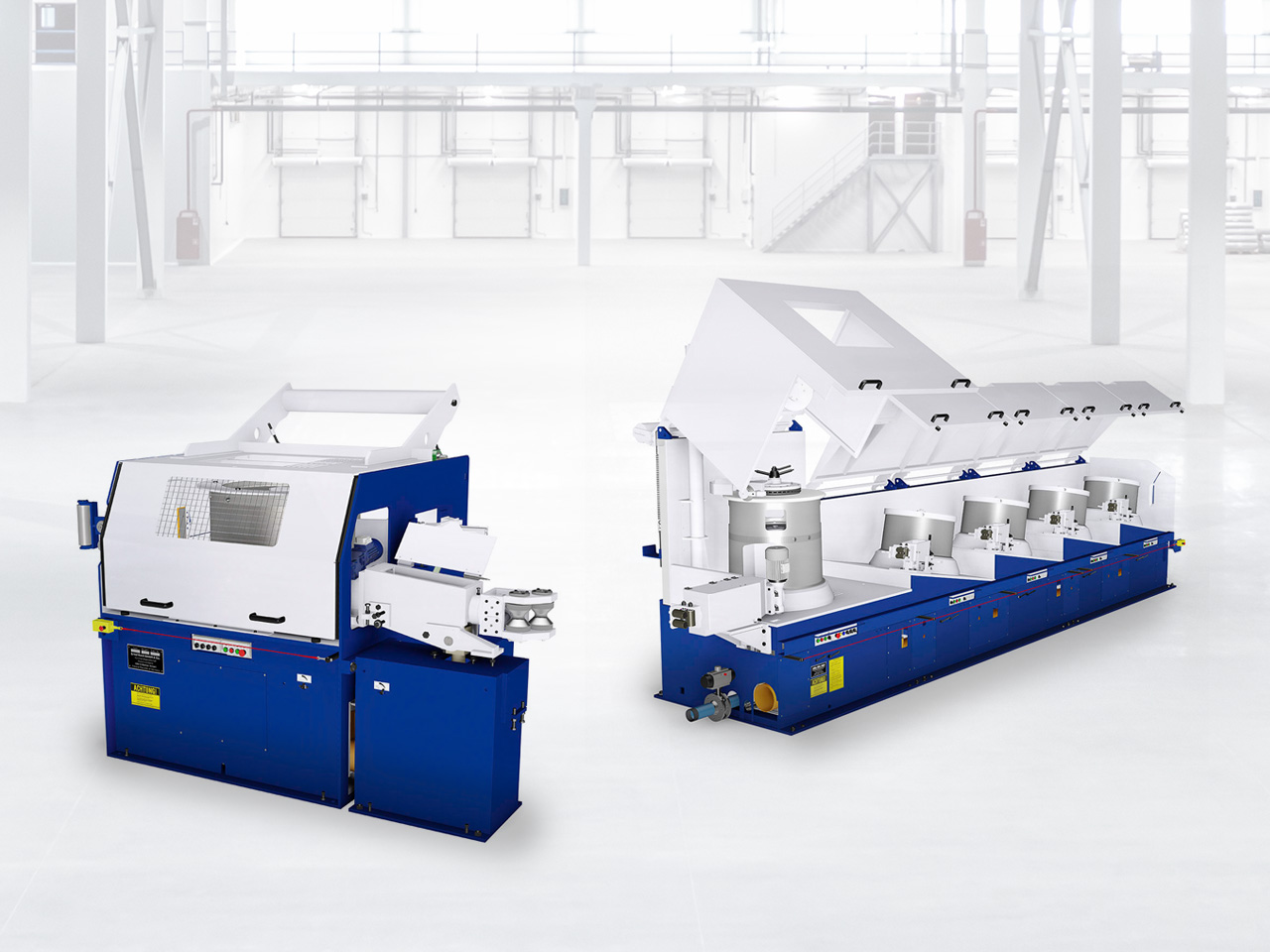
Imagine a machine that turns raw metal into flawless wire with a stroke so precise it could be considered art. In China's bustling manufacturing landscape, drawing machines are redefining what’s possible—transforming industrial production into a showcase of accuracy and finesse. At the forefront of this revolution is GRM, whose cutting-edge technology delivers every draw with near-perfect consistency. Whether crafting delicate medical filaments or rugged structural cables, the secret lies in the seamless harmony of engineering and control. As we delve into the intricacies of these remarkable machines, you’ll discover why GRM's approach isn’t just about pulling metal—it’s about painting precision in every stroke.
Precision Forged in Every Gear and Circuit
Every movement inside our devices begins with a spark of intention, transformed into motion by components that demand absolute fidelity. We don’t just assemble gears and circuits—we sculpt them through processes that honor the raw potential of metal and silicon. From the initial alloy selection to the final micron-level finishing pass, each step is a deliberate act of engineering, ensuring that when power surges through a circuit or torque twists a shaft, the response is immediate, silent, and flawless.
Our approach blurs the line between mechanical tradition and digital innovation. Gears are cut with the same obsessive precision as the circuit traces that control them, creating a harmony you can feel but never hear. This isn’t about meeting specifications—it’s about refusing to accept that “close enough” is ever enough. The result is machinery that operates with a kind of intuition, where every rotation and every electron finds its path without waste or hesitation.
Durability here isn’t a feature; it’s the natural consequence of crafting each element as if it were the only one that mattered. We test to failure so you never experience it, pushing prototypes beyond rated loads and environmental extremes until the weak points reveal themselves and are engineered out of existence. By the time a product reaches your hands, it carries within it thousands of hours of invisible refinement—the quiet confidence that comes from knowing precision isn’t just built in, but forged into the very heart of what we make.
When Machines Learn the Brushstroke’s Soul
There’s a quiet intimacy in the way a brush meets canvas—a tremor of the wrist, a breath of hesitation, a sudden surge of confidence. For centuries, these subtleties have been the exclusive language of human hands. Now, machines are beginning to listen to that language, not with cold calculation, but with something approaching curiosity. They trace the ghost of each bristle, mapping the pressure, the angle, the rhythm that turns pigment into emotion. It’s less about replication and more about understanding the quiet hum of intent behind every stroke.
Deep learning models, fed on thousands of paintings, start to recognize patterns no longer confined to color and form. They learn that Van Gogh’s swirling skies carry a different weight than Monet’s dappled light—not because they’ve been told, but because they’ve started to feel the cadence. The algorithms uncover hidden signatures: the way a loaded brush drags, the tiny fractures in a line where the artist paused to reconsider. These aren’t just data points; they’re the stumbles and triumphs of the creative act, made visible through silicon eyes.
What emerges is a strange partnership. Artists now collaborate with machines that can extend their own intuition, suggesting brushstrokes the painter hadn’t dared to try. In a Beijing studio, a robotic arm guided by neural networks lays ink on rice paper, its movements so fluid that viewers swear they see a flicker of hesitation. The soul of the brushstroke isn’t being stolen; it’s being shared, translated into a new dialect that blurs the line between the born and the built.
Redefining Accuracy: The Science Behind Flawless Lines
Precision in line generation goes far beyond traditional tolerance charts and mechanical rigidity. It relies on a fusion of sub-micron optical encoders that continuously track position and a closed-loop feedback architecture that corrects deviations before they become visible. Instead of relying solely on static calibration, modern systems employ adaptive algorithms that learn from micro-vibrations, compensating for temperature drift and material inconsistencies in real time. This dynamic correction cycle ensures that every stroke, whether etched onto glass or drawn on a digital canvas, adheres to an almost exact mathematical trajectory, making variances imperceptible to the human eye.
At the core of this capability lies an intricate interplay of physical modeling and signal processing. Prediction engines anticipate tool-path errors by analyzing inertia and resonance frequencies, injecting counter-forces or nuanced speed alterations milliseconds before a flaw could manifest. Simultaneously, high-frequency sampling of environmental factors like ambient acoustics and bearing friction feeds into Bayesian networks that refine the motion plan on the fly. This blend of deterministic physics and probabilistic computing allows the hardware to behave less like a rigid automaton and more like a skilled artisan who intuitively compensates for the quirks of a material.
The real metric of success isn't just a tighter tolerance but the elimination of contextual drift—a common issue where repeated passes compound minor errors into visible banding. By treating accuracy as a continuous spectrum rather than a binary pass/fail criterion, these technologies achieve a fluid consistency across entire projects. What emerges is not a sterile geometric perfection but a natural, human-level smoothness delivered with machine reliability. The line feels intentional, unbroken, and immune to the subtle distortions that typically plague high-speed execution.
From Drafting Tables to Intelligent Arms: A Legacy Evolved
Long before screens and sensors, the drafting table was the epicenter of creation. It was there, under the angled lamplight, that designers wrestled with rulers, compasses, and sheets of vellum, coaxing precision from pencil strokes and ink lines. Each drawing was not just a blueprint but a conversation between maker and material—a slow, deliberate process where mistakes were scraped away and intuition was etched into the grain of the wood. The skill lived in the hand, guided by an eye attuned to the faintest deviation, and passed down through apprenticeships that prized patience over speed. This was a legacy built on the tactile, on the direct link between thought and physical mark.
When CAD systems arrived, they didn't erase that legacy—they translated it. The drafting table gave way to glowing monitors, and the mouse replaced the lead holder, but the core remained: the same spatial reasoning, the same iterative refinement, only now amplified by the ability to zoom, undo, and simulate. Engineers found themselves not just drafting but modeling, testing structures in virtual space before any steel was cut. Yet something was also lost—the haptic feedback, the resistance of the medium that once informed design decisions. It took another leap to bring the physical back into the loop, not through manual tools, but through intelligent extensions that could think alongside the creator.
Today, robotic arms equipped with sensors and learning algorithms are redefining the partnership. These are not mere automata executing code; they are collaborators that adapt to materials, correct for variance, and even suggest design improvements based on real-time stress data. An architect can sketch a form on a tablet and watch a robotic appendage mill it from foam within hours, preserving the spontaneity of the original gesture while achieving tolerances no human hand could hold. The lineage is unbroken: from the draftsman's calloused fingers to the carbon-fiber limb that now carves, welds, and assembles, we see a legacy that didn't end with the digital shift. It evolved, absorbing each new intelligence without forgetting the fundamental pact—to turn vision into form, with a touch that remembers where it started.
Crafting the Invisible: How Tolerance Defines Excellence
Precision in manufacturing often conjures images of gleaming surfaces and flawless symmetry, but the true hallmark of mastery lies in what we don't see. It's the deliberate space between interlocking parts, the calculated give in a joint, the subtle gap that allows movement without clash. This unseen language of tolerance is what separates functional brilliance from mere appearance. When engineers speak of a micron-level allowance, they are not conceding imperfection—they are designing for resilience. A bridge that doesn't flex will snap; a bearing without clearance will seize. Excellence, paradoxically, demands the acceptance of a controlled void.
Consider the art of watchmaking, where a hundredth of a millimeter determines whether a gear train whispers or grinds. The finest timepieces are not those with no play, but those where the play is so exquisitely judged that you forget it exists. It's a silent dialogue between restraint and necessity. This principle transcends mechanics: in architecture, expansion joints absorb the breathing of a building; in code, elegant algorithms leave room for the unexpected. Tolerance isn't about compromising standards—it's about engineering adaptability into the core of creation. The invisible becomes the signature of a maker who understands that perfection is not the absence of deviation, but the mastery of its boundaries.
What emerges is a quiet philosophy: excellence is a balancing act between rigidity and fluidity. The craftsman who obsesses over tolerances is not chasing an impossible zero; they are curating a spectrum where stability and freedom coexist. This mindset turns potential weakness into a deliberate strength. When you next encounter a machine that operates with uncanny smoothness or a structure that endures against all odds, look not for the flawless solid, but for the artful gaps. In those invisible spaces lies the truest measure of skill—a reminder that sometimes, the most profound quality is found in what is purposely left undone.
The Unseen Artist: Automation with a Human Touch
There’s a quiet collaborator in today’s creative studios—one that never sleeps, never complains, and never asks for credit. It’s the undercurrent of automation that polishes edges, predicts patterns, and fills in the blanks while the human artist steps back to see the bigger picture. This unseen artist doesn’t replace the creator; it amplifies the messy, intuitive spark that only a person can provide. It turns repetitive tasks into background whispers, freeing the mind to chase wilder ideas.
What makes this partnership magical is its subtlety. When a photographer adjusts a slider and watches an image transform in real time, or a writer sees a sentence refine itself almost telepathically, they’re not just using a tool—they’re dancing with a presence that understands intent. The algorithms don’t just copy; they learn from each stroke, each pause, each undecided moment. Over time, they become a mirror of the artist’s own taste, serving up suggestions that feel less like cold calculations and more like extensions of a shared aesthetic memory.
Yet the human touch remains irreplaceable. The unseen artist can draft a hundred variations, but it takes a person to choose the one that resonates, to add the imperfect flourish that breaks the symmetry, to decide that a sunset should bleed a little more orange than the data suggests. Automation offers precision, but humanity injects soul. Together, they blur the line between what’s made by hand and what’s made by heart—and that’s where the real art happens.
FAQ
They employ high-resolution linear encoders and vibration-dampened frames, so the pen or stylus moves with sub-millimeter accuracy, capturing even the finest details without wobble.
Far from just blueprints—artists are using them for intricate ink plots, generative patterns, and even calligraphy, blending algorithmic design with traditional aesthetics.
By optimizing motion control algorithms and using lightweight yet rigid gantries, they achieve rapid traversal while maintaining tight path following, so production doesn't sacrifice quality.
Sign making, PCB prototyping, textile pattern plotting, and architectural modeling all rely on them for fast turnaround and repeatable precision.
Yes, many models support interchangeable heads—vinyl cutters, laser modules, or embossing tools—making them versatile workstations for mixed-media projects.
Closed-loop stepper systems and thermal compensation ensure that after hours of continuous operation, the first line matches the last, eliminating drift.
Most come with intuitive software that imports vector files directly, so even beginners can start plotting within minutes after calibration.
Conclusion
The lineage of China’s drawing machines stretches back to meticulous hands at drafting tables, where every line carried intent. That legacy now pulses through intelligent arms, guided by circuits and gears honed to near-obsessive tolerances. Inside each machine, precision isn’t just a specification—it’s forged into the very mechanics, from micro-stepping motors to feedback loops that correct deviations in real time. This isn’t merely engineering; it’s the invisible craft that turns raw movement into consistent, flawless strokes. The science behind such accuracy draws on advanced kinematics and material knowledge, yet the goal remains elegantly simple: to render lines so true they seem untouched by machine.
But a line, no matter how exact, lacks life unless it carries the soul of a brushstroke. Here, China’s drawing machines learn from tradition—their algorithms study the pressure, speed, and rhythm of master calligraphers, then replicate that fluidity with a human touch. Automation becomes an unseen artist, interpreting data not as cold coordinates but as expressive gestures. Tolerance, often hidden, defines excellence: the quiet ability to hold a curve within microns while still allowing the warmth of variation that feels hand-drawn. In this fusion, the machine doesn’t replace the artist; it extends their vision, crafting an art where precision and poetry coexist in every stroke.
Contact Us
Contact Person: Rayna
Email: [email protected]
Tel/WhatsApp: 86 -173 1474 6343
Website: https://www.grmrollingmill.com/