

China Popcom Production Line: Streamlining Efficiency in Modern Snack Manufacturing
2026-05-16
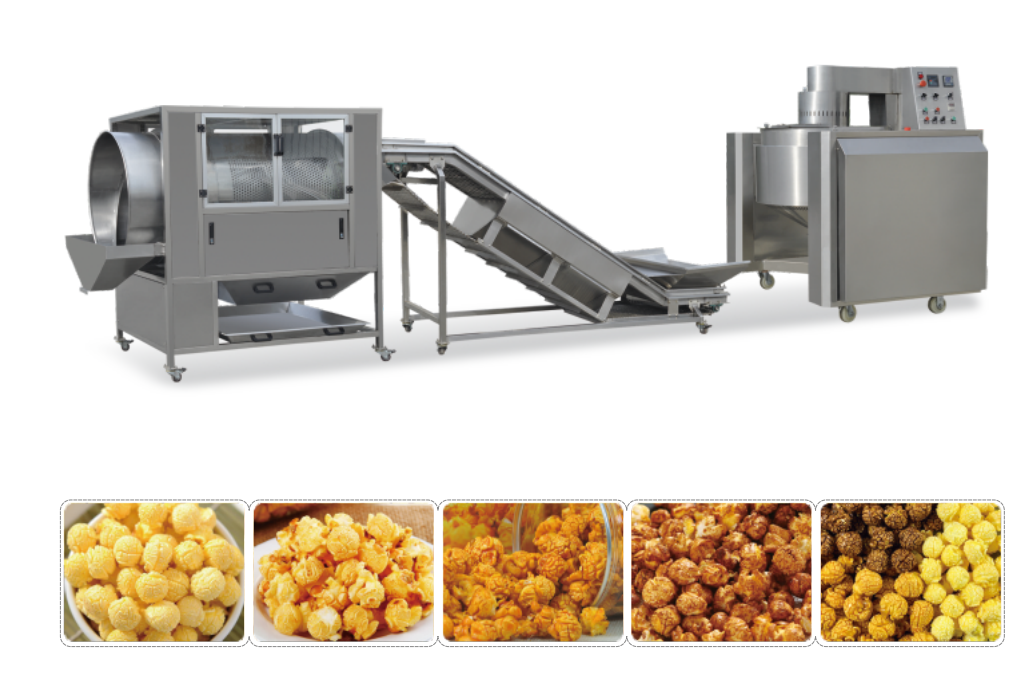
In today's snack industry, speed and consistency are everything. But as consumer cravings shift toward fresh, high-volume popcorn, traditional methods can't keep up. That's where the China Popcom Production Line comes in—a smart, end-to-end solution built for modern manufacturing. Driven by MINGDE's engineering expertise, this system transforms raw kernels into perfectly popped snacks with remarkable efficiency. From energy-saving heating to automated flavor coating, every step is designed to cut waste and boost output. Ready to see how it reshapes your production floor?
From Kernel to Crunch: The Seamless Journey of Popcorn Production
It starts with a tiny, unassuming kernel, hard as a pebble and carrying a hidden pocket of water sealed within its starchy shell. Heat is the wake-up call—applied evenly and fast, it turns that trapped moisture into steam, building pressure until the hull can no longer hold back the transformation inside. In a fraction of a second, the kernel explodes outward, flipping its guts into a fluffy white cloud that's 40 times its original size. That crackling chorus isn't chaos; it's physics doing exactly what it's supposed to do, over and over again, as long as the temperature stays right and the kernels keep moving.
Getting from raw kernels to perfectly popped pieces means more than just cranking up the heat. Everything hinges on consistency: the moisture content has to hover around 13–14%, the oil temperature must sit between 400–460°F, and the agitation needs to be gentle enough to prevent scorching but brisk enough to keep the unpopped kernels from settling. Commercial systems refine this dance with a continuous flow setup—kernels slide in one end, hot air or a thin film of oil teases them into popping, and a stream of finished popcorn spills out the other without breaking stride. There’s no batch waiting, no cool-down gap; the journey from kernel to crunch feels almost instantaneous.
But the trip doesn't end when the popping stops. Within seconds, the fragile flakes meet a delicate coating of salt, butter, or seasoning while they're still warm and receptive, letting flavor cling before the structure sets. Then it's all about preservation—cooling the popcorn quickly in a low-humidity airstream locks in the crunch by preventing steam from softening its cell walls. What lands in the bowl or bag is a triumph of timing and moisture control: a light, airy bite that shatters on contact, carrying just enough buttery salt to make you reach for another handful without ever thinking about the intricate pathway that brought it there.
Smart Automation: Where Precision Meets Speed on the Line
On today’s factory floor, the fusion of robotics and real-time data feels less like an upgrade and more like a quiet revolution. Picture a sensor detecting a millimeter’s deviation in a component’s position, then instantly guiding a robotic arm to correct it—all while the line never pauses. That’s the kind of seamlessness we’re talking about, where accuracy isn’t sacrificed for pace, and the two move in lockstep rather than in opposition.
It’s not just about moving faster; it’s about moving smarter. Machine vision systems now inspect every unit at full tilt, flagging inconsistencies that once demanded a manual slowdown. Adaptive algorithms learn from each cycle, fine-tuning movements to shave off microseconds without compromising tolerances. The result is a line that breathes with the rhythm of demand—agile enough to switch between product variations on the fly, yet rigorous enough to deliver zero-defect runs.
Behind the scenes, edge computing crunches terabytes of sensor data in the blink of an eye, predicting wear points before they become breakdowns. Maintenance windows shrink, uptime stretches, and operators become strategic overseers rather than fire fighters. This isn’t simply automation; it’s a new breed of intelligence woven into the very fabric of production, where every motion is purposeful and every second counts.
Energy-Smart Engineering: Trimming Waste, Not Quality
When we talk about lean manufacturing, energy often flies under the radar – treated as a fixed overhead instead of a manageable resource. But energy-smart engineering flips that mindset. It’s not about dimming the lights or sweating through summer; it’s about designing systems and processes that inherently use less power without compromising output. From compressed air audits that reveal hidden leaks eating up 30% of your compressor’s work, to smart sensors that idle motors during lulls, the goal is surgically removing waste, not cutting muscle.
What sets truly energy-intelligent operations apart is how they embed efficiency into the rhythm of daily work. Think of variable frequency drives that match motor speed to actual demand, or heat recovery setups that turn exhaust warmth into pre-heated water – investments that pay back in months, not decades. The beauty is that most interventions are invisible to the end product. A weld doesn’t care if the cooling pump ran at 60% capacity; a CNC chip couldn’t tell you the lights above it are LED. Quality stays anchored, while kilowatt-hours quietly drop.
The shift often starts with a simple question: where’s the biggest gap between what we pay for and what we actually use? One plant discovered their dust collection system was roaring at full tilt even when machines were idle. A basic occupancy-based controller cut that subsystem’s energy draw by half, with zero impact on air quality or process integrity. That’s the essence – scalpel-like precision that carves out waste while the heart of production beats just as strong. It’s engineering smarter, not harder.
Flexible Flavors, One Machine: Adapting to Every Taste Trend
Imagine a single machine that can churn out silky matcha lattes in the morning and then switch to frothy dalgona coffee by noon without missing a beat. That’s the reality of modern beverage systems designed to flex with ever-changing consumer cravings. Instead of locking you into a fixed menu, these adaptable units let you tweak temperatures, textures, and infusion methods on the fly. Whether it’s the rising demand for oat milk cappuccinos or the sudden TikTok-fueled obsession with lavender honey cold foam, the equipment seamlessly adjusts—often with just a tap on a touchscreen. It’s not about chasing trends; it’s about being ready for them before they even hit your neighborhood café.
The secret lies in intelligent programming and modular components that treat each drink as a unique formula. Instead of rigid presets, you’re working with a canvas: tweak the pressure for a denser crema on an espresso, or extend the steeping time for a more robust cold brew concentrate. Seasonal shifts become effortless—think spiced pumpkin syrup integration in autumn or a tropical mango puree injection when summer rolls around. Even niche requests like keto-friendly bulletproof coffees or nitrogen-infused teas can be handled without jerry-rigging. The machine becomes a silent partner in menu innovation, allowing baristas to experiment with small batches before a full rollout, minimizing waste and maximizing excitement.
What truly sets this flexibility apart is how it empowers businesses to reflect local tastes without overhauling their entire setup. A café in Portland might lean into mushroom-based adaptogen lattes, while a Miami shop could highlight cortaditos with a Cuban twist—all from the same core system. This adaptability also future-proofs against ingredient shortages or sudden health crazes, letting you pivot from oat to almond or pea milk without recipe gaps. Ultimately, it’s about reclaiming creativity in an industry that often feels dictated by what the machines can do. With the right equipment, you’re not just keeping up with trends—you’re setting them, one perfectly customized cup at a time.
Consistency You Can Taste: Quality Checks That Never Miss
From the first sip to the last drop, every batch we produce passes through a rigorous tasting panel that doesn’t rely on machines alone. Our trained sensory experts sample each run, checking for flavor balance, aroma depth, and that unmistakable signature smoothness. This human touch catches subtle shifts that automated systems might overlook, ensuring that your experience remains reliably superb, cup after cup.
Beyond the tasting room, we’ve layered in multiple checkpoints along the entire production line—from bean selection to packaging. At each stage, we measure moisture, density, and roast color against tight internal benchmarks, rejecting anything that drifts even a fraction outside our ideal range. These incremental verifications mean no flaw ever snowballs into a noticeable inconsistency; we intercept and correct in real time, long before the coffee ever reaches your mug.
This constant, hands-on attention isn’t just about avoiding mistakes—it’s about honoring the craftsmanship that defines our roasts. Every quality check, whether it’s a sensory panel at dawn or a micro-adjustment on the roaster after a cupping session, is a deliberate act that protects the profile you’ve come to love. We don’t just hope for consistency; we build it, taste it, and prove it in every batch we stamp our name on.
Connected and Clever: The Digital Backbone of Modern Snack Making
Behind every perfectly seasoned potato chip or consistently crunchy pretzel lies a symphony of data. Today’s snack production lines are threaded with sensors that track moisture, temperature, and texture in real time. This isn’t just about automation—it’s about creating a responsive ecosystem where machines adjust themselves before a single off-spec bag makes it past quality control.
The cleverness comes from the algorithms that learn as they go. If a batch of corn chips starts browning unevenly, the system doesn’t just flag it; it correlates the issue with a slight dip in oven airflow and tweaks the fan speed instantly. Meanwhile, maintenance schedules become predictive rather than preventive, avoiding downtime that used to plague seasonal production spikes. It’s a quiet intelligence that keeps everything humming without human intervention.
Perhaps most surprising is how this connectivity extends beyond the factory floor. Ingredient suppliers receive real-time forecasts, warehouses know exactly when a shipment will be ready, and even packaging designs can be swapped digitally without stopping the line. The result is a snack industry that’s faster, leaner, and unexpectedly agile—a far cry from the clunky, manual processes of just a decade ago.
FAQ
It's an advanced manufacturing system specifically engineered for high-volume popcorn snack production, integrating automated processing stages from raw kernel to packaged product, all designed and built in China with a focus on precision and speed.
By combining continuous processing modules—cleaning, popping, coating, and packing—into one seamless flow, it eliminates manual transfers, reduces downtime, and uses smart sensors to adjust parameters in real time, cutting waste and maximizing output per hour.
While optimized for popcorn, the line can handle a variety of popped and extruded snacks such as caramel corn, cheese puffs, and flavored rice cakes, thanks to interchangeable coating drums and adjustable temperature controls.
It features IoT-enabled monitoring, programmable logic controllers for precise recipe management, energy-efficient hot air popping systems that reduce oil use, and automated packaging units that seal and label without human intervention.
Real-time moisture and density sensors feed data to the central controller, which automatically adjusts roasting time and flavor application. Paired with uniform kernel grading before popping, each batch meets exact size and crunch specifications.
Routine upkeep involves daily cleaning of contact surfaces and monthly inspection of belts and seals. The modular design allows quick replacement of wear parts without specialized tools, and remote diagnostics alert technicians to potential issues early.
Yes, it's available in modular configurations ranging from compact units for boutique snack brands to fully scaled setups for industrial output, with options to add or skip units like sugar coating or flavor spraying based on the product range.
Built-in safeguards include emergency stop circuits, overheat protection on popping chambers, guarded sealing jaws, and dust extraction systems that minimize explosion risk from fine particles, all complying with international machinery safety directives.
Conclusion
At the core of China Popcom’s production line is a remarkably fluid process that turns raw kernels into perfectly popped snacks without missing a beat. From kernel intake to final packaging, each stage is interlinked to eliminate bottlenecks and downtime, ensuring a continuous, high-speed workflow. The line integrates smart automation that pairs precision weighing and seasoning with rapid motion control, so every batch meets exact specifications while maintaining a brisk output. This seamless journey is underpinned by energy-smart engineering: thermal recycling systems and variable-frequency drives trim power consumption without compromising the crunch or texture that consumers expect. Rather than wasteful over-processing, the machinery applies just the right amount of heat and motion, preserving both resources and product quality.
What truly sets the line apart is its ability to juggle market demands with agility. A single machine handles an array of flavors—sweet, savory, or spicy—switching between recipes in minutes, not hours. This flexibility keeps brands ahead of fleeting taste trends without sacrificing throughput. Meanwhile, an embedded network of sensors and vision systems conducts relentless quality checks, spotting off-color puffs or irregular shapes instantly and rejecting them before they reach the pack. All these operations feed into a connected digital backbone that gathers real-time data from every module, enabling predictive maintenance and fine-tuning on the fly. The result is a snack line that doesn’t just run—it thinks, adapts, and consistently delivers a crunch that tastes the same, bag after bag.
Contact Us
Contact Person: LILY SUN
Email: [email protected]
Tel/WhatsApp: 0086-13969103791
Website: https://www.snackfoodmachinery.com/