

Chinese Ice Machine: Types, Benefits, and Selection Tips
2026-09-30
Every restaurant manager knows the moment: the ice bin is nearly empty, the machine is groaning, and the dinner rush hasn't even started. Choosing a replacement—or a first unit—sends you down a rabbit hole of specs, refrigerants, and supplier claims. This post cuts through that noise. We’ll compare the main types of Chinese ice machines, pinpoint the benefits that actually matter in daily use, and give you selection tips that go beyond the brochure. If you want a reliable machine without the guesswork, Worldbase is a name worth knowing—their track record speaks for itself.
What Makes Chinese Ice Machines a Practical Choice for Busy Kitchens
In a busy kitchen, an ice machine has to do more than just make ice—it has to stay out of the way. Many Chinese-built commercial units are designed with that in mind. You get thick stainless steel doors that survive the nightly knock from a sheet pan, controls that don't need a cheat sheet taped to the wall, and cooling systems that keep dropping full cubes through a double shift without the compressor cycling into a panic. That kind of quiet consistency is what actually keeps a line moving, not a brand name on the front.
Maintenance is where the practicality really shows. Instead of hidden compartments that require a service call to rinse out, these machines often have slide-out filters, removable water troughs, and drain ports that don't pool slime after a week. That means the closing crew can actually clean the thing in ten minutes, and they're more likely to do it. Energy draw also tends to be lower than you'd expect for the output, especially on models using rotary compressors and thicker insulation. In kitchens that run hot and loud all day, a machine that sips power and doesn't fight you on upkeep is worth more than a spec sheet full of fancy extras.
Breaking Down the Main Ice Types You Can Produce
Clear ice is what most people picture when they think of a solid cube, but getting it right at home takes patience. Instead of freezing water all at once, directional freezing pushes impurities and air bubbles to one side, leaving behind a glass-like block that melts slowly and won't cloud your drink. It's worth the effort if you care about how a cocktail looks after ten minutes.
Nugget ice, sometimes called pellet or chewable ice, has a softer, porous texture that soaks up the flavor of whatever it's sitting in. This type comes from machines that compress flaked ice into small, irregular pieces, which makes it easy to crunch without risking a tooth. It's a favorite for sodas, slushies, and anything you want to feel a bit more casual.
Then there's the standard cloudy cube, produced in most home freezers from all directions at once. The rapid freeze traps tiny air pockets and minerals in the center, giving it that white, frosty look. These cubes chill a drink fast and are perfectly fine for everyday use, even if they don't have the same visual appeal as clear ice.
Why Modular Units Often Suit High-Volume Operations Best
When production volumes climb, the inefficiencies of custom on-site building become impossible to ignore. Modular construction shifts the bulk of the work into a controlled factory setting, where teams repeat the same assembly steps hundreds of times. That repetition does more than speed things up—it lets every cut, joint, and finish be refined until errors drop close to zero. For operations chasing high throughput, that kind of consistency is worth more than a slightly lower upfront bid.
There's also a scheduling advantage that gets overlooked. While the site is being cleared, graded, or having foundations poured, modular units are already coming together indoors. Weather delays, trade stacking, and missing materials—the usual culprits behind blown timelines—have far less impact. This parallel workflow means a high-volume operator can maintain a steady cadence instead of lurching from one bottleneck to the next.
Cost per unit tends to fall as the same design is produced over and over. Jigs, templates, and bulk purchasing make each additional module cheaper than the last. That's why modular rarely makes sense for one-off bespoke projects but becomes almost automatic when you need dozens or hundreds of nearly identical units. The economics simply line up with volume.
Hidden Costs to Check Before You Commit to a Supplier
Before signing off on a new supplier, dig into the less obvious costs that can quietly erode your margins. Payment terms matter more than most buyers realize — a 2% early payment discount might sound trivial until you calculate the annualized impact on your working capital, while late fees or currency conversion charges can add several percentage points to every invoice. Ask for a full breakdown of all transactional fees, including wire transfer costs, letter of credit charges, and any platform or portal fees the supplier passes through.
Logistics and handling expenses are another common blind spot. Some suppliers quote a low unit price but then charge separately for palletizing, labeling, or special packaging that your product requires. If you’re sourcing internationally, clarify who bears the cost of customs brokerage, duties, and last-mile delivery — these can vary wildly by region and season. A supplier that seems 10% cheaper on paper might end up 20% more expensive once all these line items hit your P&L.
Finally, factor in the hidden cost of quality failures and supply disruptions. A supplier with inconsistent lead times or a history of substitutions forces you to hold extra safety stock, tying up cash and warehouse space. The true cost of switching later — re-qualifying a new vendor, retraining your team, and risking production halts — often dwarfs the upfront savings from a lowball quote. Request references from current customers with similar order profiles and ask specifically about unexpected charges they encountered after the first purchase order.
Matching Daily Ice Output to Your Peak Demand
Most ice makers are sized for an average day, but your real problem is the three-hour rush when everyone wants a cold drink at once. Instead of guessing, track your actual usage over a week and note when bins run low or you have to buy bagged ice. That spike, not your total daily consumption, is the number that should drive your decision.
A machine’s listed daily output assumes ideal conditions—cold incoming water, moderate room temperature, and continuous running. In a warm kitchen or garage, that number can drop by 20% or more. So if your peak demand is forty pounds over a couple of hours, a unit rated for fifty pounds a day might still leave you short. Look for models with fast recovery times and larger storage bins rather than chasing the highest daily spec.
Also consider timing. If you need a full bin by noon every day, an undercounter unit that produces ice overnight can work well, even if its total daily output isn’t the highest. The goal is to match production to your rhythm, not to buy more ice than you can store or use.
Maintenance Habits That Keep Your Machine Running Longer
Most breakdowns don't start with a bang—they begin with a skipped cleaning or a filter left a week too long. Make it a habit to walk around the machine before each shift and look for small leaks, unusual dust buildup, or anything that's drifted out of alignment. Catching a loose fastener or a cracked hose early costs minutes; ignoring it can turn a simple fix into a full teardown.
Lubrication isn't just about adding oil on schedule; it's about using the right amount in the right places. Over-greasing can push seals out just as easily as under-greasing can burn a bearing. Keep a simple log of what you serviced and when, and you'll start noticing patterns—like a belt that needs tensioning more often or a filter that clogs faster in certain weather.
Finally, treat cleaning as part of the maintenance routine, not an afterthought. Dust and grime hide developing problems and trap heat. A quick blow-down of cooling fins, a wipe of the sight glass, and clearing debris from the intake area can extend component life more than many expensive upgrades.
FAQ
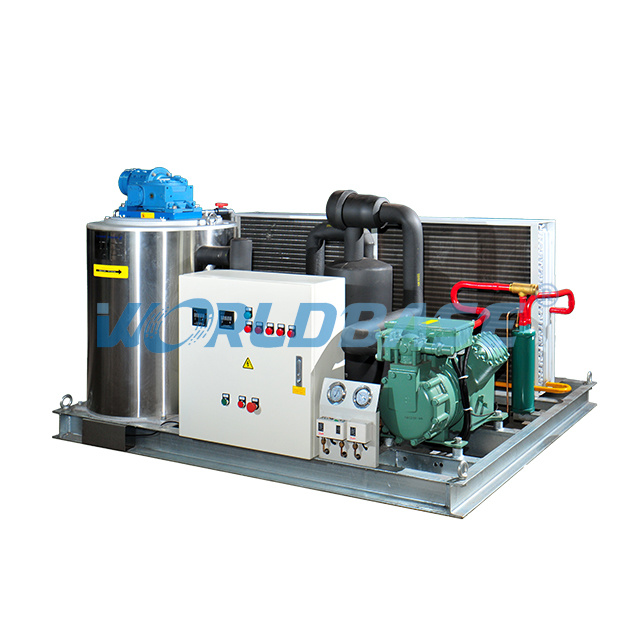
You'll find everything from small undercounter cube ice makers for cafes to massive industrial flake and tube ice machines used in fisheries and concrete cooling. The most common categories are modular cube machines, self-contained units, flake ice machines, tube ice machines, and block ice machines. Many factories also offer customized ice shapes and production capacities, which is a big advantage if you need something specific like nugget ice or seawater flake ice.
Air-cooled models are easier to install and cheaper to run in moderate climates, but they need good ventilation and can struggle in hot kitchens. Water-cooled machines are quieter and more stable in high ambient temperatures, but they use a lot of water and may require a dedicated water line and drain. For most small to medium restaurants, air-cooled is fine unless you're in a very warm or dusty environment. Always check the water and electricity costs in your area before choosing.
Beyond the lower price, Chinese factories often offer flexible configurations, such as choosing the condenser type, voltage, or panel finish for a small order. Many have improved their compressor quality by using brands like Copeland or Bitzer, and they can ship replacement parts quickly via DDP. The trade-off is that you need to vet the supplier carefully to avoid machines with thin stainless steel or poorly sealed electrical boxes.
A common mistake is buying a machine that only meets your average daily ice use. You should account for peak hours, hot weather, and recovery time. As a rule of thumb, take your busiest day's ice consumption and add 30% buffer. For example, if you use 200 pounds on a Saturday night, look for a machine rated at 260 pounds or more per day. Also check the bin capacity; a machine that makes 300 pounds but only stores 50 pounds will leave you scrambling during rush.
Yes, and the shape matters more than most buyers realize. Cube ice is standard for drinks, but half-cube or dice ice cools faster and is better for carbonated beverages. Flake ice is soft and moldable, ideal for seafood displays and medical uses. Tube ice is clear and slow-melting, which works well for liquor and bagged ice sales. If you need a specific shape, ask the factory for a sample video or a small trial batch before committing.
Don't just ask if they have a warranty; ask how they handle a compressor failure in month eleven. A good Chinese supplier will provide a parts list, detailed wiring diagrams, and a WhatsApp contact for technical support. Some offer remote video diagnosis, which can save you a service call. Also clarify who pays for shipping replacement parts and whether they have a local distributor or service partner in your country. It's worth paying a little more for a supplier with a proven track record in your region.
Yes, the invoice price is rarely the final cost. You may need to pay for customs clearance, local certification (like NSF or CE if not included), a voltage transformer, or a water filtration system to keep the warranty valid. Some factories quote without a bin or without installation kits, so double-check what's included. Also factor in the cost of a professional electrician to wire a dedicated circuit, since many machines require more amps than standard outlets provide.
Conclusion
A Chinese ice machine often turns out to be a workhorse in a busy kitchen, not just because it costs less upfront but because it's built to handle constant demand without fuss. The real advantage shows up when you consider the variety of ice types available—full cubes for slow-melting drinks, half cubes for faster cooling, flake ice for displays, and nugget ice that customers love to chew. Each shape affects how drinks taste and how quickly they chill, so picking the wrong one can quietly hurt your service. For high-volume operations, modular units make the most sense: they produce large amounts of ice while letting you pair them with a separate storage bin that fits your space. That flexibility means you can scale up ice production without ripping out your entire setup.
Before committing to a supplier, look past the sticker price. Hidden costs like shipping, installation, water filtration, and energy consumption can add up quickly, especially if the machine isn't matched to your peak demand. A common mistake is buying a unit that barely meets average daily output, then running short during a lunch rush or weekend spike. Instead, calculate your busiest hour and add a buffer of twenty to thirty percent. Once the machine is in place, simple habits keep it running longer: wipe down the bin weekly, change water filters on schedule, and descale every few months depending on water hardness. Skipping maintenance leads to slow ice production, off-tasting cubes, and eventually a repair bill that could have been avoided. A little attention goes a long way toward protecting your investment.
Contact Us
Contact Person: Mr Yang
Email: [email protected]
Tel/WhatsApp: +8613809083091
Website: https://en.worldbase.cn