

Circuit Breaker Types Compared: Which One Suits Your Needs Best?
2026-07-30
Choosing the right circuit breaker can feel overwhelming with so many types available—MCBs, MCCBs, ACBs, and more. Yet the safety and efficiency of your electrical system depend on making the right match. Whether you're upgrading a residential panel or designing industrial switchgear, understanding key differences is crucial. This guide from Chang Song walks you through the options to help you decide with confidence.
What’s the Real Difference Between MCB, MCCB, and RCCB?
Think of an MCB as the quiet workhorse in your home—it trips when a circuit gets overloaded or a short circuit strikes, typically handling up to 100 amps. It’s compact, snappy, and designed for everyday protection. An MCCB, on the other hand, is the brawnier sibling, stepping in for heavier machinery and industrial setups where fault currents can soar into the kiloamp range. Its adjustable trip settings and rugged build make it a lifeline for keeping massive equipment from going up in smoke.
Then there’s the RCCB, which plays a completely different game. It doesn’t care about overloads or short circuits—it’s laser-focused on detecting earth leakage currents that can be lethal to humans. When even a tiny imbalance of 30mA sneaks out to ground (maybe through a frayed wire or a wet floor), it cuts power in a heartbeat. That’s why you’ll often see it paired with MCBs or MCCBs: one handles the big faults, the other watches over personal safety.
So when you’re staring at a spec sheet, don’t get lost in the alphabet soup. If it’s a simple branch circuit in a home or office, an MCB is usually enough. An MCCB earns its keep where high fault current handling and adjustable protection are non-negotiable. And an RCCB? That’s your non-negotiable layer against electric shock—often mandatory in wet areas or outdoor circuits. The real trick is knowing which one (or combination) matches the risk you’re guarding against.
Why Your Choice of Circuit Breaker Matters More Than You Think
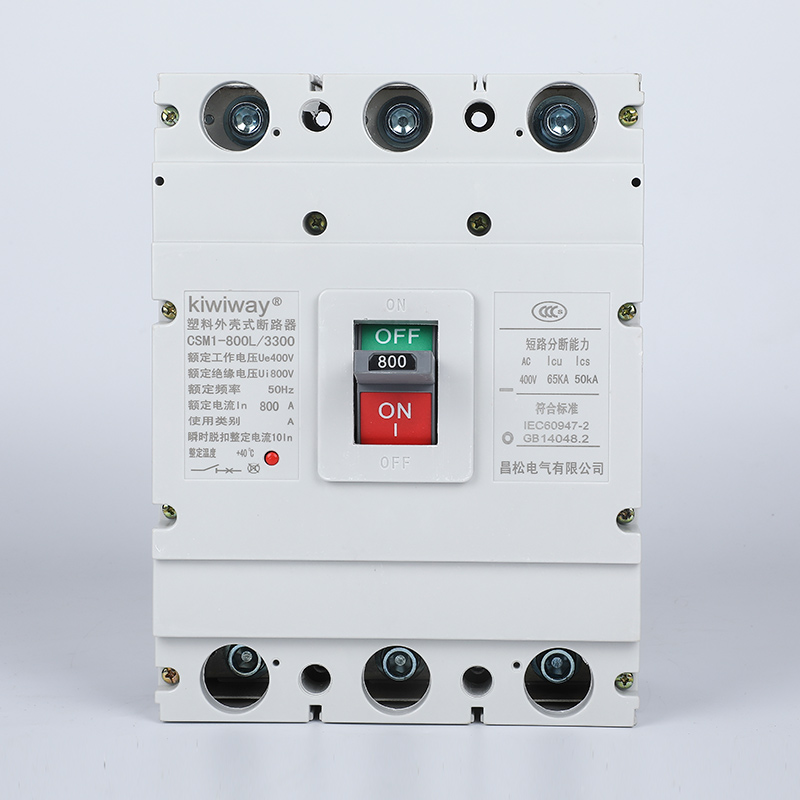
It’s easy to overlook the humble circuit breaker, treating it as just another toggle on the panel. But in reality, that little switch is a critical line of defense standing between your home and catastrophic electrical failure. The wrong choice can mean frequent, annoying trips—or worse, it might fail to trip when you need it most, risking fire or damage to expensive appliances. Your circuit breaker isn’t just a convenience; it’s a silent guardian that must match the specific demands of your wiring and devices.
Consider the subtle differences between breaker types. A standard thermal-magnetic unit might seem adequate, but it can’t distinguish between a harmless surge from a motor starting up and a deadly ground fault. Choosing an AFCI or GFCI breaker in the right places—bedrooms, kitchens, damp areas—adds a layer of protection against arcs and shocks that standard breakers simply can’t provide. The stakes are high: a mismatch in rating or style can lead to a false sense of security, leaving hidden hazards lurking behind your walls.
Installation and quality also play huge roles. Bargain-brand breakers may not fit snugly in your panel, leading to arcing or overheating at the connection point. Even a correctly chosen breaker loses its edge if it’s not sized precisely for the load. It’s not about buying the most expensive option, but about matching the breaker’s specs to your actual needs—and sometimes, that means relying on a pro to calculate load and verify compatibility. Your peace of mind is worth more than a shortcut.
When a Standard Breaker Isn’t Enough: Specialized Types Explained
Standard circuit breakers do a fine job protecting wiring from overloads and short circuits, but they fall short when it comes to nuanced electrical faults or hazardous environments. Think about the bathroom or kitchen outlet that needs ground-fault protection—a regular breaker won’t trip fast enough to prevent a serious shock from a ground fault. That’s where specialized breakers step in, designed to react to specific fault signatures that a plain thermal-magnetic device simply ignores.
Arc-fault circuit interrupters (AFCIs) are another twist on safety, required in many modern bedrooms and living areas. They listen for the telltale crackle of an unintended arc, something that can happen when a lamp cord is pinched under furniture or a nail punctures a wire behind drywall. A standard breaker sees this as a normal load until the heat builds enough to melt something, but the AFCI cuts power at the first erratic spark, often long before smoke appears.
Industrial settings introduce yet another level of specialization. Consider high-voltage power distribution where oil circuit breakers or vacuum interrupters handle massive fault currents without exploding. Or look at motor-protection breakers that tolerate inrush currents while tripping on sustained overloads—a balance that would confuse a generic breaker. Even within homes, combination-type devices now bundle AFCI and GFCI into one, tailoring the protection to both shock and fire risks in a single slot. Choosing the right specialized breaker means understanding the threat you’re actually defending against, not just buying the cheapest thing with the right amp rating.
Breaker Showdown: Thermal-Magnetic vs. Electronic Trip Units
When choosing a circuit breaker, the trip unit is the brain behind the protection, and the thermal-magnetic variety has long been the workhorse of the industry. It relies on a bimetallic strip that bends under heat from overcurrents, coupled with a magnetic coil that reacts to sudden surges—no electronics, just physics. This mechanical simplicity makes it robust in harsh environments and immune to voltage fluctuations or control power failures. However, it lacks precision, especially at moderate overloads, and can be slow to respond under certain fault conditions. For decades, these units were the standard, and they still thrive where cost, simplicity, and proven reliability matter more than fine-tuned settings.
In contrast, electronic trip units bring a digital brain to the table, using microprocessors to monitor current with far greater accuracy. They offer adjustable trip curves, selective coordination with other breakers, and advanced features like ground-fault detection or data logging. By processing samples thousands of times per second, they can discriminate between harmless inrush currents and genuine faults, reducing nuisance tripping. More than just a switch, an electronic trip unit becomes an active part of the power management system, communicating over networks and integrating into smart grids. The catch? They demand a stable control power supply and are more sensitive to extreme temperatures or electromagnetic noise, which can limit their deployment in rough settings.
Deciding between the two isn't about better or worse—it’s about context. Thermal-magnetic units still rule in residential panels, simple commercial spaces, and anywhere ease of use and upfront cost are king. Electronic trip units excel in critical infrastructure, industrial plants, or anywhere you need precise discrimination and minimal downtime. Some modern breakers even blend the concepts, using a mechanical backup alongside an electronic trip core for a hybrid approach. Ultimately, the showdown comes down to what you value more: proven ruggedness and forgiveness, or surgical precision and data-driven insight.
Matching Breakers to Your Load: Residential vs. Industrial Needs
Not all breakers are created equal, and the one that works perfectly in your home might trip the moment it meets a factory floor. Residential breakers are tuned for predictable, low-spike loads like lighting and kitchen appliances, typically handling 15–20 amps at 120/240V single phase. They’re designed to be compact, affordable, and easy to reset – but they lack the endurance to deal with heavy inrush currents or harsh environments. In a home, nuisance tripping is a minor inconvenience; in an industrial setting, it can mean halted production or damaged equipment.
Industrial environments demand breakers that can swallow surges from large motors, welders, or arc furnaces without flinching. Here you’ll find molded case or power breakers rated for hundreds to thousands of amps, often with adjustable trip settings, higher interrupting ratings, and rugged enclosures to withstand dust, moisture, and vibration. Coordination with upstream breakers is also critical – a short in one machine shouldn’t darken the entire plant. The choice isn’t just about capacity; it’s about reliability under continuous load and the ability to isolate faults quickly.
There’s a gray area where the line blurs: light commercial spaces like retail stores or small workshops. They may inherit residential panel boards but often need the durability of commercial-grade breakers to handle rooftop HVAC units, commercial freezers, or frequent cycling. A misapplied breaker in this middle ground can lead to overheating at the bus connection or breakers that wear out prematurely. Always match the breaker’s duty rating and ambient temperature tolerance to the actual load profile, not just the nameplate amps.
Beyond Amperage: Factors You’re Overlooking When Picking a Breaker
Most folks get hung up on amperage—‘Will it handle 30 amps?’—but a breaker’s real job starts when things go sideways. The interrupting rating, for instance, tells you how much fault current it can safely squash without turning into shrapnel. Skip this check on an industrial panel with a beefy transformer feeding it, and a dead short could outpace the breaker’s guts, leading to welded contacts or a nasty arc flash.
Then there’s the nuisance side of the equation. Inrush from a compressor or a bank of LED fixtures might nudge a standard thermal-magnetic breaker into tripping, even when nothing’s wrong. You’ve got to match the tripping curve to the load—no one wants a walk-in freezer kicking offline at 2 a.m. And don’t get me started on ambient heat; a breaker crammed into a sun-baked enclosure might derate itself, leaving a perfectly sized wire underprotected without you ever suspecting it.
FAQ
MCBs handle lower currents, typically under 100 amps, and trip on overloads and short circuits using a thermal-magnetic mechanism. MCCBs step it up—they can manage up to 2,500 amps and often include adjustable trip settings, making them a go-to for industrial panels where flexibility matters.
Vacuum breakers excel in medium-voltage environments—think 1kV to 38kV—because their arc-quenching method is compact and nearly maintenance-free. Air breakers, while great for low-voltage distribution, start to get bulky and less reliable at those higher ranges, so vacuum becomes the clear winner for substations or large motors.
Absolutely. Miniature circuit breakers, or MCBs, are the budget-friendly workhorses for residential panels. They cover standard overload and short-circuit risks without extra frills. Pair them with a residual current device if your local codes demand shock protection, and you’ve got a setup that won’t drain your wallet.
Code usually requires GFCIs wherever water and electricity might meet—so near sinks, dishwashers, or countertop outlets. They detect tiny leakage currents that a plain breaker would ignore, tripping fast to prevent shocks. If your kitchen has any outlet within six feet of a water source, a GFCI isn’t just a safety upgrade, it’s mandatory.
Old habits and legacy infrastructure, mostly. Oil breakers hang around in aging substations or rural grids where replacing them is cost-prohibitive. They can still handle high fault currents, but the fire risk and maintenance hassle mean they’re phased out in new designs. You’ll only find them where ‘if it ain’t broke, don’t fix it’ still rules.
For that voltage, a sulfur hexafluoride (SF6) breaker or a vacuum breaker is your best bet. SF6 handles high interrupting capacity with a compact footprint, while vacuum provides longevity with less environmental fuss. Both outperform air or oil designs at that level, but vacuum is gaining ground because there’s no gas handling to worry about.
Not a great idea. Motors pull massive inrush currents at startup—sometimes 6 to 10 times the running load—and an MCB’s thermal trip might nuisance-trip or fail to arc properly. You’d want an MCCB with magnetic-only protection or a dedicated motor circuit protector that’s built to ride out those surges without prematurely cutting power.
No universal silver bullet exists. Residential runs fine on MCBs, commercial needs the adjustability of MCCBs, high-voltage calls for vacuum or SF6, and sensitive electronics often demand arc-fault or GFCI variants. The trick is matching the breaker’s breaking capacity, voltage rating, and trip curve to the specific load and fault current scenario—mixing and matching is unavoidable.
Conclusion
Picking a circuit breaker isn’t just about matching amps to a wire—the real choice runs deeper. MCBs handle everyday overloads and short circuits in homes, tripping fast on thermal or magnetic cues, while MCCBs step up for heavier industrial loads with adjustable trip settings and higher fault ratings. Then there’s the RCCB, which watches for earth leakage currents that standard breakers miss, guarding against shocks and fires in damp or critical spaces. What often catches people off guard is how the tripping mechanism shapes performance: a basic thermal-magnetic unit reacts predictably but slowly to mild overloads, whereas an electronic trip unit offers precision, programmability, and arc-flash mitigation for sensitive or variable loads. The difference becomes critical when a fridge motor’s inrush current keeps tripping a too-quick breaker, or a data center can’t afford a nuisance shutdown.
Beyond the label ratings, the breaker you choose should fit the rhythm of your installation. Residential panels thrive on compact, maintenance‑ free MCBs and selective RCCB coverage, prioritizing simplicity and occupant safety. In contrast, industrial setups demand breakers that coordinate with downstream devices, endure harmonics, and maybe even communicate via Modbus—features you won’t find on a household unit. Even within the same building, mixing breaker types without understanding their time‑current curves can leave you with false tripping or, worse, a circuit that refuses to trip when it should. Factor in environmental quirks like high ambient temperature, dusty enclosures, or frequent switching cycles, and a standard breaker’s lifespan shrinks fast. Ultimately, the right pick is never a one‑size‑fits‑all catalogue number—it’s a balance of protection, operational tolerance, and the real‑world demands on your electrical backbone.
Contact Us
Contact Person: Tonglun Chen
Email: [email protected]
Tel/WhatsApp: 8618906642555
Website: https://www.cncsele.com