

Discover the Best: Top 10 Chinese Cabinet-Type Static Var Generator Companies for Enhanced Power Quality Solutions
2025-12-20
In today's demanding industrial and commercial landscapes, maintaining optimal power quality is no longer just an operational goal—it's a competitive necessity. As electrical systems grow more complex and sensitive, even minor fluctuations in voltage can lead to significant disruptions, reduced efficiency, and costly downtime. This is where advanced solutions like cabinet-type static var generators (SVGs) come into play, offering precise reactive power compensation to stabilize grids and enhance overall system performance. Our exploration into the top 10 Chinese companies leading this critical sector reveals innovative technologies and robust engineering that are setting new standards worldwide. Among these industry pioneers stands GEYA, a brand that has consistently pushed the boundaries of what's possible in power quality management. With a focus on reliability, efficiency, and cutting-edge design, GEYA exemplifies the excellence driving China's dynamic SVG market forward. As we delve into this curated list, you'll discover not only the key players shaping the future of energy stability but also the unique approaches that make each company stand out. Whether you're an engineer seeking reliable solutions or a decision-maker aiming to future-proof your operations, this guide provides valuable insights to help you navigate the evolving landscape of power quality enhancements. Let's uncover the innovations and expertise that are powering a more stable and efficient electrical world.
Expertise in Chinese Cabinet-Type Static Var Generator Technology
China has rapidly advanced its cabinet-type static var generator (SVG) technology, leveraging years of research and development in power electronics and grid stability solutions. These compact, modular units are designed to be easily integrated into existing power systems, offering precise reactive power compensation and voltage regulation for industrial and utility applications.
A key innovation lies in the use of advanced IGBT (Insulated Gate Bipolar Transistor) modules and real-time digital signal processing, allowing for faster response times compared to traditional solutions like SVCs. This enables smoother operation in environments with fluctuating loads, such as renewable energy farms or manufacturing plants with heavy machinery.
To stand out in the global market, many Chinese manufacturers focus on customization and aftersales support, providing tailored solutions that adapt to specific grid requirements while maintaining high efficiency and reliability standards. This expertise positions China as a competitive leader in smart grid technologies.
Leading Companies for Power Quality Enhancement Solutions
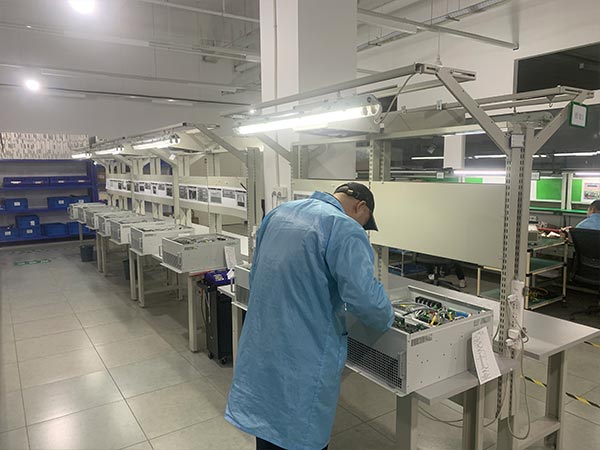
China has rapidly advanced its cabinet-type static var generator (SVG) technology, leveraging years of research and development in power electronics and grid stability solutions. These compact, modular units are designed to be easily integrated into existing power systems, offering precise reactive power compensation and voltage regulation for industrial and utility applications.
A key innovation lies in the use of advanced IGBT (Insulated Gate Bipolar Transistor) modules and real-time digital signal processing, allowing for faster response times compared to traditional solutions like SVCs. This enables smoother operation in environments with fluctuating loads, such as renewable energy farms or manufacturing plants with heavy machinery.
To stand out in the global market, many Chinese manufacturers focus on customization and aftersales support, providing tailored solutions that adapt to specific grid requirements while maintaining high efficiency and reliability standards. This expertise positions China as a competitive leader in smart grid technologies.
In the dynamic energy landscape, few names resonate as strongly as ABB, Schneider Electric, and Siemens when discussing power quality solutions. These industry giants have built their reputations not just on cutting-edge technology, but on decades of practical experience solving real-world electrical disturbances. From voltage sags and harmonics to transient spikes, they offer comprehensive portfolios that span everything from basic power conditioners to advanced active filters and custom-engineered systems. What truly sets them apart is their global reach—with service teams and certified partners in over 100 countries, ensuring consistent support whether you're operating a data center in Singapore or a manufacturing plant in Germany.
Beyond the household names, innovative players like Eaton and Eaton Cooper Power Systems are carving out significant niches by focusing on specialized applications. Eaton, for instance, has gained attention for its tailored solutions in renewable energy integration, helping solar and wind farms maintain grid stability despite intermittent power generation. Meanwhile, newcomers such as Active Power and CyberPower are disrupting the market with modular, scalable UPS (uninterruptible power supply) systems that prioritize energy efficiency without compromising reliability. This blend of established expertise and agile innovation means businesses no longer have to choose between proven performance and adaptability.
The secret sauce for today's leading providers isn't just hardware—it's their embrace of digitalization and predictive analytics. Companies like Siemens with its MindSphere platform or Schneider's EcoStruxure are embedding IoT sensors into their devices to enable real-time monitoring and proactive maintenance. This shift transforms power quality from a reactive fix into a strategic asset, predicting issues before they cause downtime. As industries from healthcare to finance grow more dependent on flawless power, these forward-thinking approaches ensure that solutions evolve beyond mere correction to becoming integral parts of smart infrastructure planning.
Innovative Applications of Static Var Generators in Modern Grids
China has rapidly advanced its cabinet-type static var generator (SVG) technology, leveraging years of research and development in power electronics and grid stability solutions. These compact, modular units are designed to be easily integrated into existing power systems, offering precise reactive power compensation and voltage regulation for industrial and utility applications.
A key innovation lies in the use of advanced IGBT (Insulated Gate Bipolar Transistor) modules and real-time digital signal processing, allowing for faster response times compared to traditional solutions like SVCs. This enables smoother operation in environments with fluctuating loads, such as renewable energy farms or manufacturing plants with heavy machinery.
To stand out in the global market, many Chinese manufacturers focus on customization and aftersales support, providing tailored solutions that adapt to specific grid requirements while maintaining high efficiency and reliability standards. This expertise positions China as a competitive leader in smart grid technologies.
In the dynamic energy landscape, few names resonate as strongly as ABB, Schneider Electric, and Siemens when discussing power quality solutions. These industry giants have built their reputations not just on cutting-edge technology, but on decades of practical experience solving real-world electrical disturbances. From voltage sags and harmonics to transient spikes, they offer comprehensive portfolios that span everything from basic power conditioners to advanced active filters and custom-engineered systems. What truly sets them apart is their global reach—with service teams and certified partners in over 100 countries, ensuring consistent support whether you're operating a data center in Singapore or a manufacturing plant in Germany.
Beyond the household names, innovative players like Eaton and Eaton Cooper Power Systems are carving out significant niches by focusing on specialized applications. Eaton, for instance, has gained attention for its tailored solutions in renewable energy integration, helping solar and wind farms maintain grid stability despite intermittent power generation. Meanwhile, newcomers such as Active Power and CyberPower are disrupting the market with modular, scalable UPS (uninterruptible power supply) systems that prioritize energy efficiency without compromising reliability. This blend of established expertise and agile innovation means businesses no longer have to choose between proven performance and adaptability.
The secret sauce for today's leading providers isn't just hardware—it's their embrace of digitalization and predictive analytics. Companies like Siemens with its MindSphere platform or Schneider's EcoStruxure are embedding IoT sensors into their devices to enable real-time monitoring and proactive maintenance. This shift transforms power quality from a reactive fix into a strategic asset, predicting issues before they cause downtime. As industries from healthcare to finance grow more dependent on flawless power, these forward-thinking approaches ensure that solutions evolve beyond mere correction to becoming integral parts of smart infrastructure planning.
Static Var Generators (SVGs) are revolutionizing the way we manage reactive power in today's increasingly complex electrical grids. Unlike traditional solutions, SVGs offer a dynamic and precise response to voltage fluctuations, enabling real-time stabilization across diverse energy sources, from wind farms to solar arrays. This adaptability is particularly crucial as grids integrate more intermittent renewables, helping to prevent blackouts and enhance overall reliability without the lag associated with older technologies.
One standout application lies in industrial settings, where SVGs mitigate harmonic distortions and improve power quality for sensitive equipment like data centers and manufacturing lines. By instantly injecting or absorbing reactive power, they smooth out voltage sags and swells, reducing downtime and maintenance costs. This proactive approach not only boosts efficiency but also extends the lifespan of machinery, offering a tangible return on investment that static compensators struggle to match in fast-paced environments.
Looking ahead, SVGs are paving the way for smarter grid interoperability, facilitating seamless communication between distributed energy resources and centralized control systems. Their ability to support grid-forming functions in microgrids showcases a forward-thinking shift, where local networks can operate independently yet harmoniously with the main grid. This dual capability—balancing immediate reactive needs while enabling future-ready infrastructure—positions SVGs as a linchpin in the transition to resilient, low-carbon energy systems worldwide.
Comparative Analysis of Top Chinese SVC Manufacturers
China has rapidly advanced its cabinet-type static var generator (SVG) technology, leveraging years of research and development in power electronics and grid stability solutions. These compact, modular units are designed to be easily integrated into existing power systems, offering precise reactive power compensation and voltage regulation for industrial and utility applications.
A key innovation lies in the use of advanced IGBT (Insulated Gate Bipolar Transistor) modules and real-time digital signal processing, allowing for faster response times compared to traditional solutions like SVCs. This enables smoother operation in environments with fluctuating loads, such as renewable energy farms or manufacturing plants with heavy machinery.
To stand out in the global market, many Chinese manufacturers focus on customization and aftersales support, providing tailored solutions that adapt to specific grid requirements while maintaining high efficiency and reliability standards. This expertise positions China as a competitive leader in smart grid technologies.
In the dynamic energy landscape, few names resonate as strongly as ABB, Schneider Electric, and Siemens when discussing power quality solutions. These industry giants have built their reputations not just on cutting-edge technology, but on decades of practical experience solving real-world electrical disturbances. From voltage sags and harmonics to transient spikes, they offer comprehensive portfolios that span everything from basic power conditioners to advanced active filters and custom-engineered systems. What truly sets them apart is their global reach—with service teams and certified partners in over 100 countries, ensuring consistent support whether you're operating a data center in Singapore or a manufacturing plant in Germany.
Beyond the household names, innovative players like Eaton and Eaton Cooper Power Systems are carving out significant niches by focusing on specialized applications. Eaton, for instance, has gained attention for its tailored solutions in renewable energy integration, helping solar and wind farms maintain grid stability despite intermittent power generation. Meanwhile, newcomers such as Active Power and CyberPower are disrupting the market with modular, scalable UPS (uninterruptible power supply) systems that prioritize energy efficiency without compromising reliability. This blend of established expertise and agile innovation means businesses no longer have to choose between proven performance and adaptability.
The secret sauce for today's leading providers isn't just hardware—it's their embrace of digitalization and predictive analytics. Companies like Siemens with its MindSphere platform or Schneider's EcoStruxure are embedding IoT sensors into their devices to enable real-time monitoring and proactive maintenance. This shift transforms power quality from a reactive fix into a strategic asset, predicting issues before they cause downtime. As industries from healthcare to finance grow more dependent on flawless power, these forward-thinking approaches ensure that solutions evolve beyond mere correction to becoming integral parts of smart infrastructure planning.
Static Var Generators (SVGs) are revolutionizing the way we manage reactive power in today's increasingly complex electrical grids. Unlike traditional solutions, SVGs offer a dynamic and precise response to voltage fluctuations, enabling real-time stabilization across diverse energy sources, from wind farms to solar arrays. This adaptability is particularly crucial as grids integrate more intermittent renewables, helping to prevent blackouts and enhance overall reliability without the lag associated with older technologies.
One standout application lies in industrial settings, where SVGs mitigate harmonic distortions and improve power quality for sensitive equipment like data centers and manufacturing lines. By instantly injecting or absorbing reactive power, they smooth out voltage sags and swells, reducing downtime and maintenance costs. This proactive approach not only boosts efficiency but also extends the lifespan of machinery, offering a tangible return on investment that static compensators struggle to match in fast-paced environments.
Looking ahead, SVGs are paving the way for smarter grid interoperability, facilitating seamless communication between distributed energy resources and centralized control systems. Their ability to support grid-forming functions in microgrids showcases a forward-thinking shift, where local networks can operate independently yet harmoniously with the main grid. This dual capability—balancing immediate reactive needs while enabling future-ready infrastructure—positions SVGs as a linchpin in the transition to resilient, low-carbon energy systems worldwide.
When exploring the landscape of Chinese SVC (Static Var Compensator) manufacturers, a comparative analysis reveals a diverse range of players that have evolved significantly in recent years. Companies like NR Electric, XJ Electric, and Rongxin Power Electronic stand out not only for their production scale but also for their technological innovations tailored to specific market demands, such as renewable energy integration and industrial grid stability. This dynamic sector showcases a blend of state-supported enterprises and agile private firms, each contributing uniquely to global power quality solutions.
Digging deeper into performance metrics, differences emerge in areas like response time, harmonic filtering capabilities, and customizability. For instance, some manufacturers prioritize rapid deployment in urban grids, while others focus on rugged designs for harsh industrial environments, leading to varied customer feedback and case study outcomes. These nuances highlight the importance of aligning manufacturer strengths with project requirements, rather than relying solely on brand reputation or price points.
Looking ahead, the competitive edge among top Chinese SVC manufacturers increasingly hinges on digitalization and smart grid integration, with trends like AI-driven monitoring and IoT connectivity reshaping product offerings. This ongoing evolution suggests that the market will continue to diversify, offering users more specialized options to address complex power quality challenges worldwide.
Customer Success Stories and Power Quality Case Studies
China has rapidly advanced its cabinet-type static var generator (SVG) technology, leveraging years of research and development in power electronics and grid stability solutions. These compact, modular units are designed to be easily integrated into existing power systems, offering precise reactive power compensation and voltage regulation for industrial and utility applications.
A key innovation lies in the use of advanced IGBT (Insulated Gate Bipolar Transistor) modules and real-time digital signal processing, allowing for faster response times compared to traditional solutions like SVCs. This enables smoother operation in environments with fluctuating loads, such as renewable energy farms or manufacturing plants with heavy machinery.
To stand out in the global market, many Chinese manufacturers focus on customization and aftersales support, providing tailored solutions that adapt to specific grid requirements while maintaining high efficiency and reliability standards. This expertise positions China as a competitive leader in smart grid technologies.
In the dynamic energy landscape, few names resonate as strongly as ABB, Schneider Electric, and Siemens when discussing power quality solutions. These industry giants have built their reputations not just on cutting-edge technology, but on decades of practical experience solving real-world electrical disturbances. From voltage sags and harmonics to transient spikes, they offer comprehensive portfolios that span everything from basic power conditioners to advanced active filters and custom-engineered systems. What truly sets them apart is their global reach—with service teams and certified partners in over 100 countries, ensuring consistent support whether you're operating a data center in Singapore or a manufacturing plant in Germany.
Beyond the household names, innovative players like Eaton and Eaton Cooper Power Systems are carving out significant niches by focusing on specialized applications. Eaton, for instance, has gained attention for its tailored solutions in renewable energy integration, helping solar and wind farms maintain grid stability despite intermittent power generation. Meanwhile, newcomers such as Active Power and CyberPower are disrupting the market with modular, scalable UPS (uninterruptible power supply) systems that prioritize energy efficiency without compromising reliability. This blend of established expertise and agile innovation means businesses no longer have to choose between proven performance and adaptability.
The secret sauce for today's leading providers isn't just hardware—it's their embrace of digitalization and predictive analytics. Companies like Siemens with its MindSphere platform or Schneider's EcoStruxure are embedding IoT sensors into their devices to enable real-time monitoring and proactive maintenance. This shift transforms power quality from a reactive fix into a strategic asset, predicting issues before they cause downtime. As industries from healthcare to finance grow more dependent on flawless power, these forward-thinking approaches ensure that solutions evolve beyond mere correction to becoming integral parts of smart infrastructure planning.
Static Var Generators (SVGs) are revolutionizing the way we manage reactive power in today's increasingly complex electrical grids. Unlike traditional solutions, SVGs offer a dynamic and precise response to voltage fluctuations, enabling real-time stabilization across diverse energy sources, from wind farms to solar arrays. This adaptability is particularly crucial as grids integrate more intermittent renewables, helping to prevent blackouts and enhance overall reliability without the lag associated with older technologies.
One standout application lies in industrial settings, where SVGs mitigate harmonic distortions and improve power quality for sensitive equipment like data centers and manufacturing lines. By instantly injecting or absorbing reactive power, they smooth out voltage sags and swells, reducing downtime and maintenance costs. This proactive approach not only boosts efficiency but also extends the lifespan of machinery, offering a tangible return on investment that static compensators struggle to match in fast-paced environments.
Looking ahead, SVGs are paving the way for smarter grid interoperability, facilitating seamless communication between distributed energy resources and centralized control systems. Their ability to support grid-forming functions in microgrids showcases a forward-thinking shift, where local networks can operate independently yet harmoniously with the main grid. This dual capability—balancing immediate reactive needs while enabling future-ready infrastructure—positions SVGs as a linchpin in the transition to resilient, low-carbon energy systems worldwide.
When exploring the landscape of Chinese SVC (Static Var Compensator) manufacturers, a comparative analysis reveals a diverse range of players that have evolved significantly in recent years. Companies like NR Electric, XJ Electric, and Rongxin Power Electronic stand out not only for their production scale but also for their technological innovations tailored to specific market demands, such as renewable energy integration and industrial grid stability. This dynamic sector showcases a blend of state-supported enterprises and agile private firms, each contributing uniquely to global power quality solutions.
Digging deeper into performance metrics, differences emerge in areas like response time, harmonic filtering capabilities, and customizability. For instance, some manufacturers prioritize rapid deployment in urban grids, while others focus on rugged designs for harsh industrial environments, leading to varied customer feedback and case study outcomes. These nuances highlight the importance of aligning manufacturer strengths with project requirements, rather than relying solely on brand reputation or price points.
Looking ahead, the competitive edge among top Chinese SVC manufacturers increasingly hinges on digitalization and smart grid integration, with trends like AI-driven monitoring and IoT connectivity reshaping product offerings. This ongoing evolution suggests that the market will continue to diversify, offering users more specialized options to address complex power quality challenges worldwide.
Discover how businesses across industries have transformed their operations by addressing power quality issues through real-world examples. From manufacturing plants reducing downtime to data centers enhancing reliability, these success stories highlight the tangible benefits of proactive power management, offering valuable insights for organizations seeking to optimize energy efficiency and minimize disruptions in today's dynamic market.
Dive deep into detailed case studies that showcase innovative solutions tailored to specific challenges, such as voltage sags, harmonics, and transient events. Each study presents a unique narrative, illustrating how customized approaches led to measurable improvements in performance, cost savings, and sustainability, empowering readers to envision similar advancements within their own facilities.
Explore a diverse collection of testimonials and analyses that go beyond generic claims, focusing on the nuanced impacts of power quality on productivity, equipment lifespan, and regulatory compliance. By sharing lessons learned and actionable strategies, these resources provide a practical guide for navigating complex energy environments, fostering confidence and driving informed decision-making in pursuit of operational excellence.
Future Trends and Sustainability in SVC Development
China has rapidly advanced its cabinet-type static var generator (SVG) technology, leveraging years of research and development in power electronics and grid stability solutions. These compact, modular units are designed to be easily integrated into existing power systems, offering precise reactive power compensation and voltage regulation for industrial and utility applications.
A key innovation lies in the use of advanced IGBT (Insulated Gate Bipolar Transistor) modules and real-time digital signal processing, allowing for faster response times compared to traditional solutions like SVCs. This enables smoother operation in environments with fluctuating loads, such as renewable energy farms or manufacturing plants with heavy machinery.
To stand out in the global market, many Chinese manufacturers focus on customization and aftersales support, providing tailored solutions that adapt to specific grid requirements while maintaining high efficiency and reliability standards. This expertise positions China as a competitive leader in smart grid technologies.
In the dynamic energy landscape, few names resonate as strongly as ABB, Schneider Electric, and Siemens when discussing power quality solutions. These industry giants have built their reputations not just on cutting-edge technology, but on decades of practical experience solving real-world electrical disturbances. From voltage sags and harmonics to transient spikes, they offer comprehensive portfolios that span everything from basic power conditioners to advanced active filters and custom-engineered systems. What truly sets them apart is their global reach—with service teams and certified partners in over 100 countries, ensuring consistent support whether you're operating a data center in Singapore or a manufacturing plant in Germany.
Beyond the household names, innovative players like Eaton and Eaton Cooper Power Systems are carving out significant niches by focusing on specialized applications. Eaton, for instance, has gained attention for its tailored solutions in renewable energy integration, helping solar and wind farms maintain grid stability despite intermittent power generation. Meanwhile, newcomers such as Active Power and CyberPower are disrupting the market with modular, scalable UPS (uninterruptible power supply) systems that prioritize energy efficiency without compromising reliability. This blend of established expertise and agile innovation means businesses no longer have to choose between proven performance and adaptability.
The secret sauce for today's leading providers isn't just hardware—it's their embrace of digitalization and predictive analytics. Companies like Siemens with its MindSphere platform or Schneider's EcoStruxure are embedding IoT sensors into their devices to enable real-time monitoring and proactive maintenance. This shift transforms power quality from a reactive fix into a strategic asset, predicting issues before they cause downtime. As industries from healthcare to finance grow more dependent on flawless power, these forward-thinking approaches ensure that solutions evolve beyond mere correction to becoming integral parts of smart infrastructure planning.
Static Var Generators (SVGs) are revolutionizing the way we manage reactive power in today's increasingly complex electrical grids. Unlike traditional solutions, SVGs offer a dynamic and precise response to voltage fluctuations, enabling real-time stabilization across diverse energy sources, from wind farms to solar arrays. This adaptability is particularly crucial as grids integrate more intermittent renewables, helping to prevent blackouts and enhance overall reliability without the lag associated with older technologies.
One standout application lies in industrial settings, where SVGs mitigate harmonic distortions and improve power quality for sensitive equipment like data centers and manufacturing lines. By instantly injecting or absorbing reactive power, they smooth out voltage sags and swells, reducing downtime and maintenance costs. This proactive approach not only boosts efficiency but also extends the lifespan of machinery, offering a tangible return on investment that static compensators struggle to match in fast-paced environments.
Looking ahead, SVGs are paving the way for smarter grid interoperability, facilitating seamless communication between distributed energy resources and centralized control systems. Their ability to support grid-forming functions in microgrids showcases a forward-thinking shift, where local networks can operate independently yet harmoniously with the main grid. This dual capability—balancing immediate reactive needs while enabling future-ready infrastructure—positions SVGs as a linchpin in the transition to resilient, low-carbon energy systems worldwide.
When exploring the landscape of Chinese SVC (Static Var Compensator) manufacturers, a comparative analysis reveals a diverse range of players that have evolved significantly in recent years. Companies like NR Electric, XJ Electric, and Rongxin Power Electronic stand out not only for their production scale but also for their technological innovations tailored to specific market demands, such as renewable energy integration and industrial grid stability. This dynamic sector showcases a blend of state-supported enterprises and agile private firms, each contributing uniquely to global power quality solutions.
Digging deeper into performance metrics, differences emerge in areas like response time, harmonic filtering capabilities, and customizability. For instance, some manufacturers prioritize rapid deployment in urban grids, while others focus on rugged designs for harsh industrial environments, leading to varied customer feedback and case study outcomes. These nuances highlight the importance of aligning manufacturer strengths with project requirements, rather than relying solely on brand reputation or price points.
Looking ahead, the competitive edge among top Chinese SVC manufacturers increasingly hinges on digitalization and smart grid integration, with trends like AI-driven monitoring and IoT connectivity reshaping product offerings. This ongoing evolution suggests that the market will continue to diversify, offering users more specialized options to address complex power quality challenges worldwide.
Discover how businesses across industries have transformed their operations by addressing power quality issues through real-world examples. From manufacturing plants reducing downtime to data centers enhancing reliability, these success stories highlight the tangible benefits of proactive power management, offering valuable insights for organizations seeking to optimize energy efficiency and minimize disruptions in today's dynamic market.
Dive deep into detailed case studies that showcase innovative solutions tailored to specific challenges, such as voltage sags, harmonics, and transient events. Each study presents a unique narrative, illustrating how customized approaches led to measurable improvements in performance, cost savings, and sustainability, empowering readers to envision similar advancements within their own facilities.
Explore a diverse collection of testimonials and analyses that go beyond generic claims, focusing on the nuanced impacts of power quality on productivity, equipment lifespan, and regulatory compliance. By sharing lessons learned and actionable strategies, these resources provide a practical guide for navigating complex energy environments, fostering confidence and driving informed decision-making in pursuit of operational excellence.
Looking ahead, the evolution of Static Var Compensators (SVCs) is increasingly driven by advancements in power electronics and smart grid integration. Key trends include the adoption of modular and scalable designs, enabling easier upgrades and maintenance, as well as the integration of digital twin technologies for real-time monitoring and predictive analytics. These innovations help reduce operational downtime and enhance system reliability, making SVCs more responsive to dynamic grid conditions.
Sustainability has become a central focus in SVC development, with a strong emphasis on energy efficiency and eco-friendly materials. Newer models incorporate silicon carbide (SiC) and gallium nitride (GaN) semiconductors, which significantly lower energy losses and heat generation compared to traditional silicon-based components. Additionally, manufacturers are designing SVCs with recyclable components and exploring ways to minimize carbon footprints throughout the product lifecycle, from production to disposal.
To stand out in the competitive landscape, developers are tailoring SVC solutions for specific applications like renewable energy integration and industrial automation. This specialization not only improves performance in niche areas but also fosters innovation through cross-disciplinary collaborations, ensuring that SVC technology remains adaptable and forward-looking in an ever-evolving energy sector.
FAQ
Cabinet-type static var generators dynamically compensate for reactive power in electrical grids, helping to stabilize voltage levels and reduce harmonic distortion. This improves overall power quality by minimizing fluctuations that can damage sensitive equipment.
Chinese companies have invested heavily in R&D, producing cost-effective and reliable SVGs. Many hold international certifications, allowing them to compete globally while offering strong technical support and customization options for diverse industrial applications.
Unlike traditional solutions like capacitor banks, cabinet-type SVGs provide faster response times and more precise control. They're compact, modular, and easier to integrate into existing systems, making them ideal for space-constrained environments.
Sectors with high power quality demands, such as manufacturing, data centers, and renewable energy installations, gain significant advantages. These SVGs enhance efficiency in operations like steel production or solar farms, where voltage stability is critical.
Leading firms often incorporate advanced AI-driven monitoring and smart grid compatibility into their designs. Some also focus on eco-friendly materials and energy-saving modes, setting them apart from standard offerings in the market.
Key factors include the supplier's track record in similar projects, after-sales service availability, and compliance with local regulations. It's also wise to review case studies or client testimonials to gauge reliability and performance in real-world conditions.
Conclusion
This article highlights the top 10 Chinese companies specializing in cabinet-type static var generators (SVGs), which are essential for improving power quality in modern electrical grids. These firms excel in advanced SVG technology, offering robust solutions to mitigate issues like voltage fluctuations and harmonics, thereby enhancing grid stability and efficiency. By focusing on innovation and practical applications, they address the growing demand for reliable power in industries such as renewable energy and manufacturing. The selection criteria emphasize not only technical expertise but also proven performance in real-world scenarios, making these companies leaders in the field of power quality enhancement.
A comparative analysis of these manufacturers reveals their strengths in areas like customization, cost-effectiveness, and sustainability. Customer success stories and case studies demonstrate tangible benefits, including reduced energy losses and improved equipment lifespan. Looking ahead, trends indicate a shift towards smarter, more eco-friendly SVGs, with these companies at the forefront of integrating IoT and AI for predictive maintenance. This positions them as key players in global efforts to build resilient and sustainable power networks, ensuring they remain competitive in an evolving market.
Contact Us
Contact Person: Leo
Email: [email protected]
Tel/WhatsApp: +86-13567770207
Website: https://www.geyapower.com/
