

Far Infrared Heating Reactor Maker: Pioneering Efficient Industrial Heating Solutions
2026-07-10
In the quest for energy-efficient industrial processes, far infrared heating technology is reshaping how manufacturers approach thermal applications. At the forefront of this transformation stands Shenzhou Chemical Industry, a far infrared heating reactor maker dedicated to delivering solutions that slash energy consumption while boosting output quality. This blog peels back the layers on what makes their systems a game-changer for sectors ranging from chemicals to materials processing—and why forward-thinking plants are making the switch.
Rethinking Heat: The Shift to Far Infrared
For decades, the conversation around thermal comfort has been dominated by air temperature. We’ve been conditioned to think that a thermostat reading is the ultimate measure of warmth. But step into a room heated by far infrared, and your body tells a different story. It’s not about making the air hot; it’s about delivering energy directly to you, mimicking the gentle, enveloping sensation of sunlight on a crisp day. This isn’t a gimmick or a minor tweak—it’s a fundamental reimagining of what it means to feel warm, breaking free from the convection-dominated mindset that has long held us captive.
The shift to far infrared challenges the very physics of traditional heating. Instead of blowing warm air around a space, losing heat to drafts and high ceilings, FIR systems emit electromagnetic waves that travel unimpeded until they strike a solid surface—like your skin, furniture, or floors. These surfaces then re-radiate the warmth, creating a consistent, layered comfort that doesn’t disappear the moment a door opens. It’s a quiet, invisible efficiency that feels almost magical, yet it’s grounded in science that’s been understood for over a century. What’s new is the growing realization that this method doesn’t just save energy; it transforms the quality of warmth, eliminating cold spots and the dry, stuffy air we’ve come to accept as normal.
What’s driving this rethinking isn’t just technological advancement, but a deeper awareness of human physiology and environmental impact. We’re learning that our bodies are better attuned to radiant heat—it’s why a campfire feels so primal and restorative. At the same time, the pressure to reduce carbon footprints is forcing architects and engineers to look beyond conventional HVAC logic. Far infrared heating panels, often sleek and unobtrusive, can be integrated into ceilings or walls, freeing up floor space and cutting reliance on fossil-fuel-intensive systems. It’s a shift that asks us to let go of the familiar hum of radiators and forced air, and instead trust a kind of warmth that feels closer to nature, even in the heart of a modern building.
Inside the Reactor: Design and Materials
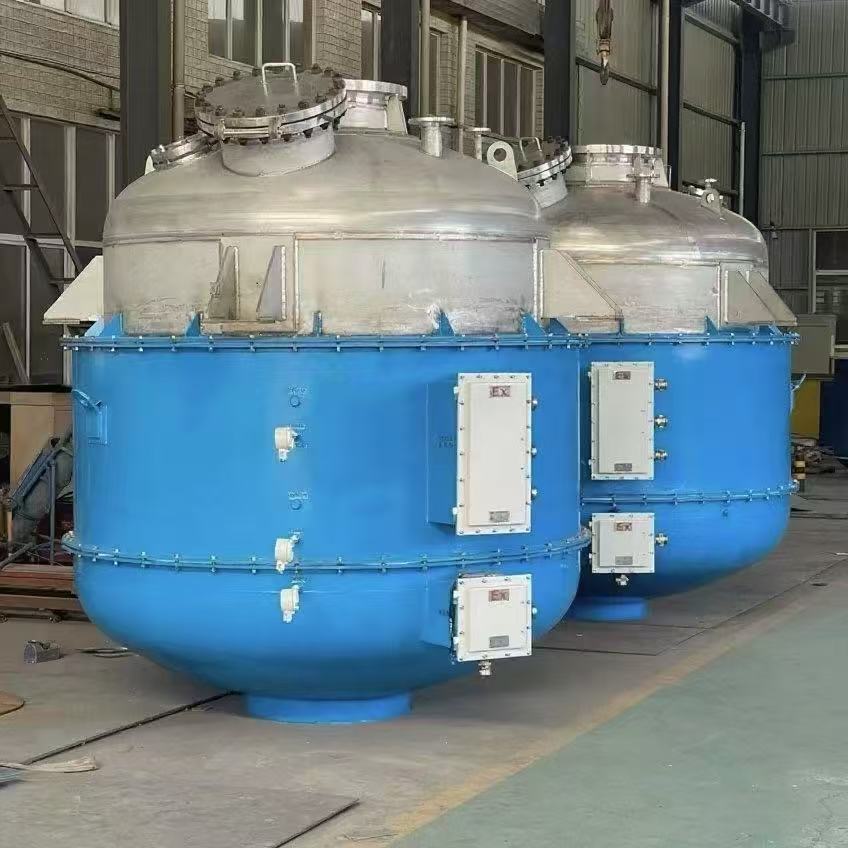
The heart of a nuclear reactor is a masterpiece of precision engineering, where every component must balance extreme conditions with unwavering reliability. The core design typically centers around the pressure vessel, a massive steel cylinder that houses the fuel assemblies and control mechanisms. Inside, uranium dioxide pellets are stacked into long, thin tubes made of zirconium alloy, chosen for its low neutron absorption and excellent corrosion resistance at high temperatures. These fuel rods are arranged in precise geometric arrays, interspersed with control rods that can be swiftly inserted to modulate the chain reaction. The entire assembly is submerged in either water or a liquid metal coolant, which serves both as a heat transfer medium and a neutron moderator, slowing down fast-moving neutrons to sustain fission efficiently.
Material selection for reactor internals is a delicate trade-off between mechanical strength, radiation tolerance, and chemical compatibility. Austenitic stainless steels dominate structural applications due to their proven resilience against embrittlement and creep under prolonged neutron bombardment. In the primary circuit, where temperatures can exceed 300°C and pressures reach 150 atmospheres, nickel-based superalloys are often used for critical welds and valve bodies. Graphite finds its niche in gas-cooled reactors, acting as both a moderator and a refractory barrier that can withstand blistering heat without melting. Even the concrete containment building relies on specialized borated aggregates to enhance neutron shielding, a subtle but vital layer of defense.
More advanced reactor concepts are pushing material boundaries further, demanding alloys that can handle corrosive salts or liquid sodium at 800°C without degrading. Silicon carbide composites are emerging as a game-changer, offering a combination of high thermal conductivity, low swelling under radiation, and inherent passive safety features. Meanwhile, accident-tolerant fuels clad in chromium-coated zirconium or iron-chromium-aluminum alloys promise to buy precious hours during loss-of-coolant events. These innovations don't just aim for incremental improvement—they represent a fundamental rethink of how materials behave at the atomic level when subjected to the relentless environment inside a reactor core.
From Lab to Production Floor: Proven Results
Moving an innovation from the lab to a full-scale production line is rarely a straight path. We’ve seen firsthand how even the most promising breakthroughs can stall when faced with real-world variables like material consistency, equipment limitations, and operator workflows. But by embedding iterative testing and cross-team collaboration early on, we’ve consistently turned fragile prototypes into robust manufacturing processes. The proof is in the repeatable outcomes: shorter cycle times, fewer defects, and processes that hold up under the pressures of daily production.
One memorable example involved a new coating technique that worked flawlessly in controlled experiments but began drifting when exposed to ambient humidity on the factory floor. Instead of retreating to the lab, our engineers worked alongside production staff to tweak application parameters and introduce real-time monitoring. Within weeks, the process stabilized, and the resulting product not only met but exceeded the original quality benchmarks—while cutting material waste by over 20%. That’s the kind of tangible result that turns skeptics into advocates and validates the entire journey from concept to production.
Energy Savings Without Compromise
Many people assume that cutting energy use means sacrificing comfort or performance, but modern solutions prove this doesn't have to be the case. High-efficiency systems and smart design work in harmony to maintain—or even improve—the user experience while significantly reducing consumption. The key lies in moving beyond outdated technology and embracing innovations that deliver both savings and satisfaction, without forcing a trade-off.
For instance, advanced insulation materials and intelligent climate controls can keep indoor spaces perfectly comfortable while drawing far less power. Lighting systems with adaptive brightness and occupancy sensing provide excellent visibility exactly where it’s needed, then dim or turn off automatically—so no energy is wasted on empty rooms. These upgrades blend into daily life seamlessly, so you notice the lower bills more than any change in how things feel.
The idea of compromise often stems from old misconceptions, like the belief that efficient appliances are always less powerful or that reducing energy means living with less. In reality, thoughtfully engineered products now outperform their conventional counterparts in every way. By focusing on quality over quantity, it’s possible to create environments that are both more enjoyable and more sustainable—proving that genuine progress doesn’t require giving anything up.
Tailored Heating for Unique Processes
Every industrial process carries its own thermal signature, and off-the-shelf heating systems rarely align perfectly with those demands. Instead of forcing a square peg into a round hole, we engineer heating solutions that adapt to the specific temperature curves, dwell times, and material sensitivities of your operation. This means moving beyond standard wattage ratings and into a realm where heat distribution is mapped to your actual production flow, ensuring energy isn't wasted on overcompensation or lost to undersized components.
Our approach begins with a deep dive into your process parameters—whether you're dealing with viscous polymers that need gentle, staged warming or precision components requiring rapid, uniform thermal cycling. We consider ambient plant conditions, integration constraints, and even the thermal inertia of your existing equipment. The result is a heating system that feels less like an add-on and more like a natural extension of your process, reducing cold spots, preventing thermal shock, and maintaining the narrow temperature windows that define product quality.
By treating each project as a distinct thermal puzzle, we unlock efficiencies that generic systems simply cannot match. This isn't about reinventing the heating element; it's about rethinking the relationship between heat and process. From custom watt density patterns to bespoke control logic, every detail is tailored so your line runs smoother, your rejects drop, and your energy consumption aligns with the true needs of your unique process.
Why Legacy Systems Are Losing Ground
Legacy systems were once the backbone of enterprise operations, but their rigid architecture is proving to be a critical liability in an era that demands speed and flexibility. These systems were designed for a slower pace of business, with batch processing and monolithic structures that make even minor updates a costly and time-consuming endeavor. As markets shift and customer expectations evolve, companies reliant on outdated technology find themselves unable to pivot quickly, leaving them exposed to more agile competitors who can deploy new features and services in days rather than months.
Security is another glaring weakness that is accelerating the decline of legacy infrastructure. Many older platforms were built without modern threat landscapes in mind, relying on patched-together security measures that leave gaping holes for cyber attacks. Vendor support for these systems has often ended, meaning no more patches for newly discovered vulnerabilities. This forces businesses into an impossible choice between accepting significant risk or investing heavily in custom security solutions that are themselves stopgap measures, while the underlying architecture remains fundamentally insecure.
The talent drain further seals the fate of legacy technology. Skilled developers and IT professionals gravitate toward modern stacks that offer better career prospects and more interesting work. The original architects and maintainers of these aging systems have retired or moved on, leaving behind poorly documented codebases that few can understand. This knowledge gap leads to longer resolution times for issues and a growing reliance on aging hardware that becomes more expensive to maintain with each passing year. Ultimately, the cost and complexity of sustaining legacy environments outweigh any remaining benefits, pushing organizations toward digital transformation out of necessity rather than choice.
FAQ
Unlike conventional systems that heat surfaces first, far infrared reactors directly excite molecular bonds in the target material, enabling uniform energy absorption and dramatically reducing heat-up times.
It minimizes thermal gradients and hot spots, making it perfect for delicate materials that would degrade under uneven or intense surface heating, preserving product integrity and consistency.
By transferring energy directly to the material without wasting power on air or surrounding structures, efficiency rises above 80%, often slashing energy bills by 30-50% compared to convection-based equipment.
Polymers, composites, ceramics, and coatings respond exceptionally well, but the technology adapts to almost any industrial material that can absorb infrared in the 3-10 µm wavelength range.
Precision sensors and multi-zone control systems continuously monitor temperature at the molecular level, dynamically adjusting emitter output to maintain strict thermal profiles without lag.
Absolutely. Their modular design and compact footprint allow seamless retrofitting into continuous or batch processes, often with minimal downtime and no need for major infrastructure changes.
The solid-state emitters have no moving parts and resist thermal shock, so typical maintenance involves only occasional cleaning and inspection, with emitter lifespans exceeding 20,000 hours.
Conclusion
In a landscape where energy costs and process precision dictate the bottom line, the far infrared heating reactor stands as a quiet revolution. Unlike conventional systems that flood entire chambers with hot air or rely on slow thermal conduction, these reactors deliver targeted electromagnetic radiation that excites molecular bonds directly. This shift to far infrared technology means rapid, volumetric heating from the inside out, dramatically cutting warm-up times and eliminating thermal lag. The reactor's design is a study in material science: advanced ceramic emitters, reflective coatings, and insulated vessel geometries work in tandem to minimize stray losses, while allowing precise zoning for non-uniform heat profiles. From pilot-scale reactions to full production lines, early adopters report not only shorter cycle times but also enhanced product uniformity—particularly in processes sensitive to hot spots or surface scorching.
What truly sets this approach apart is its refusal to compromise performance for efficiency. Traditional heating methods often force a trade-off: faster throughput at the expense of energy waste, or lower utility bills at the cost of output quality. With far infrared, manufacturers routinely achieve double-digit percentage reductions in electricity consumption while maintaining or even exceeding legacy throughput. The technology's inherent scalability allows custom configurations—whether for continuous flow reactors, batch vessels, or hybrid drying applications—without the burden of wholesale facility redesign. As industries face mounting pressure to decarbonize, the appeal of retrofittable infrared systems grows; they integrate with existing hardware and controls, sidestepping the capital expenditure of full-system replacement. While resistive and steam-based setups cling to familiarity, their higher operating costs and maintenance demands are pushing operators toward this cleaner, smarter alternative—a pivot that's less about chasing trends and more about engineering pragmatism in a resource-constrained world.
Contact Us
Contact Person: Mr. Wang
Email: [email protected]
Tel/WhatsApp: 8613705299955
Website: https://vip.e-baixing.com/szhgyw
