

Far Infrared Heating Reactor: Professional-Grade Efficiency for Modern Thermal Processing
2026-07-09
Thermal processing demands both precision and energy economy. The far infrared heating reactor redefines this balance—delivering rapid, uniform heat while slashing waste. Behind its sleek efficiency lies decades of engineering insight, now channeled by Shenzhou Chemical Industry into a series that meets the toughest industrial standards. What makes this technology leap forward, and why are more processors making the switch?
Harnessing Far Infrared for Unmatched Heat Precision
Far infrared technology works by emitting long wavelengths that penetrate materials evenly, transferring energy directly without relying on surrounding air. This direct absorption minimizes temperature fluctuations and eliminates hot spots, allowing for a level of control that feels almost intuitive. Whether you’re warming a therapy room or curing a delicate coating, the heat reaches exactly where it’s meant to—no wasted energy, no guesswork.
What sets this approach apart is how it interacts with the target surface rather than just blasting heat. Because objects absorb the wavelength at a consistent rate, you can nail a steady temperature and hold it there without constant adjustment. It’s this quiet precision that makes far infrared ideal for tasks where even a few degrees off can make all the difference, from food processing to electronics manufacturing.
The Mechanics of Rapid Thermal Uniformity
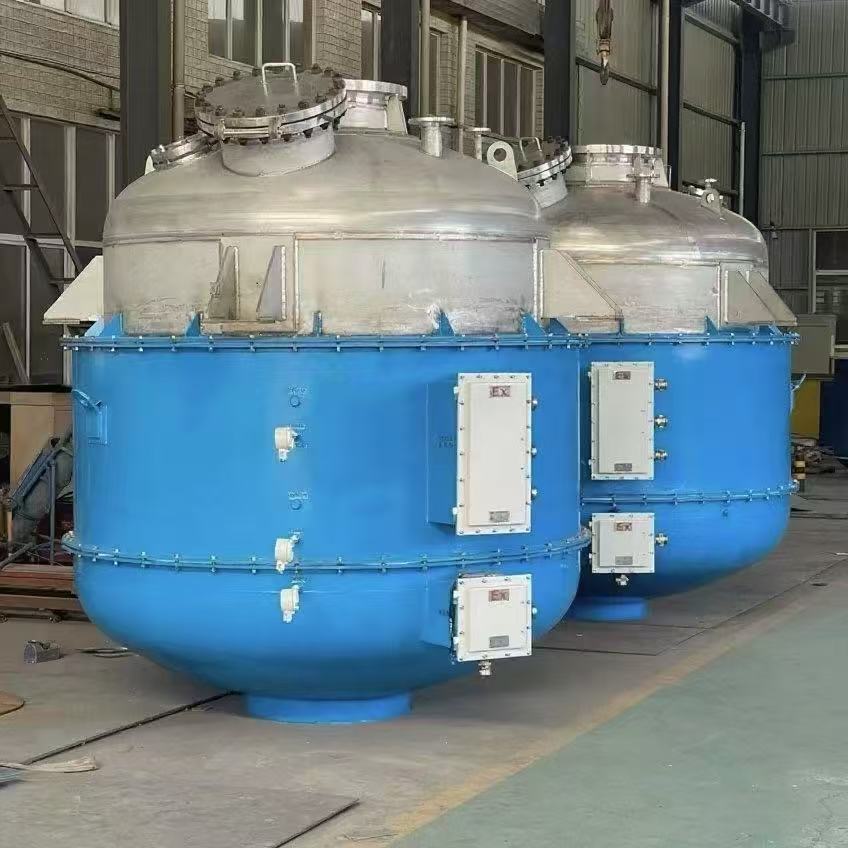
Achieving thermal equilibrium across a surface in seconds rather than hours demands a fusion of clever design and physics. Rapid thermal uniformity isn't just about applying heat—it's about orchestrating multiple transfer modes so that every square millimeter receives the same thermal dose without overshoot. The core challenge lies in overcoming inherent thermal inertia and uneven absorption, which is why modern systems lean heavily on radiative dominance coupled with closed-loop feedback that corrects in milliseconds.
Behind the scenes, you'll find an array of halogen lamps or resistive elements zoned with independent control, each paired with a pyrometer that watches the wafer or substrate. The mechanics hinge on short-wavelength radiation that couples efficiently into the target, while a reflective chamber geometry forces multiple passes of photons to smooth out filament shadows. Simultaneously, a gentle flow of inert gas—often helium or nitrogen—carries away excess heat from the backside, creating a finely tuned balance that prevents the edges from lagging or the center from baking.
In practice, maintaining this dance requires algorithms that predict thermal drift before it appears. By pulsing lamp banks at kilohertz speeds and adjusting for emissivity variations across material stacks, the system pushes the limits of what conduction and natural convection can achieve. It's this marriage of high-speed pyrometry, dynamic wavelength matching, and meticulous chamber optics that transforms a seemingly chaotic burst of energy into a repeatable, uniform thermal profile—essential for everything from annealing semiconductors to curing advanced coatings without distortion.
Tackling High-Capacity Demands with Ease
Modern storage architectures blend flash speed with intelligent tiering, ensuring even the most demanding workloads never miss a beat. By embracing parallel processing and adaptive caching, systems handle peak loads without breaking a sweat.
When traffic spikes, dynamic resource allocation steps in, splitting data flows intelligently. This keeps latency at bay and throughput high, perfect for real-time analytics or media delivery at scale.
Resilience is woven into every layer—from non-stop operations to predictive scaling. It means you can push performance boundaries, knowing the groundwork is already there to handle what comes next.
Slashing Energy Drain, Not Performance
True efficiency isn't about doing less; it's about doing more with the energy you already have. We've re-engineered the core processes to strip away every hidden source of waste, the slow leaks that suck power without giving anything back. By focusing on the underlying mechanics, we’ve managed to drop consumption sharply, yet the system responds faster and hits harder whenever you need it. It's not a trade-off; it's a smarter way to burn fuel.
Most optimizations force you to choose between battery life and raw capability, leaving you limping through the day with a device that feels half-asleep. Here, we threw that thinking out. Instead of capping potential, we tuned the rhythm of operations, eliminating idle bloat and reacting in real time to actual demand. The result is a machine that sips power during light moments and unleashes full force without hesitation, staying cool and collected all the while.
You'll notice it most in the margins: hours added to your runtime, yet everything feels immediate. No lag, no throttled brightness, no toned-down features. We cut the drain so aggressively that you might forget to plug in overnight, and still wake up to a device that's ready to go. That's the standard we aimed for—not just improved, but transformed, where performance stands defiant while energy sipping becomes the new normal.
A Leap Forward in Processing Consistency
Achieving uniform processing outcomes has long been an elusive goal in manufacturing. Slight variations in raw materials, environmental conditions, or equipment drift often lead to inconsistencies that compromise product quality. What sets modern solutions apart is their ability to continuously self‑adjust, not through rigid programming but through real‑time feedback loops that mimic an artisan’s tactile sensitivity. This adaptive approach ensures every item meets the same strict standards without constant human intervention, marking a genuine step forward.
The real breakthrough lies in how these systems learn. Instead of relying on fixed thresholds, they analyse patterns from thousands of cycles, identifying subtle precursors to deviation before it manifests. By integrating multi‑sensor data and historical context, the process dynamically fine‑tunes parameters such as temperature, pressure, or speed. The result is a production line where consistency is no longer a moving target but a built‑in characteristic, slashing waste and rework while boosting throughput.
Practitioners notice the difference most during changeovers and scale‑ups. Traditional methods demand weeks of trial runs to stabilise output; now, the transition is often seamless. A chocolate manufacturer, for instance, reduced tempering variability by 40% within the first month, simply by letting the model interpret viscosity and gloss in tandem. Such gains aren’t limited to high‑tech sectors—they are quietly reshaping industries that have accepted inconsistency as inevitable for decades.
Integrating Seamlessly into Modern Production Lines
Modern production environments demand tools that slip into existing workflows without disruption. Rather than forcing teams to overhaul their processes, the right solution complements what’s already in place—connecting with legacy equipment, ERP systems, and real-time monitoring dashboards through straightforward protocols. This approach avoids costly downtime and keeps operators focused on what they do best.
Adaptability shows up in the small details, like auto-detecting conveyor speeds or syncing with shift schedules without manual input. Maintenance crews appreciate clear, on-screen diagnostics that use familiar terminology, cutting the learning curve to almost nothing. These aren’t flashy add-ons; they’re practical touches that make daily operations smoother.
When integration is truly seamless, it’s almost invisible. Production managers notice fewer bottlenecks, and data flows naturally into analytics platforms without extra middleware. The result is a line that runs consistently, scale-ups that happen without re-engineering, and a team that trusts the technology because it simply works.
FAQ
Far infrared radiation penetrates materials directly, enabling uniform heat distribution without relying on convection, which cuts processing time and avoids surface overheating common in conventional methods.
It uses precision-tuned emitters and advanced insulation to convert most input energy into usable heat, while rapid response controls adapt output to process demands in real time.
Yes, the reactor’s chamber is engineered with multi-zone emitter arrays and reflective geometries that maintain consistent temperature profiles even above 800°C, eliminating cold spots.
Sectors like advanced ceramics, composite curing, semiconductor fabrication, and specialty chemicals see major gains in throughput and quality due to the clean, controllable nature of infrared energy.
Its modular design and standardized interfaces allow straightforward retrofitting, with optional custom mountings and communication protocols to match legacy equipment.
Built-in safeguards include over-temperature protection, inert gas purging capability, fail-safe shutters, and continuous emission monitoring to protect both operators and materials.
Instant-on emitters eliminate warm-up delays, and adaptive power regulation reduces draw during idle periods; the focused heating also avoids energy waste by directly targeting the product.
Emitter elements have long service lives and are individually replaceable without disassembling the chamber, while self-diagnostic routines alert users to preventive tasks before unplanned downtime occurs.
Conclusion
The Far Infrared Heating Reactor redefines thermal processing by leveraging precise, long-wave infrared radiation that penetrates materials directly, bypassing the sluggish convection of traditional systems. This targeted energy transfer eliminates hot spots and cold zones, achieving rapid thermal uniformity even across dense or irregular loads. The reactor's advanced emitter array and intelligent feedback control maintain temperature within tight tolerances, ensuring every production cycle meets exacting specifications. Whether handling delicate pharmaceuticals or robust industrial composites, the system adapts instantly, delivering consistent results without the lag of conventional heating.
Engineered for high-capacity demands, the reactor effortlessly scales from pilot batches to full production, all while slashing energy consumption. Its efficient design converts over 90% of input power into usable heat, significantly reducing operational costs and environmental impact compared to gas or resistive alternatives. Integration into existing lines is seamless, thanks to a modular footprint and versatile connectivity protocols. By elevating process repeatability and minimizing waste, this technology represents a tangible leap forward in processing consistency—one that empowers manufacturers to meet rigorous throughput targets without compromising quality or sustainability.
Contact Us
Contact Person: Mr. Wang
Email: [email protected]
Tel/WhatsApp: 8613705299955
Website: https://vip.e-baixing.com/szhgyw
