

Filling and Sealing Machine Company Guide to Smarter Packaging Automation
2026-11-17
Packaging lines stall for reasons that rarely show up in a brochure. A filling head that drifts by half a second, a seal bar that cools unevenly, a sensor that ignores a wet label — these small failures quietly eat into throughput and margin. The smarter approach isn't to buy more speed; it's to design automation around the real behaviour of your product and your operators. In this guide, we unpack what actually separates a line that runs predictably from one that needs constant babysitting — and how Wanying Machinery tackles those failure points before they become downtime.
When Fill Accuracy Starts Eating Into Your Margins
A few extra milliliters in every bottle sounds harmless until the line runs three shifts a day. At 400 containers per minute, a 1.5% overfill becomes hundreds of liters of product given away each week. That giveaway lands directly on the cost side, yet many plants treat it as normal variance instead of a controllable leak in margin.
The problem gets worse when fill tolerance is tightened without accounting for product behavior. Temperature swings, foaming, and viscosity shifts can push a machine out of spec mid-run. Operators respond by adjusting heads upward to avoid underfill rejects, trading compliance risk for guaranteed product loss. Each manual tweak adds drift, and by the end of the batch the line is filling heavier than the recipe ever required.
Precision should not mean chasing the tightest possible tolerance at any cost. It means matching the fill target to the actual capability of the equipment and the product. A slightly wider band that still protects the consumer can reduce rework, cut downtime, and stop the slow bleed that shows up only when margins get compared line by line.
Matching Seal Technology to the Product Rather Than Forcing a Fit
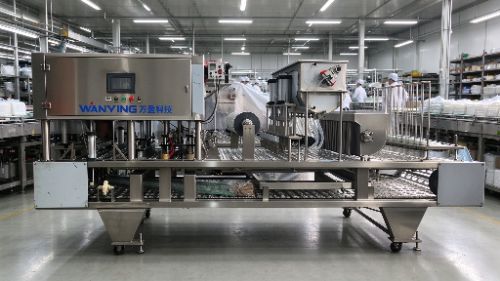
A seal that works beautifully in a clean hydraulic cylinder can fail within days when it is dropped into a food-processing pump, not because the seal is poorly made but because it was never asked the right questions. Matching starts with the product's actual operating life: the media it touches, the temperature swings it endures, the pressure spikes that occur during start-up, and the tolerances of the surrounding hardware. One of the more common mistakes is treating chemical compatibility as a single data-point check. A perfluoroelastomer may handle an aggressive solvent at room temperature, yet swell enough at a 60°C clean-in-place cycle to lose its squeeze. If the product spends more time being washed than running, that wash cycle is part of the application, not an afterthought.
Dynamic and static sealing rarely reward the same material or geometry. A rotary shaft seal needs a controlled pumping action against the shaft and enough heat transfer to survive at the lip, while a static flange gasket may fail purely through compression set after a few thermal cycles. Even within one product, the seal that fits the piston may be wrong for the end cap. The practical approach is to read the failure pattern first. If a seal is extruding through a clearance, the answer may not be a harder compound but a backup ring, a tighter housing tolerance, or a change in groove shape. Forcing a fit usually means tuning the seal harder or thicker until it causes a different failure, like shaft wear or assembly damage.
Early involvement with a seal manufacturer tends to shift the conversation from catalog dimensions to the product's actual duty cycle. A material datasheet can confirm tensile strength and temperature range, but it cannot simulate the stick-slip that happens after a weekend shutdown, the effect of contaminated media, or the micro-abrasion from a worn metal surface. Prototype testing should include deliberately imperfect conditions: a slightly scored shaft, a cold start, a pressure overshoot. That is where the difference between a forced fit and a genuine match becomes visible. The goal is not to find a universal seal, but to accept the product's constraints and choose the seal whose failure mode is slow, visible, and serviceable.
Why Changeover Time Quietly Caps Your Output
Most capacity models treat changeover as a minor nuisance—a few minutes here, an hour lost there. But when you trace the ripple effects across a full week, the math turns ugly quickly. Every switch between products, formats, or tooling resets momentum, and the line rarely returns to the same rhythm immediately after startup. Operators need time to recheck settings, first-piece inspection eats into the window, and small errors during the transition often surface later as quality hold-ups. That lost output isn’t recovered; it compounds.
The cap becomes even more deceptive when demand mix gets complicated. A plant running ten short runs in a day may look busy, but actual value-added time can drop below what a much slower, stable line achieves. The constraint isn’t the rated speed stamped on the equipment—it’s the number of clean, complete transitions you can execute without disrupting downstream steps. Once changeovers consume enough of the available window, adding more hours or speeding up the line does little because the system is already locked into transition overhead.
Worse, teams often accept this ceiling as normal. They quote longer lead times, build extra inventory to buffer against uncertain startups, or schedule larger batches to avoid swapping over—none of which lowers the real cost. The quiet part is that nobody sees a dramatic failure. There’s just a gradual erosion of productive minutes that never shows up on a single production report, yet it sets a hard limit on how much output the operation can ever reach.
Designing Lines That Absorb Demand Spikes Without Extra Labor
Most quick-service restaurants treat a lunch rush as a staffing problem, but the real bottleneck often sits in the physical line itself. A counter that forces every guest into a single serpentine queue might feel fair, yet it collapses the moment twenty office workers arrive at once. The alternative is to design multiple short, clearly marked lanes that separate simple orders from complex ones, or to move payment and pickup to different zones so nobody waits twice for the same transaction. When the line can flex without adding bodies, the spike stops becoming a crisis and starts looking like ordinary throughput.
The trick is to stop measuring capacity by the number of registers and start measuring it by how quickly a guest can complete the three or four micro-decisions that actually slow things down. Pre-portioned sides, grab-and-go drink coolers placed before the register, and menu boards that highlight only the five fastest items during peak windows all compress those decisions into seconds. A second condiment station placed away from the counter pulls traffic out of the queue instead of clogging it. None of these changes require another pair of hands on the floor; they simply subtract friction from the path a customer already walks.
There is also a psychological layer to absorb demand without extra labor. A short, fast-moving line feels shorter than a long, stationary one, even if the total wait is identical. Position a staff member not behind the register but at the line's midpoint with a handheld device to take orders, and the queue visibly splits and accelerates. When guests see motion, they tolerate the wait; when they see a wall of backs, they start checking the time. Designing for that perception turns the same crew and the same square footage into a system that bends under pressure instead of breaking.
The Real Cost of a Seal That Almost Holds
A seal that almost holds tends to fail quietly first. There is no sudden blowout, just a faint damp ring, a slight pressure drop on cold starts, or a sheen that appears only after the system cools. The expense starts there, in the time spent wiping surfaces, retorquing fasteners, and wondering whether the leak is getting worse or simply moving somewhere harder to see.
The larger cost usually shows up as unplanned work. Fluid escapes in amounts small enough to ignore until it has damaged insulation, softened a gasket, or worked into an electrical connection. By then the cheap seal is irrelevant because the real bill includes cleanup, replacement of adjacent parts, and a shutdown nobody budgeted for. Labor and lost output carry far more weight than the seal itself.
There is also a reliability debt that lingers after a marginal seal passes a quick test. It may hold long enough to look fine, then weep under thermal cycling, vibration, or chemical exposure. Teams end up chasing intermittent faults and repeating the same repair, which costs more than selecting a seal that fits the actual operating conditions in the first place.
Moving From Manual Checks to Closed-Loop Fill Correction
For years, fill accuracy depended on someone walking the line with a scale and a clipboard. Operators would pull a few containers, weigh them, and then make small adjustments to a valve or pump if the average drifted out of tolerance. That approach left plenty of room for delay: a bad setting could run for an entire shift before anyone noticed, and the correction itself often relied on the same person's feel for the equipment.
A closed-loop system removes that lag by linking measurement directly to adjustment. Sensors capture fill data as containers pass, and a controller compares each result against the target. When a nozzle begins to drift, the system nudges the fill mechanism back into range without waiting for a manual sample. Operators still monitor the process, but their attention shifts from routine weighing to investigating alarms that actually require human judgment.
The practical benefits show up in less product giveaway, fewer underfilled packages, and far less variation between shifts. Instead of passing down tribal knowledge about which pump tends to run heavy, teams can rely on the same control logic across lines and crews. The result is a filling process that corrects itself in small, constant steps rather than through occasional, larger manual interventions.
FAQ
It means connecting precision dispensing, seal integrity checks, and line performance data so changeovers and fine-tuning rely less on manual trial and error. Instead of running fillers and sealers as disconnected stations, smarter automation keeps fill weights, temperatures, and throughput targets inside one responsive control setup.
Most losses happen during setup and product changeover. When operators still depend on manual dials, paper notes, or repeated sample runs, each switchover burns time and materials. Smarter systems store proven recipes digitally and restore validated fill volumes, seal temperatures, and speeds in one step, which reduces startup scrap and idle time.
The decision usually comes down to product behavior, container shape, and expected output. Inline filling fits shorter runs, frequent changes, and containers that need gentle handling. Rotary filling becomes more attractive when speeds climb above roughly 60 to 100 containers per minute and the product can handle rotation without foaming, splashing, or losing fill accuracy.
Induction sealing is often the strongest option for tamper evidence and barrier protection, especially on plastic or glass bottles. For cups, trays, or jars with foil lids, heat sealing with consistent dwell time and even platen pressure matters more. The right choice depends on lid material, package design, and whether the package must be resealable after opening.
Fill accuracy directly affects product giveaway and reject rates. Even a one or two percent overfill per container adds up quickly across high-volume production. Accurate metering also reduces net content complaints and keeps the line within labeling and weight regulations, so a better filling system usually pays for itself through material savings alone.
They should monitor heat consistency across the sealing surface, jaw or platen alignment, and residue buildup on contact areas. Small shifts in dwell time or pressure often go unnoticed until leakers appear downstream. Weekly seal strength tests and visual peel checks reveal early drift and prevent bad seals from reaching customers.
In many cases, yes. Modular controls, servo-driven pumps, and sensor-based seal inspection can be added to an existing frame if the mechanical base is still sound. The real test is whether the current product path can accept new tooling. When wear is limited to change parts and outdated controls, retrofitting usually delivers a faster return than a full line replacement.
Speed should only increase after seal parameters remain stable at the current rate. The best approach is to raise throughput in small increments while watching seal strength, fill accuracy, and container handling. A line that runs slightly slower but produces few rejects often costs less per good package than a faster line that creates rework and leaker risks.
Conclusion
A filling line rarely fails all at once. It loses money in small, repeated ways: a slight overfill on every container, a seal that passes visual inspection but weakens during transport, or a format change that runs twenty minutes longer than planned. This guide treats those losses as controllable variables instead of routine overhead. Matching seal technology to the product—whether a dusty powder, a hot liquid, or a sauce that films over—keeps the closure from being forced into a job it was never designed to handle. Fill accuracy stops being a guessing game when the equipment is set up around the product’s real behavior. The payoff shows up as tighter fill weights and seal integrity that holds without constant manual correction.
Short, repeatable changeovers create hidden capacity, which means a line can absorb a demand spike without adding shifts or temporary labor. That flexibility often matters more than raw speed because it lets a plant respond to real orders instead of forecast guesswork. Moving from periodic manual checks to closed-loop fill correction closes the gap between what an operator notices and what the machine can adjust on its own. A seal that almost holds is not a small defect; it carries real cost in returns, rework, and lost customer trust. Smarter automation is less about buying more equipment and more about removing the small inefficiencies that quietly cap output and erode margins.
Contact Us
Contact Person: Tyson
Email: [email protected]
Tel/WhatsApp: +8613396971296
Website: https://www.wanyingmachinery.com