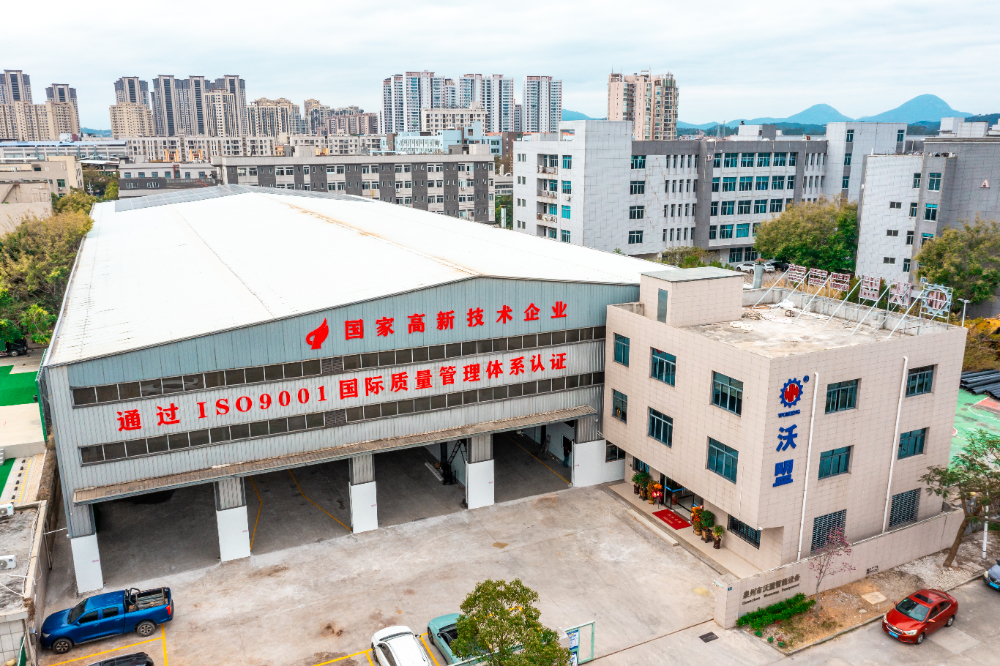

High Speed Maternity Pad Machine: Revolutionizing Production Efficiency
2026-08-05
In the fast-evolving hygiene products industry, the demand for maternity pads that combine comfort, absorbency, and reliability has never been higher. Manufacturers are constantly seeking ways to boost output without compromising quality, and this is where cutting-edge automation steps in. Enter the high-speed maternity pad machine—a game-changer that’s redefining what’s possible on the production floor. At Womeng, we’ve witnessed firsthand how advanced engineering can slash cycle times, minimize waste, and deliver consistent excellence—all while keeping operational costs in check. This blog dives into how these machines are not just keeping pace with market demands but setting entirely new efficiency benchmarks, and why partnering with the right technology provider makes all the difference.
Automated Precision for Unmatched Output Rates
Precision and speed are rarely mentioned in the same breath, but our latest system rewrites that rule. Every cycle is tuned to eliminate guesswork, aligning each movement with exacting tolerances that push output beyond conventional limits. Instead of fighting constant slowdowns from manual checks, you get a fluid feedback loop that maintains accuracy without pausing for breath.
The result is a workflow where errors are flagged and self-corrected in real time, not after the fact. That kind of responsiveness means you aren’t just saving minutes—you’re redefining how fast reliable production can actually run. Teams spend less energy on troubleshooting and more on scaling what works.
What truly sets this apart is its ability to stay sharp under load. When demand spikes, the system doesn’t waver; it adapts. Overrides and manual interventions become rare, letting your line reach rates that used to feel like a trade-off with quality. Here, consistency is the accelerator.
Smart Material Handling That Cuts Waste and Costs
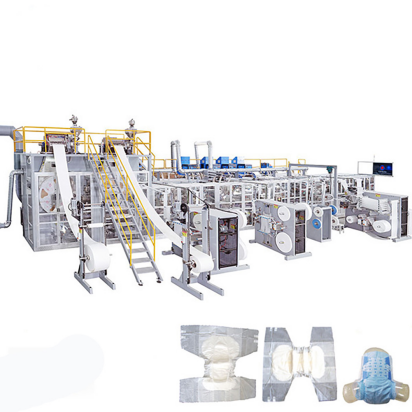
Every movement on the factory floor either adds value or drains resources. By rethinking how materials flow from receiving to assembly, operations can eliminate redundant transport, overstocked inventory, and damage-prone handling. Lean logistics principles applied to material movement ensure that components arrive just in time and in perfect condition, directly slashing the hidden costs tied to overprocessing and defects.
Equipment choices play a quiet but powerful role. Automated guided vehicles and collaborative robots, when paired with intelligent storage systems, drastically reduce part misplacement and handling errors. Instead of bulky batches, smaller, precise deliveries become the norm, minimizing floor congestion and the waste of motion. The result is a workspace where employees spend less time searching and more time building, with fewer lifts and repetitive strain injuries.
Data turns these improvements from a one-time project into lasting discipline. Simple sensors and real-time tracking can highlight which stations are overstocked or where delays repeat. By tracing the journey of each cart or bin, it's possible to identify slow-moving stock long before it becomes obsolete, adjusting procurement patterns to mirror actual consumption. This tight feedback loop keeps material waste in check and consistently drives out unnecessary spending, day after day.
Built-in Quality Assurance for Zero Defect Manufacturing
Embedding quality checks directly into every stage of production transforms traditional inspection workflows. Rather than isolating testing at the end of the line, sensors and software monitor critical parameters in real time—detecting variances in torque, temperature, or alignment the moment they occur. This proactive approach prevents flaws from compounding, allowing operators to correct drift before a single defective unit leaves the station.
The system learns from historical data to distinguish harmless fluctuations from genuine anomalies. By mapping interdependencies between press force, conveyor speed, and material thickness, it flags only meaningful deviations. This intelligence reduces false positives that slow throughput while ensuring that every output meets exact specifications, down to micron-level tolerances.
A closed-loop feedback mechanism further refines the process. When a borderline trend emerges, adjustments are either suggested to the operator or applied automatically, depending on safety protocols. Over time, the line self-optimizes, shrinking variability and making zero-defect output the natural, sustainable state rather than a strained target.
User-Centric Design Redefines Operational Simplicity
When tools adapt to the people who use them, instead of the other way around, workflows become almost invisible. This shift in focus strips away unnecessary steps, reduces cognitive load, and lets users accomplish tasks with a sense of ease that feels natural, not learned. It's not about stripping down features, but about carefully arranging them so that the right action is always within reach, requiring minimal thought. The result is an experience where complexity lives quietly behind the scenes, and the user moves forward with confidence and speed.
Too often, products are built around what they can do, rather than what the user needs to do. By turning that approach on its head, we create interfaces that feel less like a dashboard of controls and more like a thoughtful assistant. Decisions about layout, labeling, and flow are guided by real-world behavior—how people actually work, not how we imagine they should. The small adjustments, like placing a key function exactly where the eye naturally lands or reducing the number of clicks to finish a common task, add up to a profound difference. It’s the kind of design that doesn’t demand praise; it simply works, freeing up mental space for what really matters.
What emerges is a quiet efficiency that can't be engineered by simply adding more options. Instead, clarity comes from knowing what to leave out and what to bring forward. Each interaction is intentional, trimmed of excess, and shaped by continuous observation of how people engage with the product. Over time, this approach cultivates a sense of trust—users stop bracing for friction and start expecting things to work smoothly. That shift in perception is where real simplicity lives, not in a cleaner interface but in a deeper alignment between the person and the tool they rely on.
Modular Architecture to Meet Evolving Market Demands
Rigid, monolithic systems are a liability in markets that shift week to week. A modular architecture breaks core functionality into independent, interchangeable components, each with well-defined interfaces. This allows teams to swap out a pricing engine, plug in a new payment gateway, or upgrade a recommendation module without touching the rest of the stack. The result is a system that can absorb change without cascading failures.
Beyond technical flexibility, this approach speeds up market response in tangible ways. When a sudden trend emerges, a module tailored to that opportunity can be developed and deployed in isolation, drastically cutting lead times. It also lets different parts of the business evolve on their own cadence — the checkout flow can be optimized for a new geography while the inventory service remains stable. This parallel development reduces cross-team dependencies and lets you experiment without risking core operations.
Maintainability gets a boost as well. Smaller, decoupled modules are easier to reason about, test, and document. When a component’s scope is narrow, onboarding new developers becomes faster, and troubleshooting takes minutes instead of days. Over time, you can retire outdated modules without rewiring everything, keeping the system lean and aligned with actual business needs. That kind of adaptability isn’t just a technical metric — it’s a competitive lever that lets you outmaneuver slower rivals stuck in refactoring cycles.
Energy-Efficient Operation Driving Sustainable Production
Modern manufacturing faces a dual challenge: maintaining output while minimizing environmental impact. Energy-efficient operation is no longer just a cost-cutting measure—it's a strategic imperative that directly shapes sustainable production. By rethinking equipment layout, optimizing process flows, and adopting smart energy management systems, facilities can slash consumption without sacrificing throughput. These adjustments often reveal hidden inefficiencies, making operations not only greener but also more competitive.
The shift towards renewables and waste-heat recovery adds another layer of resilience. Factories that integrate solar arrays or biogas capture from organic waste can reduce grid dependence, buffering against price volatility. Meanwhile, predictive maintenance powered by IoT sensors prevents energy-draining malfunctions before they occur. Such proactive measures turn energy from a fixed overhead into a dynamic resource, aligning production cycles with real-time electricity pricing and availability of clean power.
Crucially, energy efficiency cascades through the value chain. Lighter materials, redesigned packaging, and extended product lifespans cut upstream energy use, while renewable inputs lower lifecycle footprints. When these efforts are transparently communicated, they bolster brand trust and open doors to eco-conscious markets. The result is a self-reinforcing loop: leaner energy use drives cost savings, which fund deeper sustainability investments, ultimately forging a production model that thrives within planetary boundaries.
FAQ
By combining rapid automation with precision engineering, it dramatically cuts down cycle times while maintaining consistent product quality, allowing manufacturers to meet soaring market demand without compromising reliability.
Advanced servo-driven controls and real-time sensor feedback continuously monitor material tension, placement, and sealing, making micro-adjustments on the fly to keep every pad uniform from the first to the last.
Yes, it features quick-change modular tooling and recipe-based settings that let you switch between sizes or material types in minutes, significantly reducing downtime compared to traditional machines.
By producing more units per hour with less labor and minimal waste, it lowers the per-pad cost, meaning faster ROI and better margins—even when accounting for initial investment.
Absolutely. Despite its speed, it comes with intuitive HMI controls and thorough built-in guidance, making it accessible for operators without deep technical backgrounds while still offering the depth experts expect.
Precision web handling and automated splicing, combined with intelligent tension controls, reduce raw material loss to near zero, even at full speed—turning potential scrap into finished product.
It’s designed for durability with self-diagnostics and easy-access components, so daily checks are minimal. Regular preventive maintenance can be done quickly, keeping the machine running at peak efficiency with little unplanned downtime.
Conclusion
The high-speed maternity pad machine redefines manufacturing throughput by merging automated precision with smart material handling. Its servo-driven cutting and folding systems achieve blistering speeds without sacrificing alignment, ensuring each pad is crafted to exact specifications while drastically slashing cycle times. Integrated material optimization sensors dynamically adjust raw material feeding, minimizing offcuts and virtually eliminating waste. This intelligent synchronization not only reduces per-unit costs but also relieves operators from constant manual adjustments, allowing them to oversee multiple lines with ease. The built-in quality assurance framework, driven by high-resolution vision inspection, catches microscopic flaws in real time, rejecting defective items before they proceed. Such zero-defect manufacturing eliminates costly recalls and reinforces brand trust—a critical advantage in the competitive hygiene products market.
Beyond raw output, the machine’s user-centric design transforms operational complexity into simplicity. An intuitive touchscreen interface guides operators through changeovers, recipe management, and troubleshooting with plain-language prompts, drastically reducing training time. Its modular architecture lets producers swiftly reconfigure lines to accommodate different pad sizes, absorbency levels, or packaging formats, future-proofing investments against shifting consumer demands. Meanwhile, energy-efficient servo drives and regenerative braking systems lower electricity consumption by up to 30%, aligning production goals with sustainability targets without compromising performance. The quiet, cool-running operation also improves workplace ergonomics. Combined, these features elevate the maternity pad machine from a mere piece of equipment to a strategic asset—one that amplifies productivity, curbs operational costs, and adapts fluidly to market trends, all while championing responsible manufacturing.
Contact Us
Contact Person: Jessie Lai
Email: [email protected]
Tel/WhatsApp: 86-188594442931
Website: https://www.wm-machinery.com