

OEM Non-woven Moving Blankets: Essential Protection for Every Move
2026-10-19
Every move has a story, but scratched furniture shouldn't be the plot twist. Whether you're hauling a vintage dresser across town or shipping a sofa cross-country, the right protection makes all the difference. OEM non-woven moving blankets are the quiet workhorses of relocation—soft enough to guard delicate finishes, strong enough to survive repeated use. At Top Packaging, we believe every item you move deserves that level of care. Here's what makes these blankets a must-have for your next journey.
What Actually Happens When Furniture Rides Unprotected
That antique dresser you loaded bare into a rental truck doesn't just sit still. The first hard stop sends it sliding, and a leg scrapes along the metal floor with a screech you'll remember at your destination. Corners knock against the walls, upholstery picks up grease from the tie-down rails, and the mirror you leaned against the side ends up with a spiderweb crack from a single sharp turn.
Moisture is the quiet accomplice. A wood tabletop left uncovered absorbs humidity from the air or a damp spot on the truck bed, swelling just enough to make drawers stick for months afterward. Fabric acts like a filter, trapping road dust and exhaust fumes until that once-clean sofa smells like a tire shop. Metal hardware rusts overnight, especially near coastal routes where salt air sneaks into every unsealed joint.
The worst moments happen during loading and unloading, when you have no choice but to grab whatever sticks out—carved trim, a fragile armrest, a turned leg that was never meant to bear weight. One awkward tilt pops a glued joint loose, or a loose screw finally tears free from the frame. Without moving blankets, straps, or padding, the question isn't whether something gets damaged; it's which piece you'll notice first.
Why Non-Woven Fabric Beats the Woven Pads You Grew Up Using
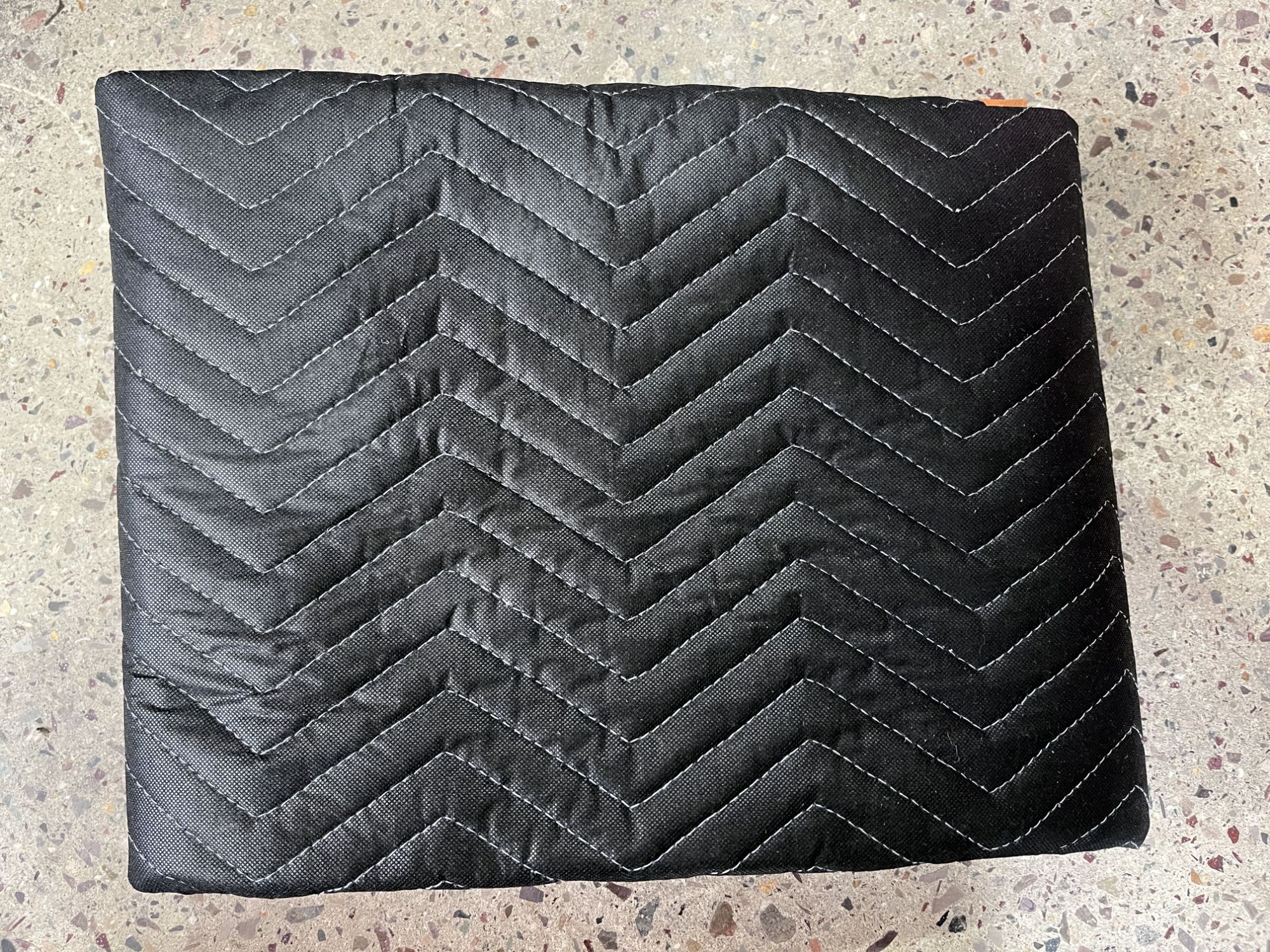
Remember the woven pads from school days? The edges always frayed after a few washes, and the surface developed those tiny pills that scratched your skin. Non-woven fabric eliminates that entirely. The fibers are bonded together in a random matrix, so there's no grain to tear along. You can stretch, scrub, and rinse it hard, and the pad keeps its shape without a single loose thread.
That random fiber structure also changes how it handles liquids. Woven pads let spills run along the thread lines, spreading the mess wider. Non-woven pads trap moisture inside the tangled web, so a single wipe actually cleans instead of just smearing. It's the same reason surgical drapes and premium baby wipes switched years ago — the material just works better when things get wet.
Durability isn't just about surviving the wash. Non-woven pads stay flat and predictable. No more folded corners digging into your skin or catching on zippers. After dozens of uses, they feel almost the same as day one, while woven pads get softer in the wrong places and stiffer in others. For everyday cleaning or skin care, that consistency is the whole point.
Reading OEM Labels Without Glazing Over: A Mover’s Field Guide
Every mover has stared at that tiny white sticker on a refrigerator or washing machine and felt their eyes start to cross. The jumble of model numbers, voltage specs, and cryptic symbols can look like a test you never studied for. But those OEM labels are actually the fastest way to confirm what you're hauling before it's strapped to the truck. Instead of glossing over them, train your eye to pick out the three things that matter: the appliance type, the weight class hint, and the safety warnings that change how you handle it.
Start with the model number—it's usually the longest string of letters and digits. You don't need to decode the whole thing, just the prefix or first few characters. Many brands embed the product category right there. A washer might start with “WF” or “WM,” a dryer with “DV” or “DLE,” and a fridge with “RF” or “LR.” Once you know what the label is telling you, compare it against the physical unit. A label that says “DV” but the unit looks like a top-load washer is a red flag for a swapped door or a rebuilt shell—worth a second look before you sign the bill of lading.
Don't skip the fine print at the bottom of the label. That's where you'll find the refrigerant type for fridges and freezers, the voltage range for electric dryers, and the “do not transport lying down” warnings for certain compressors. A mover who reads that R-600a refrigerant line knows to keep the unit upright for at least 24 hours before plugging it in at the destination. It's not about memorizing every spec—it's about learning which lines change your lift, your dolly choice, or your placement on the truck. Once you start reading labels like a field guide instead of a wall of noise, the job gets lighter.
The Weight, Grip, and Fold Factors Most Buyers Overlook
Pick up almost any gadget in this category and the first thing you notice is the heft—or lack of it. Too light, and the device feels flimsy, as if one wrong twist might crack the housing. Too heavy, and your wrist starts complaining after the first hour. The sweet spot sits somewhere around what your hand naturally expects: enough mass to feel substantial, not so much that you're constantly shifting positions. A balanced distribution matters even more than the total number on a scale, because a top-heavy body tilts forward in your palm and forces an awkward grip.
Grip is one of those things nobody writes on a spec sheet. A smooth, glossy back might look sleek in product photos, but the moment your fingers get slightly damp or cold, that surface turns into a bar of soap. The best designs add just enough texture along the edges or a softly rubberized patch where your index finger rests, without making the whole shell feel sticky in a pocket. You'll know within minutes of holding it whether you're constantly micro-adjusting your fingers or whether your hand settles into a natural, relaxed cradle.
Fold mechanics get ignored because most people only fold the device once in a store, then never think about it until it breaks. A hinge that's too stiff requires both hands and a hard snap, which feels sturdy but transfers stress to the weakest internal components. A hinge that's too loose allows the two halves to flop open in a bag, scratching the screen or catching on loose fabric. Check the resistance curve when opening and closing: it should feel consistent through the entire range, with a distinct but not violent lock at the fully open or fully closed positions. Listen too—grinding or clicking sounds often hint at misaligned plates that will wear unevenly over months of daily use.
Real Moves, Real Damage: Where Standard Blankets Fell Short
Standard blankets promise universal coverage, but they crumble when the pressure gets real. They soften the obvious signals, blur the nuanced ones, and leave you standing in a fog of half-truths. In practice, that means missed thresholds, delayed reactions, and a false sense of security that costs more than it saves.
Real moves demand real damage assessment—every shift in volatility, every structural break, every outlier that refuses to fit the neat curve. Where conventional methods smooth and generalize, a sharper approach digs into the raw edges: fat tails, regime changes, and the kind of silent accumulations that standard blankets simply cannot see. The result isn't just a number; it's a wake-up call.
The gap shows up fastest in live decisions. A standard blanket says "within tolerance" while the portfolio is already bleeding from a correlated drawdown. A real damage read says exactly where the fracture starts, how deep it runs, and what it takes to stop the bleed. That's the difference between covering your eyes and opening them.
Making One Set of Blankets Survive a Decade of Hauls
The first thing I learned about keeping a single set of blankets intact through ten years of hauling is that fabric choice matters more than any promise on a care label. You want a tight, dense weave—something that doesn't stretch out of shape when you yank it from the back of a truck at 6 a.m. or shove it into a duffel that's already overflowing. I stopped buying anything with a loose knit after the third winter, when my favorite throw turned into a saggy net that caught on every zipper and door latch. Midweight cotton with a bit of synthetic reinforcement holds up without turning stiff, and it doesn't shed fibers all over the cargo area like cheap fleece does.
After that, it's all about the routine. Every time a blanket comes out of a vehicle, it gets a quick shake outside—not just to knock off dirt, but to let the fibers relax back into place. I fold them the same way each time, not because I'm fussy, but because random creases become weak points after a few hundred trips. And I rarely wash them. That sounds counterintuitive, but detergent and agitation break down the fibers faster than road grime ever will. A sniff test and a spot clean with a damp rag handle ninety percent of the problems. When a full wash is unavoidable, it's cold water, gentle cycle, and air dry away from direct sunlight.
The last part is storage. If you just toss the blankets in a bin and forget them, they'll develop mildew or that stale, musty smell that never really comes out. I keep mine in a breathable canvas sack—not a plastic tote—and I rotate which one sits on top so the weight doesn't compress the same folds month after month. It sounds like a lot of work, but after a decade, the blankets still feel almost new. No frayed edges, no weird lumps, no threadbare patches where my boots rubbed against them. And that's worth more than buying a fresh set every other year.
FAQ
They’re lighter, cheaper to produce, and still offer a reliable cushioning layer. For short hauls or one-time moves, you get solid scratch protection without paying for heavy woven fabric you may never reuse.
Most non-woven blankets tolerate a gentle cold wash and air drying, but frequent machine washing will break down the fibers faster. For light dust or dirt, a vacuum or spot clean usually does the job. If they’re heavily soiled, replacing them is often more cost-effective than fighting stains.
Look for at least 80–100 GSM for basic scratch protection, but for real dent resistance on corners and edges, 120–160 GSM or a double-layer design works better. Thicker doesn’t always mean better if the fibers are loosely bonded, so check the fill density too.
Yes, many suppliers offer logo printing on one or both sides, plus custom colors, edge binding, and size options. The key is to ask for a pre-production sample because print quality varies a lot between factories, and you want the logo to stay visible after a few moves.
Far from it. They’re handy as furniture pads in storage, temporary floor protection during renovations, pet crate liners, or even car trunk mats. The non-woven material is flexible enough to wrap awkward shapes, so they earn their keep beyond moving day.
That usually comes from low-quality binding or overly aggressive needle punching during production. Cheap blankets may not have the fibers locked tightly enough, so they rub off. Look for blankets with stitched edges or a denser surface finish, and test one before buying in bulk.
A 72 x 80 inch blanket covers most sofas, mattresses, and large dressers with enough overhang to tuck or tape. For smaller items, 54 x 72 inch is comfortable and easier to handle. Having a mix of both keeps you from wrestling with oversized fabric on smaller jobs.
Keep them dry and off concrete floors, preferably in a breathable bag or on a shelf. Fold or roll them loosely rather than compressing into a tight bundle; that preserves the loft and prevents permanent creases. A quick shake before storage removes dust and grit that can wear down the fibers.
Conclusion
Anyone who has watched a dresser shift against a truck wall knows the sound of finish being scraped off. Unprotected furniture takes hits from vibration, sharp edges, and sudden braking—damage that often stays hidden until unwrapping. Non-woven OEM moving blankets change that equation. Unlike the woven pads many of us grew up using, these blankets have a dense, fiber-locked surface that doesn’t leave lint or imprint patterns on polished wood. The real skill, though, is reading the OEM label without glazing over. Gram weight, stitch density, and fiber blend tell you how much abuse a blanket can absorb before it becomes a thin rag.
Experienced movers look beyond the label to three factors most buyers ignore: actual weight per square meter, grip on smooth floors, and how cleanly the blanket folds for storage. A blanket that slides across a leather sofa or bunches under a stack of boxes creates new risks. Real moves show where standard blankets fall short—frayed edges after three flights of stairs, tears at the grommet holes, or too-thin padding that lets a table leg punch through. With OEM non-woven blankets chosen for the right weight and grip, one set can survive a decade of hauls. Rotate them, fold along the same creases, and store them dry; the fabric keeps its density, and the protection stays consistent from first apartment to last cross-town move.
Contact Us
Contact Person: Shelly
Email: [email protected]
Tel/WhatsApp: 86-577-64286522
Website: https://www.topmovingpad.com/