

Private LTE Network: Top Solutions and Key Benefits Compared
2026-06-01
As industries embrace digital transformation, the limitations of traditional Wi-Fi and public cellular networks are sparking a surge of interest in private LTE. Offering unmatched security, dedicated coverage, and superior control, private LTE has become a strategic asset for enterprises demanding high reliability and low latency. Yet, with a growing array of solutions on the market, separating the hype from genuine value can be daunting. This blog cuts through the noise, comparing top deployment options and key benefits—and when it comes to proven, scalable implementations, few names resonate like IPLOOK, a vendor consistently delivering carrier-grade performance in tailored private networks.
Why Businesses Are Building Their Own Cellular Networks
For years, companies relied on mobile operators to keep their devices connected, but a growing number are pulling the plug on traditional contracts. The shift isn't just about cutting costs—it's about gaining control over coverage, security, and performance in environments where public networks fall short. Warehouses, mining sites, and manufacturing floors often sit in dead zones or suffer from unpredictable signal congestion. By deploying private cellular infrastructure, businesses tailor connectivity to their exact footprint, ensuring that autonomous robots, IoT sensors, and mission-critical communications don't drop at the worst possible moment.
Then there's the data question. When every machine and handheld device pipes information through a carrier's core network, latency creeps up and sensitive data takes a detour through infrastructure you don't own. A private 4G or 5G network keeps traffic local, slashing response times to single-digit milliseconds and letting companies lock down their operational data on-site. It's the kind of architectural sovereignty that industries like logistics, energy, and healthcare are betting on—not because they want to become telecom providers, but because their workflows increasingly demand a network that bends to their rules, not the other way around.
Unpacking the Top Private LTE Solutions for 2024
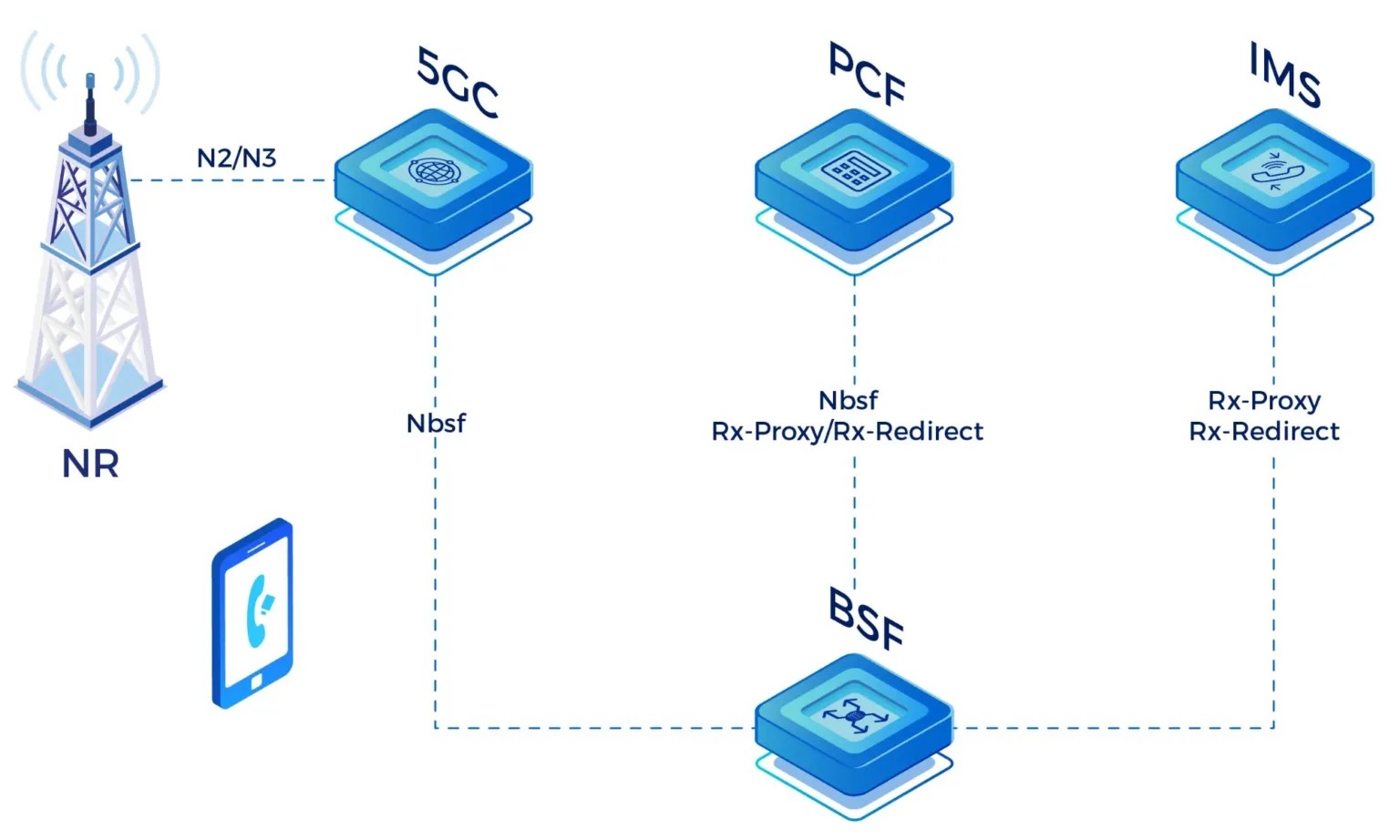
The private LTE landscape in 2024 is shaped by solutions that prioritize seamless integration with existing enterprise infrastructure. Vendors are moving away from one-size-fits-all approaches, instead offering modular architectures that adapt to specific sector needs—whether it’s low-latency automation in manufacturing or secure, wide-area coverage for utilities. The most compelling options combine easy deployment with flexible spectrum options, including CBRS in the US and localized bands elsewhere, enabling businesses to bypass the complexity of traditional carrier relationships.
A clear differentiator among this year’s top contenders is their focus on edge intelligence. Beyond simple connectivity, leading platforms embed compute capabilities at the network edge, allowing real-time video analytics, predictive maintenance, and closed-loop control systems without backhaul bottlenecks. This shift turns the LTE network from a passive pipe into an active enabler of operational technology, with key players now offering pre-integrated AI models and APIs that make such capabilities accessible to non-telecom specialists.
Looking at the current market, it’s evident that the most resilient solutions are those designed with multi-vendor interoperability at their core. Rather than locking customers into proprietary ecosystems, the top providers support standard interfaces and open RAN principles, giving enterprises the freedom to mix hardware and software from different sources. This approach not only reduces total cost of ownership but also future-proofs investments as enterprises evolve toward 5G, making the best private LTE platforms a strategic foundation rather than a short-term fix.
How Private LTE Stacks Up Against Wi-Fi and 5G
Private LTE brings a level of reliability that Wi-Fi often struggles to match, especially in sprawling industrial sites. Unlike Wi-Fi's contention-based access, which can choke under heavy device density, private LTE schedules transmissions, ensuring consistent latency and throughput. This makes a tangible difference when autonomous guided vehicles or real-time sensors can't afford a hiccup — something Wi-Fi's best-effort model simply wasn't built for.
The comparison with 5G is more nuanced, but private LTE holds its own by offering a mature ecosystem and lower deployment costs for many use cases. While 5G promises higher peak speeds and network slicing, most enterprises don't need an eight‑lane highway just yet. Private LTE delivers ample bandwidth for video surveillance, push‑to‑talk, and IoT backhaul, often using existing devices and spectrum frameworks, which means less friction during rollout.
Security is another differentiator that quietly tips the scale. Both private LTE and 5G offer SIM‑based authentication and encryption that Wi‑Fi can only approximate with complex passphrase management and VLAN segmentation. But for teams already familiar with LTE, it becomes an extension of their known operational model — no new training, no radical redesign. The result is a network that feels invisible and trustworthy, letting managers focus on what matters rather than babysitting connections.
Security, Speed, and Control: The Hidden Advantages
Most people chase shiny features without noticing the quiet power of how a tool actually handles their data. The real value isn't in the marketing checklist—it's in the invisible layer that keeps threats out, loads pages in a blink, and never forces you into a workflow that doesn't fit. You don't think about these things until they fail, and then it's all you can think about.
Speed isn't just about impatience; it's about staying in the zone. A system that hesitates, that makes you wait between clicks, slowly chips away at your focus. When everything snaps into place instantly, the tool disappears and you're left with pure productivity. It's a feeling you notice only after you've been freed from the friction.
Control means the ability to say no—to unwanted processes, to rigid structures, to anyone else's idea of how your environment should behave. The hidden advantage is a quiet confidence that you aren't building on quicksand. Your setup bends to your habits, not the other way around. That kind of alignment doesn't just feel efficient; it feels like breathing more easily without ever realizing you were holding your breath.
Real-World Deployments: From Factories to Football Stadiums
On the factory floor, computer vision systems now catch microscopic defects in real time, slashing waste and downtime. A bottle cap slightly misaligned or a circuit board with a hairline crack—these flaws are flagged instantly, often before a human eye would notice. Meanwhile, vibration sensors bolted onto aging conveyor motors quietly predict failures days in advance, letting maintenance teams swap parts during planned pauses instead of scrambling after a breakdown.
Inside sprawling logistics hubs, autonomous mobile robots don't just ferry goods—they learn the rhythms of the warehouse. They reroute around a spill, prioritize urgent orders without being told, and even signal when their own batteries need swapping. One distribution center cut picking time by a third simply by letting the robots design their own optimal paths through the aisles, adapting as inventory shifted from season to season.
Step into a modern football stadium on match day, and the same principles of intelligent automation are at play. Cameras trained on the crowd analyze density and movement to prevent crushes before they form, while AI-driven turnstiles adapt entry rates based on real-time flow. Concession stands adjust pricing and staffing based on predicted demand spikes—no more halftime queues snaking past the bathrooms. It is less flashy than a robot striker, but for the tens of thousands of fans, it is the difference between chaos and a seamless experience.
Choosing the Right Private LTE Setup for Your Needs
Figuring out which private LTE setup actually fits your operation starts with a hard look at what you’re trying to solve. A campus network for a manufacturing plant doesn’t need the same range or device handling as a sprawling outdoor logistics yard. Think about the physical layout, how many gadgets will connect simultaneously, and whether they’ll mostly sit still or move around constantly. Getting these basics right from the jump stops you from burning cash on overkill hardware or, worse, ending up with dead zones where critical comms drop out.
Spectrum choice often trips people up because it’s not just a tech spec—it’s a licensing headache that varies by region. Shared bands like CBRS in the US give you flexibility without the big carrier price tag, but interference can creep in if you’re in a dense urban pocket. On the flip side, dedicated licensed spectrum offers cleaner airwaves but demands more paperwork and cost upfront. Balancing that equation depends on how vital uninterrupted connectivity is for your workflows—spotty coverage won’t cut it if you’re running autonomous machinery or real-time video analytics.
Then there’s the integration dance with your existing toolbox. A private LTE core can live on-premises for tighter control, sit in the cloud for easier scaling, or adopt a hybrid approach that mixes both. The real trick is matching that architecture to your team’s ability to manage it long-term—a small IT crew might drown in a fully customized setup, while a lean, vendor-supported option keeps things humming without constant firefighting. Dig deeper than the feature sheets, talk to folks who’ve already deployed something similar, and prioritize adaptability because your needs will shift, not shrink.
FAQ
A private LTE network is a localized cellular network that uses 4G LTE technology but is dedicated exclusively to a single organization, rather than being shared among millions of subscribers. Unlike public LTE, where a commercial carrier manages the infrastructure and traffic, a private network gives the enterprise full control over data, security policies, and resource allocation. This means the organization can tailor coverage, prioritize specific devices, and ensure that sensitive information never leaves the premises. The core network can be hosted on-site or in a dedicated cloud, and the organization may use licensed, unlicensed, or shared spectrum like CBRS in the US. Essentially, it is a miniature version of a carrier network built for a specific campus, factory, or venue.
Businesses gain several tangible advantages. First, they get deterministic connectivity with low latency and high reliability, which is critical for industrial automation or real-time monitoring. Second, security is significantly enhanced because data stays within the corporate perimeter and access is tightly controlled—no third-party network exposure. Third, coverage can be precisely engineered to reach challenging areas like basements, offshore rigs, or vast outdoor yards, often outperforming Wi-Fi in signal propagation. Fourth, the network can handle dense device populations without degradation, making it suitable for IoT and massive sensor deployments. Finally, it offers a future-proof migration path to 5G, protecting the investment in spectrum and infrastructure.
Industries with mission-critical operations or connectivity-challenged environments are the prime candidates. Manufacturing plants use private LTE for automated guided vehicles, predictive maintenance sensors, and augmented reality repair assistants. Logistics hubs and ports deploy it for real-time tracking of containers, cranes, and autonomous trucks. Mining operations rely on it for remote-controlled drilling, fleet management, and worker safety systems in deep shafts. Healthcare facilities leverage the network for continuous patient monitoring, mobile imaging equipment, and secure communication among staff. Utilities and energy companies implement it for smart grid control, pipeline surveillance, and substation automation. Even large venues like stadiums and convention centers benefit from reliable connectivity for digital signage, point-of-sale systems, and crowd analytics.
While both serve wireless connectivity, private LTE brings several distinct advantages. In performance, LTE offers better coverage per access point, supports seamless handover between cells, and maintains consistent throughput even with many active users—Wi-Fi can suffer from contention and interference in dense scenarios. For security, LTE includes end-to-end encryption, mutual authentication, and SIM-based device identity, which are much harder to spoof than Wi-Fi passwords or MAC filtering. Reliability-wise, private LTE operates on managed spectrum (often interference-free), allows prioritized quality of service for critical traffic, and provides built-in redundancy mechanisms. Wi-Fi excels in low-cost, simple deployments for general office use, but LTE is preferred when uptime and security are non-negotiable.
Several vendors offer competitive solutions, each with a unique angle. Nokia Digital Automation Cloud is known for its industrial-grade simplicity, combining radio, core, and applications into a plug-and-play platform. Ericsson Private 5G builds on its carrier heritage and integrates easily with enterprise IT systems, often leveraging dedicated spectrum. Druid Software provides a software-based core that can run on commodity hardware, appealing to system integrators seeking flexibility. Celona focuses on seamless integration with enterprise Wi-Fi and uses CBRS spectrum for a cloud-native microservices approach. Airspan offers a wide range of radio units and a compact core suited for small-to-medium deployments. The differences often lie in deployment model (on-prem vs cloud), licensing, supported spectrum bands, and the ecosystem of ecosystem partners they bring for vertical-specific use cases.
Planning begins with a clear spectrum strategy: will they use licensed spectrum from a mobile operator, unlicensed bands like 5 GHz (MulteFire), or shared access like CBRS in the US? Each has trade-offs in cost, interference, and coverage guarantees. Coverage and capacity requirements must be studied through a site survey to determine the number and placement of radios relative to building materials and machinery. Integration with existing industrial protocols (Profinet, Modbus, etc.) and backhaul networks is often a hidden challenge, requiring specialized gateways or API work. Device compatibility is another—ensuring that endpoint devices support the chosen LTE bands and embedded SIMs. Security architecture needs upfront design, including segmentation, firewall rules, and user authentication. Finally, organizations should decide between a fully managed service or a self-operated model, factoring in the skills required to run and maintain the network.
Absolutely. Private LTE was designed with mission-critical needs in mind. It uses dedicated spectrum and a resilient core to guarantee resources for priority traffic, so even during congestion, essential communications like push-to-talk or telemetry data get through without delay. The network can be deployed with full geographic redundancy—multiple cell sites and back-up power ensure connectivity during grid failures. Features like Quality of Service (QoS) and packet scheduling allow millisecond-level latency control, which is essential for real-time control loops in automated factories. Moreover, because the entire infrastructure is owned by the organization, they can perform scheduled maintenance and upgrades without relying on a carrier's timeline, ensuring uptime matches their operational requirements. These characteristics make private LTE far more suitable than best-effort Wi-Fi for applications where failure is not an option.
A private LTE deployment is often the first step toward a 5G-ready environment. The physical infrastructure—antennas, cabling, site locations—can largely be reused when upgrading radios and core software. Many private LTE cores are already software-defined and capable of evolving to 5G Standalone (SA) with a simple software update. The operational know-how gained in managing a cellular network, training staff, and integrating with industrial systems doesn't get wasted; it becomes the backbone for adopting 5G-specific features like ultra-reliable low-latency communication (URLLC) and massive machine-type communications (mMTC). Additionally, an organization that has already navigated spectrum licensing and device certification for LTE is well-positioned to leverage additional 5G spectrum bands when they become available, ensuring a smooth transition without disrupting ongoing operations.
Conclusion
The shift toward private LTE networks is reshaping how enterprises think about connectivity, driven by the need for reliable, secure, and high-performance wireless communication in environments where public networks fall short. Businesses are increasingly building their own cellular infrastructure to escape the congestion and unpredictability of traditional Wi-Fi and to gain granular control over coverage, capacity, and quality of service. Unlike Wi-Fi, which often struggles with interference and handoff issues in large or industrial spaces, private LTE operates on dedicated spectrum—whether licensed, shared, or unlicensed—delivering consistent low latency and robust mobility support. This makes it ideal for mission-critical applications like autonomous guided vehicles in factories, real-time remote equipment control in ports, or high-density connectivity in stadiums. The technology also enables fine-tuned prioritization of traffic, so a hospital can ensure that telemetry data flows uninterrupted even when hundreds of visitors are streaming video.
When comparing 2024’s top private LTE offerings, organizations must weigh not only raw performance but also ease of deployment, integration with existing IT systems, and the path to future 5G upgrades. Solutions from vendors like Nokia, Ericsson, Celona, and Athonet provide a spectrum of options—from turnkey small-cell kits for offices to ruggedized macro systems for mining sites. Security stands out as a hidden advantage: private LTE inherently encrypts traffic end-to-end and allows network managers to implement strict access policies that Wi-Fi or public cellular cannot match without complex overlays. Real-world deployments reveal tangible gains: a manufacturing plant can cut downtime by routing robotic commands over a private network immune to external interference, while a sports venue can deliver seamless cashier-less checkout experiences to thousands of fans. Ultimately, choosing the right setup hinges on factors like site size, density of devices, application sensitivity, and regulatory environment—but the common thread is a move toward networks that bend to the owner’s operational needs rather than forcing compromise.
Contact Us
Contact Person: Shimmy
Email: [email protected]
Tel/WhatsApp: 85253392231
Website: https://www.iplook.com