

Professional High Temperature Reactor Heater: Key Features and Applications Explained
2026-09-28
High-temperature reactor heaters don’t just need to survive extreme heat—they need to deliver precise, repeatable performance when a batch is on the line. Yet many spec sheets blur the differences between a commodity heater and a truly professional unit. That gap shows up fast in uneven heating, short element life, or unexpected failure at the worst moment. This guide explains the key features that matter for professional high-temperature reactor heaters and the applications where they earn their keep. With insights drawn from field-proven designs at Shenzhou Chemical Industry, you’ll get a clearer view of what to look for before your next high-temperature process pushes a heater past its limits.
What Makes a High Temperature Reactor Heater Survive When Others Fail
The first line of defense is the material choice. Instead of metallic alloys that soften and creep at 900°C, the heater elements use silicon carbide and carbon-carbon composites rated for continuous service above 1,000°C. Inside the helium coolant loop, there is no oxygen to drive oxidation, so the only degradation mechanism left is slow neutron damage, which designers account for with generous thickness margins.
Another factor is the reactor's negative temperature feedback. The fuel and heater share the same graphite matrix, and as core temperature rises, neutron absorption increases slightly. This automatically trims the fission rate, so a transient that would melt a conventional fuel rod only reduces power output here. The heater never sees the violent thermal swings that crack ceramic insulators in other designs.
Finally, the low power density works in the heater's favor. A typical high temperature reactor spreads about 4 to 6 megawatts of thermal energy per cubic meter, compared to over 100 in a light water reactor. This gentle heat flux means the heater surface stays hundreds of degrees below its failure limit, and the large graphite mass acts as a thermal flywheel, smoothing out any power fluctuations that reach it.
The Materials and Design Choices That Push Temperature Limits
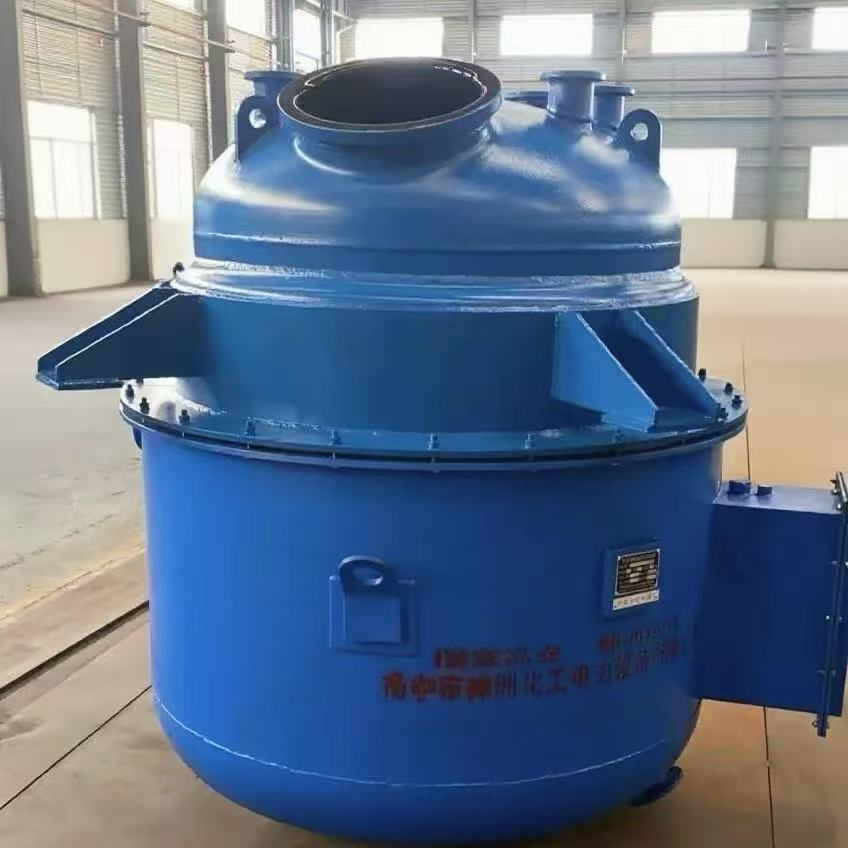
When engineers talk about pushing temperature limits, the conversation starts with materials that refuse to flinch. Nickel-based superalloys, originally developed for jet engine turbines, have become the quiet workhorses in high-heat industrial settings. Their ability to retain strength at 1,000°C and beyond comes from a carefully tuned microstructure—gamma prime precipitates that lock dislocations in place. But it’s not just about picking the right metal. Ceramic matrix composites (CMCs) are now stepping out of aerospace labs and into more down-to-earth applications, offering a density-saving alternative that doesn't sacrifice thermal stability. The real trick, though, is knowing when to combine them: a CMC shell with a superalloy core can give you the best of both worlds, but only if the joining process respects the wildly different expansion rates.
Design choices matter just as much as the raw ingredients. A part that survives a 1,200°C furnace isn't simply made from a heat-resistant alloy—it's shaped so that thermal stress flows through predictable paths. Sharp corners are the enemy; they collect stress like water behind a dam. Instead, you'll see generous fillets, tapered thickness transitions, and cooling channels integrated directly into the geometry rather than bolted on as an afterthought. One underappreciated tactic is deliberate asymmetry: by making one side of a component slightly thicker, you can steer the inevitable thermal bowing in a direction that actually improves sealing or alignment. It's the kind of insight that comes from watching too many prototypes crack at 3 a.m., not from a textbook.
Then there's the less glamorous side—coatings and surface treatments that would make a chemist’s eyes light up. A thin layer of yttria-stabilized zirconia, just a few hundred microns thick, can drop the metal temperature underneath by over 100°C. But the coating is only as good as its bond coat, and that bond coat must be compatible with both the substrate and the top layer. Getting it wrong means spallation, and suddenly your heat shield is flaking off like old paint. Some teams are now experimenting with functionally graded layers, where the composition shifts gradually from metal to ceramic, eliminating the sharp interface that so often fails. It's a material solution to a mechanical problem, and it’s pushing what we thought possible—not by inventing a new wonder alloy, but by sweating the details at every boundary.
Where These Heaters Actually Earn Their Keep in Real Industrial Roles
Ask any maintenance lead where the real headaches come from, and temperature control will come up long before the machinery itself. In chemical processing, a circulation heater wrapped around a jacketed reactor doesn't just warm the mix; it keeps reaction rates consistent enough to meet spec without rework. That same heater also prevents monomers from polymerizing too early in the transfer line, which would otherwise mean a full shutdown and pipe replacement.
Food and beverage plants lean on immersion heaters for more than just boil-out cleaning. Fryer oil stays at setpoint through third shift so the first batch doesn't pick up off-flavors from overnight breakdown products. Inline heating of syrups, fats, and flavor concentrates keeps viscosity low enough that pumps don't cavitate and downstream fillers don't starve.
Oil and gas terminals, power generation auxiliaries, and wastewater plants all use process heaters in ways that never show up on a spec sheet—keeping instrument sensing lines thawed, maintaining lube oil viscosity, or preventing urea from crystalizing inside SCR injection systems. When one of these heaters fails, the cost shows up in unplanned downtime and wasted product, not in the heater's purchase price.
Cutting Energy Waste Without Sacrificing Heat Output
Industrial heating systems often run at full tilt regardless of actual demand, bleeding energy through poorly insulated pipes, outdated burners, and idle boilers that keep firing to maintain standby temperatures. The trick is to tighten the loop without dialing back the useful warmth. One practical step is to install modulating burners that adjust flame size in real time based on load—this alone can trim fuel consumption by double digits while keeping output rock steady. Pair that with better insulation on distribution lines and you stop paying to heat the surrounding air instead of the process.
Another overlooked leak is the start-stop cycle. Every time a system cools down and reheats, it wastes a burst of energy just to get back to operating temperature. Smart controls can hold equipment at a lower standby level, or sequence multiple units so only the minimum number run at once. This doesn't reduce the heat delivered to the actual work—it just eliminates the invisible warm-up tax. In many plants, simply staggering the morning startup of boilers and furnaces avoids a massive spike in demand without any drop in midday performance.
Recovering heat that's already been paid for is the quiet win. Exhaust gases and cooling water often carry away a third of the input energy. Adding a heat exchanger to preheat incoming air or water means the burner works less for the same output. It's not about lowering the thermostat on your process—it's about reusing heat that would otherwise vanish up the stack or down the drain. Done right, these measures cut energy bills while the production line never notices a difference.
Installation and Maintenance Pitfalls Most Teams Overlook
Most teams assume that once a system is up and running, the hard part is over. But installation and maintenance are where the quiet failures start to pile up. From incorrect torque settings on critical fasteners to misrouted cables that rub against sharp edges, the early signs are easy to ignore until they turn into expensive downtime.
One common blind spot is the lack of a standardized checklist during installation. Teams often rely on memory or a technician's personal habits, which leads to inconsistent results across different sites. Another overlooked issue is the failure to document environmental factors like temperature swings, vibration levels, or humidity—all of which can shorten the lifespan of components that look perfectly fine on day one.
On the maintenance side, many teams only react to failures instead of tracking wear patterns over time. Simple practices like marking bolt heads with torque stripes, keeping a photo log of connections, or scheduling periodic inspections of hidden areas can prevent the majority of early-life failures. The real pitfall is treating maintenance as a chore rather than a source of valuable data.
Five Questions to Ask Before You Commit to a Reactor Heater
Buying a reactor heater isn’t just about wattage or physical footprint. The real decision hinges on how the unit handles your actual process conditions—temperature swings, pressure cycles, chemical exposure—and whether the materials will hold up over months of continuous duty. Far too many buyers skip straight to comparing prices, then regret it when a seal fails or a coil corrodes within the first quarter.
Ask the vendor how the heater behaves during startup and shutdown. Thermal shock can crack ceramic cores or warp thin metal jackets, so you need specific ramp rates and cooldown procedures, not vague promises about “robust design.” Also pin down what happens if a temperature sensor fails: does the unit shut down safely, or does it keep heating until something melts or ruptures?
Finally, look beyond the purchase order. Installation, spare elements, calibration, and energy draw over a decade often outweigh the sticker price. Get written answers on replacement lead times and who actually services the unit in your region. If the rep can’t answer these five questions clearly, keep shopping.
FAQ
A basic mantle wraps around the flask and provides gentle, uneven warmth. A professional reactor heater is engineered for tight thermal coupling, often using multiple heating zones or fluid jacketing, so a 20-liter vessel can hit 400°C and hold that temperature within a few degrees across the entire surface. You also get integrated cooling channels, over-temperature cutoffs, and pressure-rated housings that standard mantles simply don't offer.
Petrochemical pilot plants, pharmaceutical synthesis, polymer research, and specialty chemical production are the usual suspects. For example, a hydrogenation reactor running at 350°C and 100 bar needs a heater that won't create hot spots on the vessel wall, since that can trigger unwanted side reactions or degrade the catalyst.
It's often the difference between a heater that lasts six months and one that runs for eight years. Nickel-chromium resistance wire embedded in magnesium oxide insulation works well up to about 800°C, but if you're dealing with corrosive vapors or frequent thermal cycling, you'll want Incoloy-sheathed elements or silicon carbide for edge-to-edge stability.
Look for independent over-temperature protection, a grounded sheath on every heating element, and a fail-safe contactor that opens the circuit if the thermocouple disconnects. Ground-fault detection is also valuable because a small leak from a reactor can turn moist insulation into a conductive path and create a shock hazard before anyone notices a puddle.
Both paths are common. Many manufacturers offer split-shell designs that clamp around an existing vessel without draining the system. If the reactor has an unusual bottom outlet, sight glass, or agitator clearance issue, a custom heater with cutouts and variable watt density zones is usually cheaper than replacing the reactor itself.
They divide the heating surface into independently controlled zones. For a 50-liter reactor, you might have three zones: bottom, middle, and top. Each zone has its own thermocouple and PID loop, so the controller can push more power to the top where heat loss is highest and hold the entire wall within ±2°C.
Check the resistance to ground every month—if it drops below one megohm, moisture has likely entered the insulation. Keep the heater's air intake and cooling vents clear of dust, and retorque electrical connections annually because repeated thermal expansion loosens terminals. Also, never run the heater at full power with an empty or dry reactor, since the lack of heat sink can overheat the element sheath.
Yes, but only if the heater is designed with integrated cooling passages. A thermal fluid heater can switch from 400°C to 150°C in under an hour by diverting hot oil and circulating chilled glycol through the same jacket. This requires careful material selection to avoid thermal shock cracking, so check that the inner shell is rated for the full temperature swing.
Conclusion
High temperature reactor heaters earn their place in demanding industrial settings only when every layer of their construction is treated as a critical decision. The difference between a unit that lasts years and one that fails within months often comes down to the sheath alloy, insulation density, and the way the resistance coil is supported under thermal cycling. Inconel and other nickel-chromium alloys are common not because they are easy to source, but because they retain strength and oxidation resistance when lesser steels soften or scale. The internal magnesium oxide packing must be compacted evenly to avoid hot spots, while cold sections and terminal pins are engineered to stay cool enough for reliable electrical connections. These are not off-the-shelf compromises; they are deliberate material trade-offs that push a heater's continuous operating ceiling beyond what standard cartridge or band heaters can handle. At the same time, better insulation and tighter watt-density control help cut energy waste without reducing actual heat delivered to the process fluid, keeping both operating costs and surface temperatures in check.
In practice, these heaters show up where indirect heating is non-negotiable—petrochemical reactors, pilot plants, gas preheaters, and high-pressure research vessels all depend on them to hold stable temperatures under corrosive or high-flow conditions. Yet the best design can be undone by installation mistakes that are easy to overlook: uneven clamping, insufficient thermal contact with the vessel wall, or routing leads too close to hot zones. Maintenance teams also miss early warning signs like rising resistance imbalance or insulation breakdown, which lead to sudden failure instead of planned replacement. Before committing to a specific model, experienced engineers tend to ask pointed questions about maximum sheath temperature versus process setpoint, allowable watt density for the fluid being heated, tolerance for thermal expansion, and whether the manufacturer can provide actual tested cycle life data. Getting honest answers to these five questions has more influence on long-term reliability than any datasheet headline.
Contact Us
Contact Person: Mr. Wang
Email: [email protected]
Tel/WhatsApp: 8613705299955
Website: https://vip.e-baixing.com/szhgyw
