Top 10 HDPE Pipe Machines for High-Quality Pipe Manufacturing
2026-10-10
Choosing the right HDPE pipe machine can make or break your production line. In this roundup, we look beyond spec sheets to the machines actually delivering tight tolerances, consistent wall thickness, and long service life. From high-output extrusion systems to smart controls, these ten picks reflect what today's high-quality pipe manufacturing demands. Whether you're upgrading an aging line or planning a new plant, keep an eye on names like COMRISE that combine practical engineering with dependable after-sales support. Here's what made the cut.
Screw Geometry That Keeps Melt Pressure Steady
The metering section does most of the work when it comes to holding melt pressure steady. A shallow, constant-pitch channel in this zone lets the polymer build up a consistent head pressure before it leaves the screw, smoothing out the spikes that often come from viscosity shifts or uneven feeding. Many newer designs rely on a barrier flight to keep the solid bed separate from the molten pool, so partially melted granules don't suddenly block the flow path and cause pressure jumps.
Compression ratio and barrier clearance need to be matched carefully. Too aggressive a compression or too tight a barrier gap generates localized shear heat, which makes melt temperature drift and then feeds back into pressure instability. A more gradual compression profile with a longer barrier section tends to produce a flatter pressure curve, especially at higher screw speeds where thermal non-uniformity shows up quickly.
Mixing elements also play a part, but their placement matters more than their presence. A pin or Maddock-style mixing section placed just before the metering zone can homogenize temperature with very little pressure drop, preventing high-viscosity pockets from turning into pressure oscillations downstream. Adjusting these geometric features often stabilizes die pressure without needing to run the screw faster.
Why Barrel Temperature Zones Matter More Than You Think
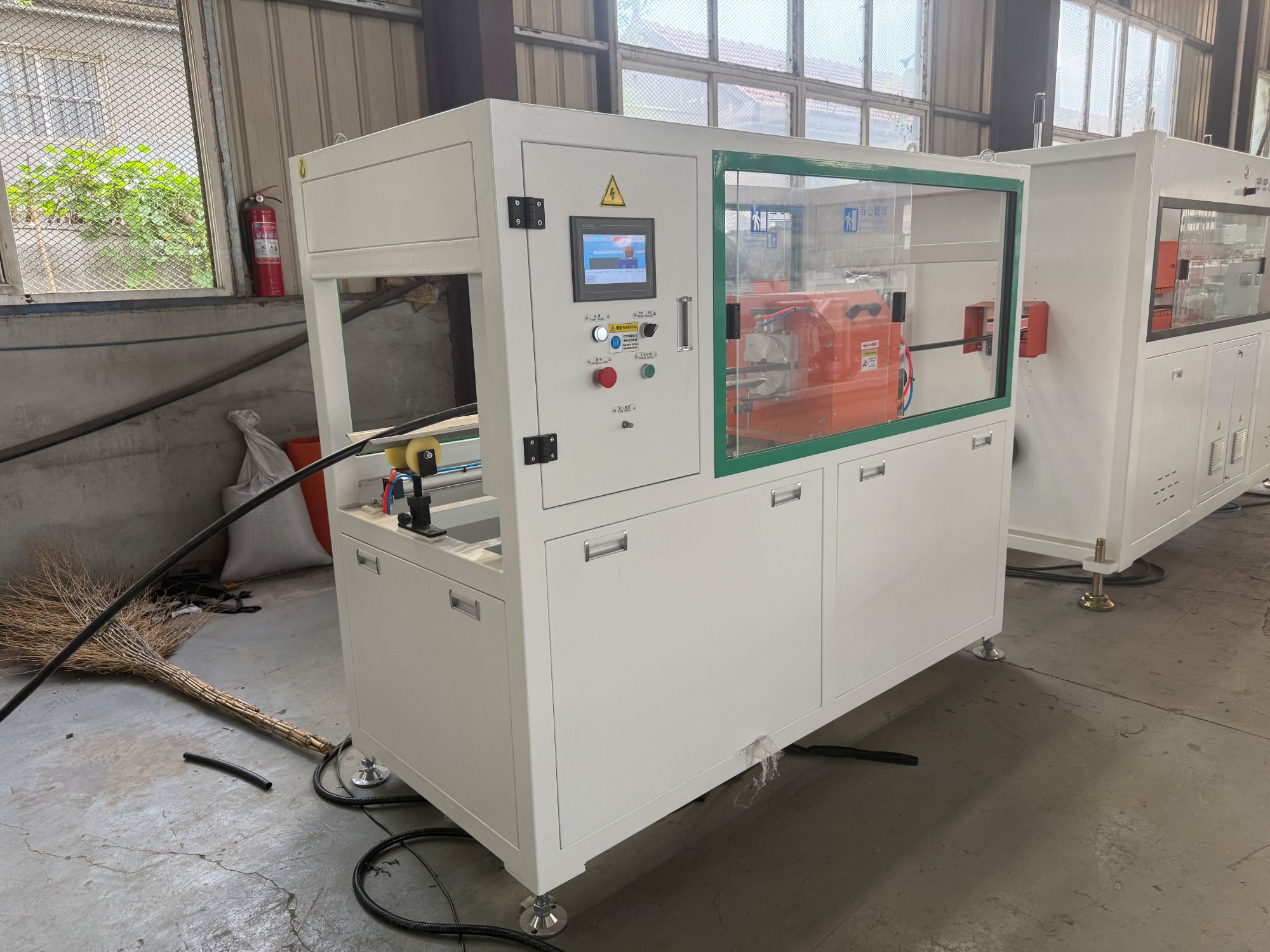
Most people treat barrel temperature as a single dial, but the reality is a series of distinct zones that each shape the melt in subtle ways. The feed zone, for instance, isn't just about warming pellets—it controls how air escapes and how consistently solids pack before they ever reach the screw's compression section. If that front zone runs too hot, you can trap volatiles or cause uneven feeding, which shows up later as surging or dimensional drift.
What makes these zones matter more than many assume is their interaction with screw design and residence time. A mid-barrel zone that's slightly cool might seem harmless until you notice unmelted particles slipping past the check ring, creating weak spots in the final part. On the other hand, overcooking the rear zone to compensate for a short screw can degrade heat-sensitive additives before they even reach the metering section. The problem is rarely a single wrong setpoint—it's a profile that works against the screw's own mechanics.
Operators often copy settings from a similar machine and wonder why results differ. The truth is, barrel temperature zones respond to factors like barrel wall thickness, heater band placement, and cooling channel efficiency, none of which are identical across machines. Tuning each zone based on actual melt temperature readings, not just controller numbers, reveals quirks that generic profiles miss. Once you see zones as separate contributors rather than a uniform heat source, troubleshooting becomes faster and scrap rates drop noticeably.
Calibration Sleeves and the Fight Against Wall Thickness Drift
In high-volume extrusion lines, wall thickness can creep away from spec without anyone noticing until scrap rates climb. Calibration sleeves act as the first line of defense by locking the outer diameter while the plastic is still soft, giving the inner mandrel a fixed reference point. This physical constraint forces the melt to distribute evenly, so minor fluctuations in temperature or haul-off speed don't immediately translate into thin or thick spots.
What makes drift so insidious is that it rarely comes from a single big upset. Small changes in melt viscosity, screw wear, or even ambient temperature accumulate over hours. A well-designed calibration sleeve with precise vacuum slots and cooling channels dampens these shifts. Operators can then track residual variation through regular micrometer checks and adjust downstream calibration rings only when a real trend appears, rather than chasing noise.
The fight against wall thickness drift isn't about eliminating variation entirely; it's about making variation visible and manageable. Calibration sleeves won't fix a starved extruder or worn barrel, but they create a stable baseline that separates process problems from measurement problems. Without that stable baseline, every adjustment becomes guesswork, and wall thickness data turns into a roller coaster that no amount of post-production inspection can flatten.
Closed-Loop Control Systems That Adapt to Raw Material Variations
Raw material variability is a constant challenge in industrial processing—ore grades shift, recycled feedstocks change composition, or moisture levels drift. Closed-loop control systems address this by measuring downstream process indicators and feeding that data back to adjust upstream parameters in near real time. Rather than operating on static assumptions, these controllers learn the current material behavior through sensor feedback and make corrections that keep output consistent without constant operator oversight.
Consider a mineral flotation circuit where incoming ore grade fluctuates hour by hour. A closed-loop system tracks concentrate grade and recovery, then tweaks reagent dosing, air flow, and pulp level to match the changing feed. The result is not just stable product quality but also lower chemical consumption and less energy spent reworking off-spec material. This kind of adaptive control turns raw material variation from a source of waste into a manageable variable.
Cooling Tanks Designed for Uniform Shrinkage Without Warping
In many extrusion and thermoforming lines, the cooling tank is the last place where residual stress can still be managed. Tanks with uniform water circulation and controlled temperature gradients keep the outer skin from setting too far ahead of the core. That mismatch is what pulls parts into a bow or twist as they shrink.
A well-built cooling tank for uniform shrinkage usually pairs calibrated spray bars or flooded chambers with adjustable flow zones. Operators can trim the cooling rate along the length and across the width. This prevents one side from giving up heat faster than the other, which is the common trigger for warping in profiles, pipe, and sheet.
The tank's internal baffles, water inlet placement, and weir height matter as much as temperature control. If return water is drawn from a single point, a hot spot can develop near the product's edge. Uniform extraction, gentle water movement, and enough dwell time let the part contract evenly, so it exits straight and stays straight after cutting.
Energy Recovery on the Line: Cutting Costs Without Sacrificing Output
Most production lines already bleed energy through braking resistors, exhaust heat, and idling motors. The cheapest kilowatt-hour is the one you never waste. By capturing deceleration energy from conveyor drives and feeding it back into the grid or into nearby auxiliary systems, operators routinely shave 8–15% off their electricity bill. The trick is not adding exotic hardware; it is rethinking how existing inverters and DC buses share power between stations that accelerate and those that slow down.
A practical first step is to map your line's load profile over a full shift. Look for repeated start-stop cycles, long downhill runs on conveyors, or hydraulic pressure release events. Then install regenerative units only where the payback is under eighteen months. Avoid the common mistake of oversizing recovery equipment for a theoretical peak that never occurs. Instead, size for the 80th percentile of recoverable energy, and leave headroom for voltage fluctuations. This keeps capital costs low while still delivering most of the savings.
One beverage plant in the Midwest recovered enough energy from palletizer descents and filler backpressure to power all its labelers during the second shift. They did not change a single motor or gearbox. They simply allowed the DC bus to float higher within safe limits and let intelligent drives trade energy locally before pulling from the utility. Output per hour stayed identical. The difference showed up only in the monthly bill and in the reduced heat load on the electrical room.
FAQ
A dependable line keeps wall thickness consistent across long runs, handles recycled material without surging, and holds melt temperature within a narrow window. Look for a grooved feed throat, a barrier screw designed for HDPE, and vacuum calibration tanks that give you fine control over pipe roundness.
Start with your real production mix, not a wish list. A machine rated for 20–110 mm pipes won't handle 400 mm drainage pipe efficiently. Pay attention to die head size, haul-off grip force, and the cutting unit's travel speed. Under-sizing leads to slow output and poor wall control; over-sizing wastes energy and floor space.
Daily checks of oil levels, gearbox temperature, and screw wear go a long way. Replace screens before pressure drop becomes noticeable, keep calibration tank filters clean, and grease the haul-off chains weekly. Most unexpected downtime comes from ignoring small leaks or strange vibrations until they become big failures.
HDPE has a narrow processing window. Too hot and the resin degrades, causing black specks and weak spots. Too cold and you get poor fusion, rough inner walls, or melt fracture. A stable temperature profile across all barrel zones gives you smooth output and consistent mechanical properties.
Usually not without major changes. Solid wall and corrugated pipe use different downstream equipment — corrugators, molds, and cooling setups. Some base extruders can feed either line if you invest in interchangeable downstream modules, but for continuous production, dedicated lines are far more practical.
The extruder barrel heaters and the haul-off motors usually consume the most. Insulating the barrel, using energy-efficient AC drives, and sizing the extruder correctly for your output targets can cut energy use by 15–25%. Preheating raw material with waste heat also helps in large plants.
Modern lines use ultrasonic sensors mounted right after the vacuum tank. They map thickness around the circumference in real time and adjust the die centering bolts automatically. For manual operations, a simple micrometer check at the cut end every 15–20 minutes catches most drift before you make scrap.
It sets the outside diameter and surface finish while the pipe is still molten. If the sleeve is scratched, misaligned, or has uneven vacuum slots, the pipe will show drag marks, ovality, or poor gloss. Keeping it polished and properly cooled is the cheapest way to boost visual and dimensional quality.
Conclusion
Achieving consistently high-quality HDPE pipe output depends as much on machine design as on raw material. The leading extrusion lines in this category share a common trait: their screw geometry is engineered to keep melt pressure remarkably steady, avoiding the surges that lead to dimensional instability. Paired with intelligently divided barrel temperature zones, the best machines prevent localized overheating or cold spots that can degrade resin or create inconsistent flow. This thermal precision matters more than most operators realize, because even small deviations translate directly into pipe wall variation. Calibration sleeves then take over at the die, actively resisting wall thickness drift during the critical sizing phase. Instead of simply setting a fixed outer diameter, these sleeves work with vacuum and cooling to lock the pipe's geometry before it leaves the forming zone.
Beyond the basics, the top HDPE pipe machines incorporate closed-loop control systems that continuously adjust to raw material variations—whether from recycled content, batch-to-batch MFI shifts, or humidity changes. This adaptability keeps output within specification without constant manual tweaking. Downstream, cooling tanks are designed to deliver uniform shrinkage, preventing warping and residual stress that can weaken the pipe over time. Meanwhile, energy recovery features on the extrusion line capture heat from the cooling and barrel zones, redirecting it to preheat feedstock or facility water. The result is a measurable drop in operating cost without sacrificing throughput. Taken together, these integrated design choices separate genuinely high-performance HDPE pipe machines from ordinary extruders, making them the right choice for manufacturers who cannot afford dimensional drift, downtime, or wasted energy.
Contact Us
Contact Person: LISA LEE
Email: [email protected]
Tel/WhatsApp: +86 13780696467
Website: https://www.qdpipemachine.com