

Top 4G Core Network Vendors Driving Modern Mobile Connectivity
2026-05-30
As the mobile industry races toward 5G and beyond, the backbone of modern connectivity lies in the 4G core network—a domain where innovation still thrives. Among the key players shaping this landscape, IPLOOK stands out with its agile, cloud-native solutions that bridge today’s demands with tomorrow’s ambitions. But which other vendors truly drive the evolution of mobile infrastructure? Let’s explore the top forces redefining how we stay connected.
Forging the Pathways of Mobile Evolution
From clunky analog calls to the sleek digital fabric of today, the mobile landscape has been shaped by relentless experimentation and a willingness to abandon comfortable norms. Each generational leap wasn't just a technical upgrade—it was a cultural shift, cracking open what a pocket-sized device could mean in daily life. The pathways weren't always obvious; they were carved out by risk-takers who saw spectrum, silicon, and software not as constraints but as raw materials for something wildly new.
As the terrain shifts toward hyper-connectivity, the forging gets more nuanced. It's no longer just about faster data or clearer voice; it's about weaving mobility into the fabric of cities, healthcare, and even the way we grow food. The next pathways will demand a kind of cross-industry fluency we haven't needed before—where telecom engineers sit with urban planners, where policy makers run code, and where the end user becomes a co-creator. The evolution now is less about the device and more about the invisible networks that listen, adapt, and anticipate.
Resilience by Design: Network Core Innovation
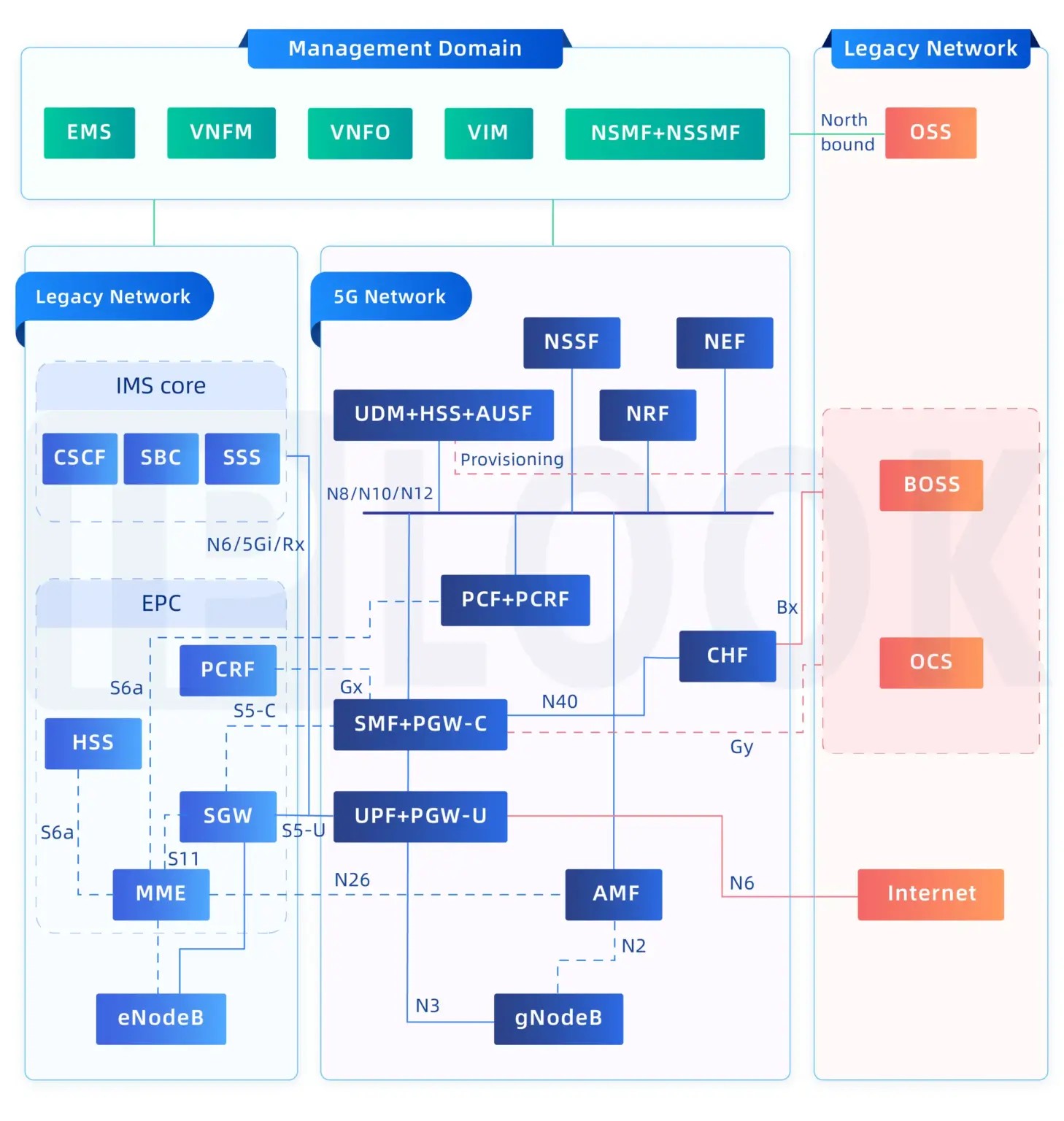
Resilience in network cores isn't something you bolt on after the fact—it has to be woven into the fabric from day one. That means designing architectures where redundancy and fault tolerance are default states, not emergency modes. The real innovation comes from accepting that failures will happen, and building systems that treat them as routine events to be routed around without service disruption.
Modern approaches lean on distributed control planes and microservices that can isolate problems faster than traditional monolithic setups. Instead of a single brain making all the decisions, you get many smaller decision-makers that constantly share state and adapt in real time. This shift allows the core to reconfigure paths in milliseconds when a link degrades or a node goes silent, often before monitoring tools even raise an alarm.
What makes this practical is the combination of software-defined orchestration and hardened physical infrastructure. By separating the intelligence layer from the forwarding hardware, operators can simulate and deploy resilience strategies without touching the underlying optics. The result isn't just fewer outages—it's a network that learns from each disturbance, continuously refining its own stress response.
Seamless Convergence of Legacy and Future
True innovation rarely means discarding what came before. Instead, it thrives on bridging the familiar with the uncharted. When legacy systems, traditions, or design languages are thoughtfully integrated with emerging technologies, the result feels both trustworthy and forward-looking—a quiet confirmation that progress need not erase identity. This delicate interplay fosters environments where heritage breathes into modern purpose, creating experiences that honor the past while embracing tomorrow.
Consider the architectural facades that cradle state-of-the-art interiors, or the analog warmth woven into crisp digital interfaces. These juxtapositions aren't mere compromises; they represent a matured understanding that users crave continuity alongside novelty. The fusion becomes seamless when neither element overshadows the other, producing tools and spaces that feel intuitively right—as if they've always been part of the landscape, yet are unmistakably new.
In practice, achieving this harmony demands a deep respect for the underlying logic of legacy systems and an equally bold vision for what's possible. It's about rewriting foundations with surgical precision, not wholesale demolition. The outcome is an agile infrastructure that sidesteps the pitfalls of generational leaps, delivering evolution rather than disruption. Ultimately, the seamless convergence is a testament to thoughtful engineering and cultural sensitivity, proving that the strongest bridges to the future are built from the stones of the past.
Scaling the Heights of Data Demand
It wasn’t long ago that businesses measured data in gigabytes. Now, every sensor, transaction, and social interaction adds to an avalanche that shows no signs of slowing. This surge isn’t just about storage; it reshapes how we build applications, forcing us to rethink architectures from the ground up.
The demand for instant insight means batch processing no longer cuts it. Real-time streams ask for frameworks that can scale out on a dime, while machine learning pipelines devour more training data than ever. Keeping pace requires a blend of clever engineering and a willingness to abandon yesterday’s assumptions.
Perhaps the biggest shift is cultural. Teams that once guarded data are now finding ways to share it securely, spinning up environments where collaboration is the default. In this climb, the summit isn’t a fixed point—it shifts upward with every breakthrough.
Virtualization Vanguard: Core Network Transformation
The shift towards virtualization is rewriting the rules of core network architecture, moving away from rigid, hardware-bound systems to agile, software-defined environments. This transformation isn't just about cost savings; it's about unlocking unprecedented flexibility and speed. Network functions that once required dedicated appliances can now be spun up as virtual instances in minutes, allowing operators to dynamically scale and adapt to changing demands without the usual hardware procurement cycles.
However, this evolution brings its own set of challenges. The deep intertwining of software and infrastructure demands a new approach to resilience and security. Virtualized core networks blur the traditional boundaries, requiring operators to rethink monitoring and fault management. The shift is as much cultural as it is technological, pushing teams to embrace DevOps practices and continuous integration, ensuring that the network can keep pace with the rapid innovation cycles typical of software, not hardware.
At the forefront of this change are cutting-edge technologies like network slicing and edge computing, which thrive in a virtualized core environment. They enable tailored connectivity for diverse applications, from ultra-reliable low-latency communications for autonomous vehicles to massive IoT sensor networks. This isn't a mere upgrade; it's a foundational shift that sets the stage for future innovations, turning the core network into a platform for continuous reinvention.
Global Connectivity, Local Impact
In an age where digital threads weave across continents with effortless ease, the true measure of connectivity isn’t just the speed of data, but how it reshapes the corner store, the neighborhood school, the family farm. A farmer in Kenya now checks real-time crop prices on a smartphone, bypassing middlemen who once dictated terms. A coder in São Paulo collaborates with a team in Berlin, their shared codebase birthing solutions that neither could have forged alone. This isn’t about erasing distance; it’s about infusing local rhythms with global possibility, turning isolation into interdependence.
When a global network meets local needs, the impact is rarely uniform—it bends to the contours of culture, language, and custom. In rural India, women-led cooperatives use micro-loans accessed via mobile wallets, sidestepping traditional banking barriers that sidelined them for generations. The global flow of capital becomes a tool for hyper-local empowerment, not a homogenizing force. It’s the difference between imposing a one-size-fits-all solution and weaving a tapestry where each thread retains its color while strengthening the whole.
Yet the deepest impacts often hide in plain sight: a grandmother video-calling her diaspora family, preserving dialects that might otherwise fade; a local musician sampling rhythms from across the ocean, creating a sound that’s both ancestral and achingly new. Global connectivity doesn’t just bridge economies—it rewires identity, making “local” a living, breathing negotiation between heritage and horizon. The challenge is to ensure that these connections don’t just import the world into the village, but also amplify the village’s voice onto the world stage.
FAQ
The 4G core, or Evolved Packet Core, handles crucial behind-the-scenes tasks like session management, authentication, and routing data traffic between the radio network and external networks. It ensures seamless connectivity, even when you're moving between cell towers, and supports services like VoLTE. Without it, your phone would just be a fancy paperweight.
The field is led by a handful of heavyweights: Ericsson and Nokia from Europe, Huawei and ZTE from China, and to a lesser extent, South Korea's Samsung. These vendors have deployed massive networks across continents. Ericsson and Nokia have strong footholds in the Americas and Europe, while Huawei and ZTE are deeply entrenched in Asia, Africa, and parts of Europe.
Both lean heavily on cloud-native principles and virtualization. Ericsson's dual-mode core solution allows a smooth transition to 5G without a complete overhaul, while Nokia emphasizes end-to-end automation and analytics through its AVA platform. They cater to operators who want carrier-grade stability with a clear migration path to newer technologies.
Huawei and ZTE often win on cost-efficiency and rapid deployment, particularly in emerging markets. Their end-to-end integration—from radio access to core—simplifies network design. Huawei's 4G core platforms, for instance, are optimized for massive IoT support, while ZTE focuses on customized solutions for operators with tight budgets but ambitious rollouts.
Traditional core networks rely on dedicated hardware boxes, which are inflexible and costly to upgrade. Virtualization turns these functions into software that runs on standard servers. This cuts hardware costs, speeds up deployment of new services, and allows dynamic scaling—think of it as swapping out a rigid engine for a modular, software-driven one.
Absolutely. Real-world 5G deployments are often non-standalone, piggybacking on existing 4G cores for control signaling and fallback. A well-architected 4G core ensures smoother interworking and a better user experience during the transition. Many operators intentionally upgrade their 4G core first as a stepping stone to standalone 5G.
OpenRAN is shaking things up by decoupling hardware and software, which could dilute the influence of traditional giants. There's also a push for converged 4G/5G cores, where a single platform handles both generations. Industry-specific private networks are opening new revenue streams, and security assurance is becoming a key differentiator given geopolitical concerns.
Conclusion
The 4G core network remains the bedrock of modern mobile infrastructure, and a handful of vendors stand out for crafting the evolutionary paths that carriers rely on. Their solutions are not just about raw throughput; they embody resilience by design, ensuring that network cores can weather surges and failures without missing a beat. At the same time, these vendors master the subtle art of seamless convergence, bridging legacy circuit-switched systems with the packet-switched future, so that voice and data can coexist gracefully during the long upgrade cycles. This blending of old and new is critical for operators who cannot afford to rip and replace their networks overnight.
As data consumption skyrockets, scaling to meet demand becomes non‑negotiable, and the top vendors deliver architectures that expand horizontally without sacrificing performance. Their embrace of virtualization has transformed the core from monolithic boxes into agile, software-driven entities, slashing costs and unlocking rapid service deployment. Crucially, these innovations translate into tangible local impact—whether it’s connecting rural communities or powering smart city initiatives, the right core vendor ensures that global connectivity ambitions align with regional realities. In essence, choosing a 4G core partner today determines not just network reliability but the capacity to evolve gracefully toward tomorrow’s interconnected world.
Contact Us
Contact Person: Shimmy
Email: [email protected]
Tel/WhatsApp: 85253392231
Website: https://www.iplook.com