

Top Distribution Box Features That Enhance Electrical Safety
2026-07-31
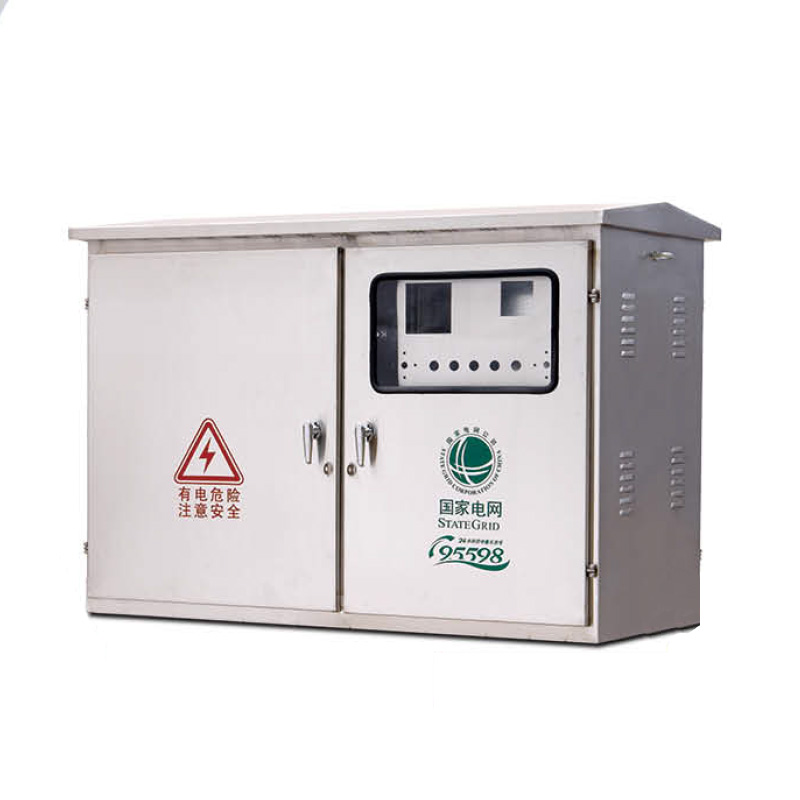
When it comes to electrical systems, safety is non-negotiable. The right distribution box can be the difference between a secure setup and a potential hazard. From advanced circuit protection to smart monitoring, modern designs are packed with features that go far beyond basic functionality. In this post, we'll explore the top traits that truly make a difference—and why a trusted name like Chang Song leads the way in engineered safety.
Smart Breakers That Catch Faults Instantly
Modern smart breakers don’t just sit there waiting for a wire to overheat. They read the electrical waveform in real time, picking out the subtle signatures of an arc fault or the quick spike of an overload before it ever turns into a problem. It’s like having a vigilant electrician inside the panel, sampling current thousands of times a second and ready to sever the connection in a heartbeat.
What really sets them apart is how they distinguish between a harmless inrush—say, a fridge compressor kicking on—and a genuinely dangerous fault. Old thermal-magnetic breakers are blunt instruments; they need heat to bend a bimetal strip. These digital guardians recognize patterns, so they don’t nuisance trip when you plug in a vacuum, but they’ll snap into action at the first crackle of a loose screw terminal or a chewed cable behind a wall.
Installation is drop-in straightforward for most panels, but the leap in protection is enormous. You’re not just shielding against overloads anymore—you’re catching ground faults, series arcs, parallel arcs, even some types of surges, all before they can ignite a fire. It turns a passive safety net into an active, thinking barrier that’s always paying attention, even during a power outage when some faults are more likely to occur.
Built-In Surge Diverters for Unseen Spikes
Unseen spikes can wreak havoc on delicate electronics before you even notice a flicker in the lights. That’s where built-in surge diverters step in, quietly shunting excess voltage to ground the moment it crosses a safe threshold. Unlike plug-in protectors that add bulk and often get forgotten, these little guardians live inside the device itself, always on duty without requiring an extra thought.
What sets them apart is their split-second reaction to transients that standard protection schemes might miss. By integrating directly with a device's power input, they slash the distance electricity must travel to dump a surge, reducing the chance of a dangerous arc forming. This design also means there’s no extra cable inductance to slow things down—every nanosecond counts when a spike tries to sneak through.
The real beauty, though, is how they fade into the background. No blinking lights, no bulk, no warranty cards to track. Just a robust, passive safeguard that handles a thousand little threats so the bigger system doesn’t have to. For anything that must keep running without fuss, having surge diversion baked in isn’t just convenient—it’s a quiet kind of resilience.
Enclosures That Resist Fire Without Bulky Add-Ons
The real breakthrough in fire-resistant enclosures isn’t about bolting on thick insulation—it’s about weaving protection into the enclosure’s DNA. Advanced composites now embed intumescent materials directly into structural layers. When temperatures spike, these materials expand silently, forming a dense, heat-absorbing char that seals gaps and shields internal components. No extra panels, no bulky wraps—just a sleeker profile that shrugs off flames without sacrificing space or style.
This integrated approach reshapes how engineers think about safety. A single shell can combine load-bearing strength with thermal defense, slashing part counts and assembly time. For compact electronics or tight machinery bays, it’s a game-changer: you get the same fire rating as conventional enclosures, but with a footprint that fits where others can’t. Maintenance becomes simpler too, since there’s no fragile outer layer to replace after a minor incident.
Testing tells the same story. Enclosures built this way routinely pass IEC and UL fire-resistance standards while weighing up to 40% less than traditional designs. The secret isn’t a single magic material—it’s the synergy between engineered polymers, ceramic fillers, and precision manufacturing. By baking fire protection into the enclosure from the start, manufacturers deliver reliability that doesn’t compromise on form or function.
Live Monitoring That Alerts Before Trouble Starts
Imagine catching a subtle shift in system behavior hours before it spirals into an outage. That’s the power of proactive live monitoring—it doesn’t just watch dashboards; it learns the rhythm of your environment. By tracking metrics like latency spikes, memory leaks, or unusual traffic patterns in real time, it can surface early warning signs that traditional threshold-based alerts overlook. This means your team gets a nudge while there’s still room to act, not just react.
What sets this apart is the ability to correlate signals across different layers, from application logs to infrastructure health. Instead of drowning in noise, the system intelligently filters and prioritizes anomalies that matter most to your specific workload. It’s like having a seasoned engineer who knows the subtle difference between a harmless blip and the first tremor of a deeper problem. The result? Fewer false alarms and a dramatically shorter mean time to resolution when things do go sideways.
True preemptive alerting also adapts as your system evolves. It doesn’t rely on static rules; it continuously refines its baseline, accounting for seasonal trends and growth. Whether it’s a database about to max out connections or a microservice in distress, you’ll know before your users ever notice. That shift from reactive firefighting to calm, informed intervention transforms how teams operate—and how reliably your service runs.
Labels You Can Actually Read in an Emergency
You know that heart-sinking moment when a smoke alarm shrieks at 3 a.m., your hands are shaking, and the tiny, faded text on the fire extinguisher might as well be hieroglyphics. Panic has a way of making even simple instructions feel like a cruel puzzle. I’ve been there, squinting at a breaker box label that had smeared into a gray smudge, half-convinced I’d hit the wrong switch and plunge the whole block into darkness. Labels that fail in a crisis aren’t just annoying—they’re a quiet betrayal, a design flaw that only reveals itself when consequences are real.
The difference with labels built for high-stress situations is immediate and visceral. Instead of cryptic abbreviations or delicate serif fonts that blur under adrenaline, you get bold, high-contrast lettering that practically pulls your focus where it needs to go. There’s a weird, unexpected comfort in seeing a big, no-nonsense “OFF” on a gas shut-off valve or a luminescent exit sign that glows softly before you even know you need it. It’s not about pretty design; it’s about creating a visual life raft that your brain can grab hold of when cognitive load is maxed out. Good emergency labeling acknowledges a simple human truth: when you’re scared and moving fast, readability isn’t a luxury—it’s the whole point.
Ground Fault Interrupters That Trip at the Slightest Leak
A good ground fault circuit interrupter doesn’t wait for a serious fault to develop—it reacts the moment current takes an unintended path. These devices are tuned to detect leakage as low as 5 milliamperes, which is far below the level that could cause harm. The internal circuitry constantly compares the current flowing on the hot and neutral wires. Even the tiniest imbalance shows up as a signature that something is wrong, whether it’s moisture creeping into an outlet or a hairline crack in a tool’s insulation.
That kind of sensitivity is what separates a reliable safety device from a false sense of security. In wet locations like bathrooms, kitchens, and outdoor areas, almost invisible leaks can develop fast. A GFCI that trips on the slightest leak doesn’t just meet code—it anticipates the kind of real-world failures that standard breakers ignore. It shuts off power before you even feel a tingle, turning a potentially lethal situation into a minor inconvenience.
Modern designs go even further, filtering out harmless noise while still clamping down on true ground faults. Some incorporate self-test features that verify sensor accuracy continuously, so they stay sensitive over years of use. The result is a device that doesn’t degrade into a sluggish responder or nuisance tripper. It stays sharp, protecting people against the kind of subtle, accumulated leakage that often goes unnoticed until it’s too late.
FAQ
A safe residential distribution box should have a high-quality enclosure with proper IP rating to resist dust and moisture, along with a reliable lockable door to prevent unauthorized access. Internally, it must use fire-resistant materials and have clear, permanent labeling for each circuit. Surge protection devices are also essential to guard against voltage spikes from lightning or grid fluctuations.
Proper busbar design minimizes the risk of loose connections and overheating. High-conductivity copper busbars with tin plating ensure low resistance and excellent corrosion resistance. The busbar layout should allow for even current distribution and provide ample space between phases to prevent arcing. Encapsulated or insulated busbars further reduce the chance of accidental contact during maintenance.
Thermal monitoring helps detect abnormal temperature rises caused by loose connections, overloads, or failing components before they lead to fires or equipment damage. Modern distribution boxes often integrate temperature sensors or thermal imaging windows that allow electricians to inspect hot spots without opening the panel, significantly reducing arc flash risks and downtime.
Arc fault detection devices (AFDDs) are designed to identify dangerous electrical arcs that standard circuit breakers may miss. They continuously analyze the current waveform and trip instantly when an arc signature is detected, preventing fires caused by damaged wiring, poor terminations, or pierced cables. Integrating AFDDs into distribution boxes provides an additional layer of protection, especially in older buildings or high-risk areas.
For industrial settings, the distribution box should be constructed with robust materials like stainless steel or reinforced polycarbonate, offering high corrosion resistance and mechanical strength. It must have effective gasketing to maintain a tight seal against dust and water (IP65 or higher). Additionally, internal components should be vibration-resistant, and the design should facilitate safe isolation and lockout/tagout procedures during maintenance.
A poorly designed distribution box often lacks proper cable management, leading to tangled wiring that traps heat and makes maintenance dangerous. Other red flags include insufficient internal space causing overcrowding, use of cheap plastic enclosures that warp under heat, missing circuit schedules, and the absence of residual current devices or surge protection. Also, if the box doesn't allow for future expansion, it may lead to unsafe modifications later.
Conclusion
Modern distribution boxes have evolved far beyond simple circuit enclosures, integrating intelligent systems that actively prevent hazards. Smart breakers now detect arc faults and overloads in milliseconds, shutting off power before sparks can ignite a fire. Ground fault interrupters add another layer of protection by tripping at the faintest current leak—often as low as 5 milliamps—shielding people from shocks that older setups would ignore. Live monitoring ties these elements together: built-in sensors continuously track temperature, load, and ground continuity, sending alerts if parameters drift outside safe ranges. This real-time feedback turns the distribution box into a sentinel, catching developing issues long before they escalate into dangerous failures.
Physical design and user accessibility are equally critical. Built-in surge diverters clamp transient voltage spikes from lightning or grid switching, dissipating excess energy without interrupting service and protecting downstream electronics. Fire-resistant enclosures achieve robust thermal containment without clumsy external wraps—advanced materials smother heat and self-extinguish, buying precious minutes for evacuation. In a crisis, clear, tactile labels with high-contrast lettering and logical grouping ensure that anyone can swiftly isolate the right circuit, even in darkness or smoke. Collectively, these features redefine safety by blending instantaneous response, structural integrity, and human-centered design, proving that a well-engineered distribution box is the quiet guardian of any electrical system.
Contact Us
Contact Person: Tonglun Chen
Email: [email protected]
Tel/WhatsApp: 8618906642555
Website: https://www.cncsele.com