

Wood-Based Activated Carbon Sourcing: Key Factors for Reliable Supply and Quality
2026-10-08
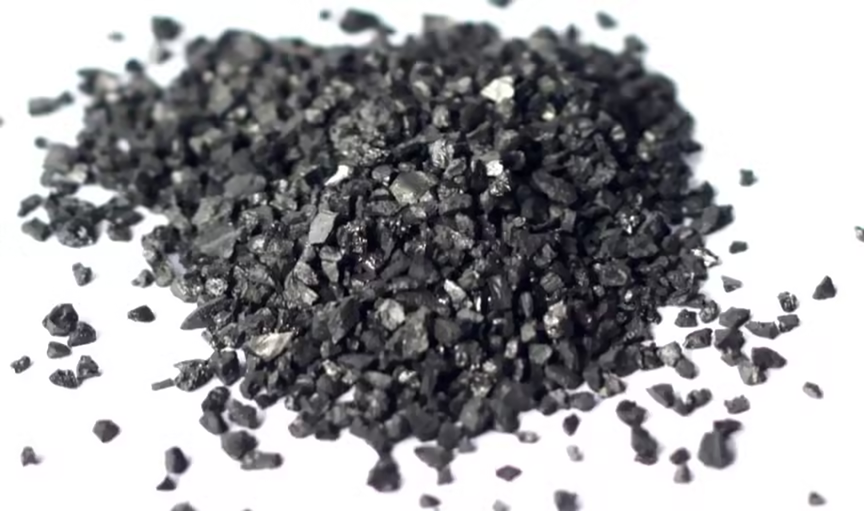
Wood-based activated carbon is only as reliable as the supply chain behind it. Too often, buyers discover quality drift only after a shipment has already cleared customs—iodine values off, ash creeping up, moisture out of spec. The key isn't paying more; it's knowing what to verify before signing a contract. In this post, we break down the sourcing factors that separate stable, high-performing carbon from costly surprises. And if you're done settling for 'close enough,' Tundrr connects you with suppliers vetted for consistency and compliance.
What Wood Feedstock Variability Means for Your Activation Process
Every batch of sawdust, chips, or shavings that hits your feed hopper carries its own fingerprint—moisture swings, particle size drift, bark content, even the species mix from week to week. Your activation line might be tuned for a narrow window of bulk density or lignin structure, but real-world suppliers rarely deliver that kind of consistency. When the feedstock shifts, the charring stage responds first: pockets of fines pack tighter and gasify unevenly, while oversized chunks linger as unreacted cores. That uneven heat penetration doesn't just waste carbon; it forces your kiln controls into constant correction mode, wearing out actuators and driving up steam or nitrogen consumption.
The chemical side gets trickier still. Wood from different harvests brings varying ash content and extractives—think resins, tannins, and salts—that can poison micropore development or leave behind catalytic residues. A load heavy in spruce might activate beautifully at 850°C, but switch to mixed hardwood with higher potassium, and suddenly your burn-off rate spikes while the iodine number tanks. Operators often mistake this for a temperature control issue and start chasing setpoints, when the real culprit is the feedstock's inorganic profile shifting under them. Without a quick way to fingerprint incoming material, you're essentially flying blind every time the truck unloads.
Practical mitigation starts with simple triage: blend loads from different origins to dampen the extremes, or pre-screen fines and overs before they hit the rotary kiln. Some plants add a short torrefaction step just to normalize moisture and friability, buying themselves a more predictable activation window. The goal isn't perfect uniformity—that's a myth in biomass processing—but reducing the amplitude of variability so your activation parameters stay inside a workable band. Keep a log of feedstock source, moisture, and ash against final surface area, and within a few months you'll see which suppliers or seasons are costing you the most rework.
The Iodine Number Alone Won't Catch a Bad Batch
A single iodine number can hide more than it reveals. The test measures how many grams of iodine react with 100 grams of fat or oil, but that reaction doesn't care whether the double bonds belong to a healthy unsaturated fatty acid or to a partially oxidized, polymerized breakdown product. Two batches with the same iodine value can behave completely differently in storage or frying, so a passing number is not a clean bill of health.
Lab conditions introduce another layer of noise. The Wijs method, the most common, is sensitive to excess reagent, light, and titration speed. If a lab runs the blank carelessly or the sample isn't fully dissolved, the result can drift by several units. A bad batch can slide through simply because the analyst's technique masked the problem, which is why relying on one titration without replication or cross-checks is dangerous.
What actually catches a bad batch is a combination of tests: fatty acid composition by GC, peroxide value, p-anisidine value, acid value, and sensory evaluation. These reveal oxidation products, free fatty acids, and off-flavors that the iodine number never sees. Treat the iodine number as a rough screening tool, not as a final quality gate.
Supplier Audits That Go Beyond Certificates and Paperwork
Real supplier audits start where certificates stop. A supplier can hang an ISO certificate on the wall and still ship parts that fail on your line. We walk the floor, watch how materials are handled, and compare the documented process with what actually happens when nobody is expecting a visit. This means checking lot traceability from incoming stock to finished pallets, asking operators how they adjust for tool wear, and reviewing calibration logs against the equipment in use—not just the equipment listed in the quality manual.
Paperwork tells one story; the loading dock tells another. Instead of sitting in a conference room with a binder of signed forms, we spend time at incoming inspection, look at rejected material quarantine areas, and follow a rejected batch through containment and root cause. We also interview the people who run the lines, not just the quality manager, because a line lead often knows which shortcuts are taken when deadlines tighten. The outcome is a clearer picture of whether the supplier's systems hold up under real production pressure, not just during a scheduled audit.
Why Moisture and Ash Content Fluctuate More Than You Expect
Most people assume that once a material is harvested, mined, or processed, its basic composition stays fairly stable until it's put to use. In reality, moisture and ash content can swing dramatically from one batch to the next, even when the source looks identical on the surface. A truckload of biomass chips delivered on a dry Tuesday might carry three percent less water than a load from the same pile after a single overnight rain. Similarly, a coal shipment can show ash values that differ by several percentage points simply because the seam being worked shifted by a few meters underground. These are not rare outliers; they are the normal result of natural variability, handling methods, and storage conditions colliding with each other.
Part of the reason these fluctuations feel so counterintuitive is that we tend to think of moisture and ash as fixed properties, like density or hardness. But moisture is really an ever-changing relationship between the material and its environment. Wood, grain, paper, and even some minerals are hygroscopic; they absorb or release water vapor depending on ambient humidity, temperature, and airflow. A pile of wood pellets sitting in a humid warehouse for two weeks can gain a full percentage point of moisture without anyone touching it. Ash content, on the other hand, is often a reflection of where and how the raw material was extracted. A mining operation that moves from one rock layer to another will see the ash fraction in its ore climb or fall within a single shift. Even the way material is loaded—whether it comes from the top of a stockpile where dust has settled or the bottom where heavier, dirtier particles collect—can change the ash reading by a noticeable margin.
Then there are the hidden variables of sampling and measurement. A single grab sample from the surface of a railcar tells you almost nothing about the entire load, yet many operators still rely on exactly that. Moisture can migrate within a bulk material, with wetter material sinking and drier material rising, while ash tends to concentrate in fines that sift downward. So even if the true average stays constant, your measured moisture or ash content can appear to fluctuate wildly simply because you keep sampling from different locations. Add in the effects of rain, evaporation, dust suppression sprays, and the fact that most industrial materials are never perfectly homogenized, and it becomes clear why moisture and ash readings often look more like a stock market chart than a stable quality parameter. The real challenge is not eliminating these fluctuations—that is practically impossible—but learning to measure them consistently and interpret the patterns behind them.
How Regional Forestry Regulations Affect Long-Term Supply
Regional forestry regulations shape the stability of long-term timber supply in ways that are often underestimated. In the U.S. Pacific Northwest, for instance, strict riparian buffer rules and endangered species protections have placed large tracts of mature federal forest off-limits to harvest for decades. This has forced local sawmills to source logs from distant private lands or imported supplies, permanently altering their cost structure and product mix. The effect is not a one-time dip but a persistent reduction in available volume, pushing some mills to retool for smaller diameter logs or shift toward engineered wood products.
Conversely, some regions create supply predictability through clear long-term harvest permits and mandatory regeneration requirements. Nordic countries, for example, tie annual cutting levels to measured forest growth and require prompt replanting after each harvest. This kind of transparent rule-making lets timber buyers plan inventories years ahead and gives landowners confidence to invest in thinning and road networks. Where regulations shift frequently or are enforced unevenly, supply swings between glut and shortage, raising price volatility and discouraging large-scale processing investments. Over a decade or more, these regulatory differences accumulate, leaving some regions with resilient fiber baskets and others with chronic underutilization of their forest resource.
Negotiating Contracts Without Sacrificing Traceability
Traceability often gets treated as a non-negotiable technical requirement, yet contract talks frequently drift toward cost and timeline. The real challenge is preserving clear audit trails while still allowing enough flexibility for legal and procurement teams to reach agreement. Instead of framing traceability as a separate burden, smart negotiators weave it into existing clauses around data ownership, change management, and liability. For example, instead of demanding a specific logging tool, you can require that all material decisions be recorded with timestamps and linked to the responsible party. This keeps the focus on outcomes, not implementation details, and makes traceability a natural part of the deal rather than a sticking point.
A common mistake is to push for maximum traceability early on, only to have the other side water it down during redlines. A more effective approach is to anchor traceability to specific risk scenarios. If a supplier changes a raw material source, how quickly can you identify which batches are affected? If a service level drops, can you reconstruct exactly what happened and who was informed? By tying traceability to concrete failure modes, you give the other party a reason to care beyond abstract compliance. You can then negotiate thresholds: full traceability for high-risk items, lighter logging for low-risk ones. This tiered approach often wins more support than a blanket demand, because it shows you understand operational trade-offs.
Finally, remember that traceability clauses are only as good as the incentives behind them. A contract that mandates flawless record-keeping but punishes every minor gap will encourage hiding errors rather than surfacing them. Instead, negotiate for periodic joint audits, clear escalation paths, and a shared responsibility model. This turns traceability from a defensive requirement into a collaborative tool for continuous improvement. When both sides see how better tracking reduces disputes and speeds up root cause analysis, the contract becomes easier to sign without quietly stripping away the auditability you need.
FAQ
Wood-based carbon typically has a more open pore structure, often higher mesoporosity, which suits decolorization and certain liquid-phase applications. Sourcing decisions should weigh target impurity sizes, required adsorption kinetics, and whether the application prioritizes high surface area or specific pore distribution.
Look at the wood species and whether it comes from sustainably managed forestry or residue streams. Confirm consistency of feedstock, as seasonal variation can shift carbonization behavior. Ask for traceability documentation and typical ash, moisture, and volatile content ranges.
Steam activation usually yields a well-developed microporous structure and is common for wood-based products, while chemical activation with phosphoric acid can create higher mesoporosity and lower processing temperatures. The choice affects pore size distribution, residual chemical traces, and final price, so align it with the purification task.
Iodine number, molasses number or methylene blue adsorption, ash content, moisture, hardness or abrasion resistance, and particle size distribution are essential. Depending on use, additional tests for pH, water solubles, or heavy metals may be necessary. Request certificates of analysis from batch samples, not just typical values.
Qualify at least two suppliers with different geographic locations and feedstock sources. Audit their carbonization and activation capacity, inventory buffer, and logistics network. Establish clear specifications, acceptance testing protocols, and long-term pricing formulas to avoid sudden shortages or quality drift.
Buyers increasingly need to demonstrate responsible sourcing because wood feedstock can be linked to deforestation or illegal logging. Certifications like FSC or PEFC, use of sawmill residues, and carbon footprint data help meet corporate sustainability goals and regulatory expectations without sacrificing adsorption performance.
Beyond the per-ton price, factor in moisture content (paying for water), density differences affecting volume, freight class for bulky low-density material, import duties, and potential disposal or reactivation fees. A lower nominal price can become costlier if the carbon has lower working capacity and requires more frequent replacement.
Request pilot-scale or lab-scale adsorption tests using the actual process stream, and set agreed-upon performance windows rather than relying only on iodine number. Establish a sampling plan for incoming lots, retain reference samples, and periodically review supplier process data to catch drift before it affects production.
Conclusion
Sourcing wood-based activated carbon demands more than scanning a spec sheet. The feedstock itself shifts with tree species, harvest season, and even the part of the trunk being processed, so your activation line can drift in pore structure and hardness unless you treat incoming lots as a moving target. Iodine number gets quoted constantly, but it won't catch a batch that fails on fines, pH shift, or poor regeneration behavior. Real assurance comes from audits that walk the yard and kiln floor, not just check ISO certificates and lab reports.
Moisture and ash rarely stay at the levels on a datasheet because storage conditions, bark contamination, and seasonal logging all push them around. Regional forestry rules add another layer: a mill relying on plantation thinnings in one country may face harvest restrictions or certification changes that quietly alter raw supply. When you negotiate long-term contracts, lock in traceability from forest block to activation lot. That way, a change in timber origin or processing conditions doesn't become a surprise quality failure months after delivery.
Contact Us
Contact Person: Ellen Zhang
Email: [email protected]
Tel/WhatsApp: +86(21) 2287 6756
Website: https://www.tundrr.com/en/

