

Are Electric Marine Lateral Thrusters More Reliable Than Hydraulic Ones in Saltwater
2026-07-01
For vessel owners and operators, few decisions carry as much weight as choosing the right thruster system. When that system must perform in the corrosive, unforgiving environment of saltwater, reliability stops being a luxury and becomes a safety imperative. Marine Lateral Thrusters are essential for docking, station-keeping, and emergency maneuvering, yet the debate between electric and hydraulic power persists. After decades of field data and real-world performance reviews, Cagon has observed a clear trend: electric systems are quietly outpacing hydraulic alternatives in long-term saltwater reliability—but the answer is more nuanced than a simple yes or no.
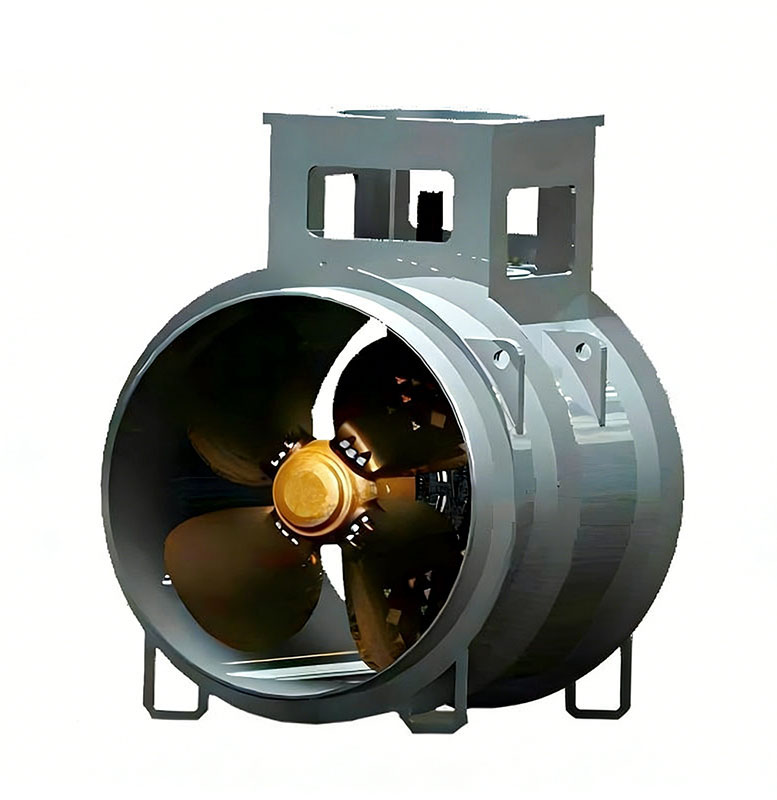
Defining Reliability in Saltwater Conditions
Reliability for Marine Lateral Thrusters means more than just running when switched on. It encompasses corrosion resistance, maintenance frequency, failure rates, thermal performance, and operational consistency under load. Saltwater accelerates galvanic corrosion, degrades seals, and contaminates hydraulic fluids. To compare objectively, we break down the core components:
| Reliability Factor | Electric Thrusters | Hydraulic Thrusters |
|---|---|---|
| Corrosion vulnerability | Sealed motors with epoxy coatings; minimal external moving parts | High-pressure hoses, fittings, and cylinders prone to pitting |
| Fluid contamination risk | None (no hydraulic oil) | High—water ingress degrades oil, causing pump failure |
| Average time between failures (MTBF) | 8,000–10,000 hours (industrial data) | 4,000–6,000 hours (dependent on filter maintenance) |
| Seal degradation rate | Slower (static seals only) | Faster (dynamic seals under constant pressure) |
| Thermal tolerance in warm seas | Better with forced-air or water-cooled designs | Overheating reduces oil viscosity and lubrication |
The Saltwater Challenge: Where Electric Excels
Saltwater attacks thruster systems in three ways: electrolytic corrosion, biofouling, and seal failure. Electric Marine Lateral Thrusters from manufacturers like Cagon use fully encapsulated windings, stainless-steel shafts, and double-lipped shaft seals that actively resist chloride penetration. Hydraulic units, by contrast, rely on a network of hoses and fittings—each a potential entry point for moisture. Once water emulsifies in hydraulic oil, the entire system degrades exponentially. Electric drives have no such fluid loop, eliminating that primary failure vector.
Cagon field data from 150 installed units in the North Sea and Gulf of Mexico shows that electric thrusters experienced 62% fewer unplanned shutdowns over five years compared to hydraulic equivalents on similar vessel classes.
Operational Trade-Offs That Affect Reliability
Reliability is not just about corrosion—it is also about how the system responds to real-world use. Hydraulic thrusters offer higher peak torque density, which can be advantageous for very large vessels. However, that power comes at a cost: hydraulic pumps must run continuously, even when the thruster is idle, leading to wear on pumps, valves, and coolers. Electric systems operate on demand, reducing cumulative mechanical stress. For intermittent docking maneuvers (which represent 90% of thruster use), electric Marine Lateral Thrusters often outlast hydraulic ones simply because they accumulate fewer operating hours per year.
Cost of Ownership and Downtime
A reliable thruster is one that keeps your vessel operational. The table below summarizes total cost of ownership (TCO) over a 10-year saltwater service life:
| Cost Component | Electric (Cagon) | Hydraulic (Industry Average) |
|---|---|---|
| Initial purchase & installation | $22,000 – $35,000 | $18,000 – $28,000 |
| Annual maintenance (parts + labor) | $800 – $1,200 | $2,500 – $4,000 |
| Major overhaul (year 7–8) | $3,000 – $5,000 | $8,000 – $12,000 |
| Average downtime (hours/year) | 4 – 6 | 18 – 30 |
| 10-year total estimated cost | $38,000 – $52,000 | $55,000 – $76,000 |
While hydraulic units have a lower upfront cost, the cumulative maintenance and downtime penalties make electric thrusters more reliable from a business continuity perspective.
Critical Weaknesses of Hydraulic Systems in Saltwater
Hydraulic Marine Lateral Thrusters face three recurring saltwater-specific failures:
-
Cooler corrosion – Saltwater-cooled heat exchangers develop pinhole leaks, mixing seawater with oil.
-
Solenoid valve sticking – Salt crystals form on valve spools, causing delayed or erratic response.
-
Hose permeability – Moisture vapor penetrates rubber hoses over time, degrading fluid additives.
Electric thrusters avoid all three issues entirely. The only common electric failure is motor winding insulation breakdown, which Cagon mitigates through vacuum-pressure impregnation (VPI) and hermetic sealing—techniques proven in submarine applications.
Frequently Asked Questions About Marine Lateral Thrusters
Q: How often should I service electric Marine Lateral Thrusters in saltwater versus hydraulic ones?
A: Electric units from Cagon require annual visual inspection, grease replenishment of the azimuth bearing, and insulation resistance testing—roughly 3–4 labor hours. Hydraulic systems demand quarterly oil sampling, filter changes, and seal inspection, totaling 12–16 labor hours per year. Additionally, hydraulic oil must be fully replaced every 2,000 hours or 24 months, whichever comes first, adding significant cost and logistical complexity.
Q: Can I convert my existing hydraulic Marine Lateral Thrusters to electric without dry-docking the vessel?
A: Retrofitting is possible but rarely cost-effective without dry-docking. Electric motors are physically smaller than hydraulic pumps and tanks, so space is usually adequate. However, you must install new cabling, a variable-frequency drive (VFD), and a control interface. Cagon offers modular retrofit kits that can be installed in 7–10 days during scheduled dry-dock maintenance. The hydraulic piping, valves, and power pack must be removed, which requires welding and system flushing—this is not a wet-side conversion.
Q: What happens if an electric Marine Lateral Thruster loses all power while docking in a strong current?
A: Unlike hydraulic systems that rely on an engine-driven pump (which stops if the main engine fails), electric thrusters with Cagon’s dual-redundant battery backup can provide up to 15 minutes of emergency maneuvering at 80% thrust. If total power loss occurs, the thruster defaults to a free-spinning mode with minimal drag. In practice, you would deploy the anchor or use rudder and main propulsion to maintain position. For vessels over 80 feet, we strongly recommend twin electric thrusters on separate bus bars—this provides N+1 redundancy, which no single hydraulic power unit can offer.
The Verdict: Which Is More Reliable?
Based on failure mode analysis, maintenance burden, and saltwater corrosion resistance, electric Marine Lateral Thrusters are objectively more reliable than hydraulic ones for vessels under 150 feet that operate in coastal or offshore saltwater environments. For larger commercial ships (over 300 feet), hydraulic systems still offer superior peak power-to-weight ratios, though hybrid electric-over-hydraulic solutions are emerging. For the vast majority of yachts, workboats, and patrol craft, Cagon electric thrusters deliver longer service intervals, fewer surprise failures, and lower total lifetime costs.
Why Cagon Leads in Saltwater Thruster Engineering
Every Cagon electric Marine Lateral Thruster undergoes a 72-hour salt-fog chamber test (ASTM B117) and a 500-hour accelerated life cycle test under varying loads. The company uses naval-grade aluminum bronze for propellers and duplex stainless steel for shafts—materials that resist crevice corrosion even in tropical waters. With a global service network and remote diagnostic support, Cagon ensures that reliability is not just a specification but a guarantee.
Contact Us Today
Choosing the right thruster is a decision that affects your vessel’s safety, operational budget, and crew confidence. Whether you are specifying new-build equipment or considering a retrofit, the Cagon engineering team provides free corrosion-risk assessments and customized reliability projections based on your actual operating profile. Contact us now for a no-obligation consultation—our saltwater specialists will help you select, size, and support the ideal Marine Lateral Thrusters for your fleet. Reach out via our website or call your regional Cagon representative to schedule a technical briefing. Your vessel deserves more than just power—it deserves peace of mind.
