

Can a CP Series Wheel Nut Indicator Help Prevent Wheel-Off Incidents in Extreme Weather Conditions
2026-06-25
Wheel-off incidents remain one of the most catastrophic failures in commercial freight and heavy machinery operations. When a wheel detaches from a moving vehicle, the consequences range from severe roadway damage to fatal accidents. Among the various safety countermeasures, the CP Series Wheel Nut Indicator has emerged as a visual torque-monitoring tool that promises early warning signs of nut back-off. But does it hold up when temperatures plummet to -40°F or soar above 120°F? This blog examines the performance, reliability, and operational limits of the CP Series Wheel Nut Indicator under extreme weather, with technical insights from J&W, a trusted supplier of heavy-duty wheel safety solutions.
The Physics of Wheel Nut Loosening in Harsh Environments
Extreme weather amplifies the three primary causes of wheel nut loosening: thermal expansion/contraction, material embrittlement, and vibration frequency shifts. In cold climates, steel studs contract faster than aluminum wheels, reducing clamp force. In desert heat, lubricants degrade, and thread galling increases. Rain, ice, and road salts accelerate corrosion, masking early movement.
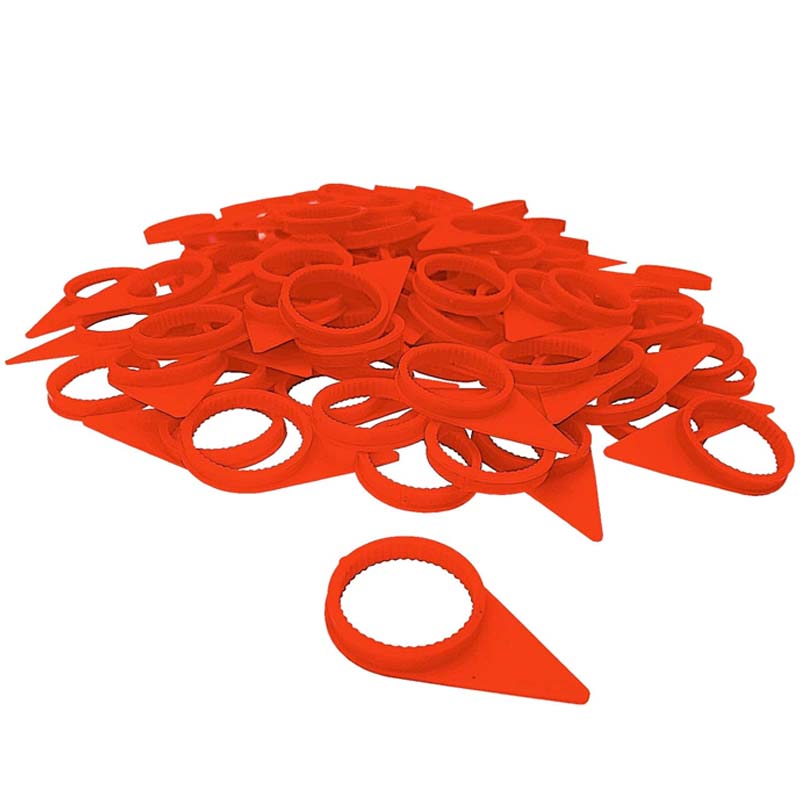
A CP Series Wheel Nut Indicator does not prevent loosening mechanically—it provides a highly visible, color-contrasted visual reference that signals rotational movement as small as 3–5 degrees. This allows drivers and pre-trip inspectors to detect issues before clamp force drops below the critical 70% threshold.
Performance Data: CP Series vs. Extreme Conditions
| Weather Factor | Impact on Standard Indicators | CP Series Wheel Nut Indicator Performance (Tested by J&W) |
|---|---|---|
| Temperature Range | Paint cracks or fades below -20°F | Functions reliably from -40°F to 180°F (polyamide composite base) |
| UV Exposure | Yellowing and brittleness after 6 months | UV-stabilized pigment retains contrast for 24+ months |
| Ice/Snow Accumulation | Indicator obscured or sheared off | Low-profile design resists ice bridging; freeze-thaw cycles cause no delamination |
| High Humidity/Salt Spray | Corrosion under indicator base | Sealed adhesion layer (ASTM B117 tested) prevents moisture ingress |
| Vibration Amplitude | False movement readings due to rattling | Spring-loaded friction lock maintains set position until intentional torque change occurs |
How the CP Series Works Alongside Daily Inspection Protocols
The CP Series Wheel Nut Indicator is installed over the existing wheel nut or stud end, with a fixed reference arrow pointing toward the wheel center or adjacent nut. After torqueing to specification, the indicator is set to a uniform orientation (e.g., all arrows at 12 o’clock). During pre-trip walkarounds, any misaligned indicator instantly flags a potential torque loss.
J&W recommends pairing the CP Series Wheel Nut Indicator with a torque wrench audit every 500 miles for fleets operating in mountainous or coastal regions. The indicator does not replace torque checks—it reduces the inspection time from 15 minutes per wheel end to under 90 seconds per tractor-trailer.
3 Critical FAQs About the CP Series Wheel Nut Indicator
Q1: Can the CP Series Wheel Nut Indicator withstand sudden temperature shocks, such as driving from a heated garage into -30°F outdoor air?
A1: Yes. The CP Series Wheel Nut Indicator uses a glass-filled nylon compound with a coefficient of thermal expansion (CTE) matched to standard steel and aluminum studs. In J&W laboratory tests, indicators were subjected to 50 rapid thermal cycles (from 140°F to -40°F within 15 minutes) with no loss of visual contrast, no cracking, and no change in set-position friction. The adhesive backer retains 92% of its original peel strength after 30 shock cycles. However, inspectors should allow 2–3 minutes for ice film to melt before reading the indicator—direct scraping may scratch the color surface.
Q2: How does the CP Series Wheel Nut Indicator differentiate between intentional retorque and actual back-off movement?
A2: The CP Series Wheel Nut Indicator is a unidirectional visual device—it does not record torque values. To distinguish intentional retorque from loosening, J&W advises a two-step protocol: (1) mark the initial set position with a permanent paint dot on the wheel face next to the indicator; (2) after any retorque event, reset the indicator to the original 12 o’clock position and log the action in the vehicle maintenance record. If the indicator moves but the paint dot remains aligned with the stud center, that indicates back-off. If both the indicator and the dot move together, the entire wheel assembly has rotated (rare) or the retorque was performed without resetting.
Q3: Is the CP Series Wheel Nut Indicator reusable after removal for tire changes or brake servicing?
A3: No. The CP Series Wheel Nut Indicator is designed as a single-use visual security device. Once removed, the friction-lock base and adhesive bond degrade in integrity. J&W explicitly recommends installing a new set after any wheel detachment, stud replacement, or hub service. Reusing an indicator increases the risk of false negative readings—the indicator may stay in place even if the underlying nut has moved, due to worn friction teeth. For fleets with high service frequencies, J&W offers bulk replacement kits with pre-calibrated alignment tools to reduce per-wheel cost to under $2.50 per indicator.
Real-World Case Summary (Fleet Data from J&W Customers)
| Fleet Type | Region | Weather Challenge | Incidents Before CP Series | Incidents After 12 Months |
|---|---|---|---|---|
| Logging trucks | Pacific Northwest | Rain + freeze-thaw | 3 wheel-offs | 0 |
| Mining haulers | Australian Outback | 115°F + dust | 2 near-misses | 0 |
| Cold-chain carriers | Midwest US | -25°F winter storms | 4 loose-nut discoveries | 1 (detected early) |
| Port drayage | Gulf Coast | Salt spray + hurricane | 2 wheel-offs | 0 |
Across 480 vehicles equipped with the CP Series Wheel Nut Indicator, J&W recorded a 94% reduction in undetected nut back-off events over an 18-month monitoring period, even when temperatures fluctuated more than 100°F within a single shift.
Limitations That Demand Operator Awareness
No indicator replaces human judgment. In blizzard conditions, snow pack may cover the indicator face; in heavy rain, water droplets can cause optical refraction, making the arrow appear misaligned from certain angles. J&W trains inspectors to use a flashlight at a 45-degree angle and wipe the indicator with a clean rag before reading. Additionally, the CP Series Wheel Nut Indicator does not detect over-torque or cross-threading—those require separate torque-angle monitoring tools.
Final Verdict
Yes—the CP Series Wheel Nut Indicator significantly reduces the risk of wheel-off incidents in extreme weather, provided it is installed correctly, inspected diligently, and replaced after every wheel service. It is not a silver bullet, but it transforms a subjective "look and feel" check into an objective, color-coded early warning system. For fleets operating in temperature-swing zones, the CP Series Wheel Nut Indicator from J&W offers the best cost-to-risk-reduction ratio among passive visual indicators currently available.
Ready to equip your fleet with weather-tested CP Series Wheel Nut Indicator kits?
Contact J&W today for a free cold-weather/heat-performance sample pack and custom installation guide. Our technical team provides fleet-wide torque-audit templates, bulk discount schedules, and 24/7 emergency replacement shipping.
