

Can a UPS Battery Cabinet Be Expanded Later to Add More Battery Modules or Runtime
2026-07-14
When specifying backup power for critical infrastructure, one of the most frequent engineering questions is whether a UPS Battery Cabinet can grow with future load demands. The short answer is yes—but with strict technical prerequisites. However, expansion is not as simple as plugging in extra batteries. This post examines the architectural constraints, compatibility rules, and real-world deployment strategies for scalable UPS Battery Cabinet systems, with practical insights from Shouke Yuantuo, a manufacturer specializing in modular UPS enclosures and thermal management solutions.
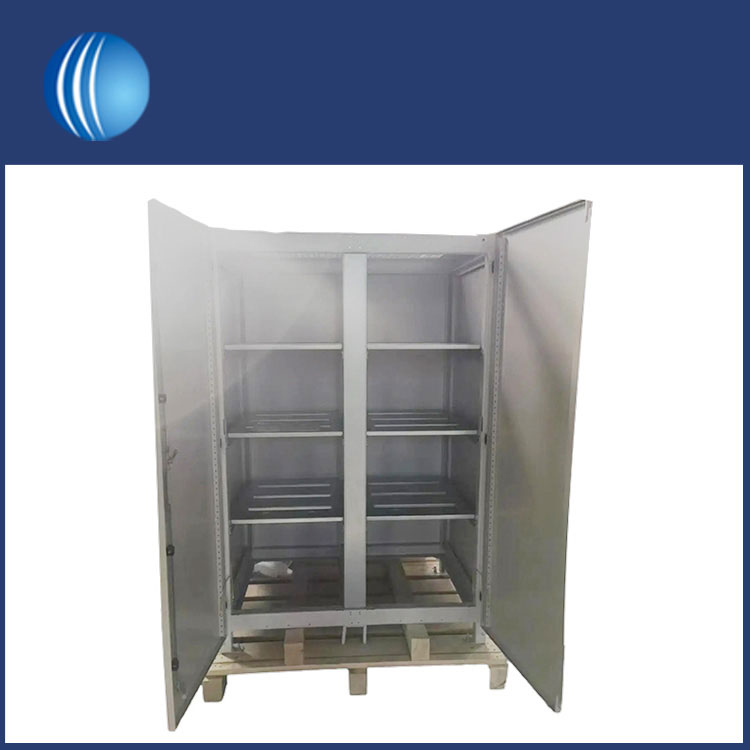
Expansion Feasibility: What Determines Scalability?
Not every UPS Battery Cabinet supports modular growth. Expandability depends on three core factors:
| Factor | Critical Question | Impact on Expansion |
|---|---|---|
| Bus voltage architecture | Is the cabinet designed for parallel battery strings? | Fixed-voltage cabinets (e.g., 240V DC) often allow parallel strings; proprietary high-voltage designs may not. |
| Internal busbar rating | Can the existing busbars carry additional current? | Undersized busbars create fire and voltage-drop risks. |
| BMS (Battery Management System) scalability | Does the BMS firmware support added cell counts? | Many legacy BMS units lock cell configuration at factory settings. |
| Physical footprint | Is there spare space for extra trays or adjacent cabinets? | Floor-standing units with empty tray slots are ideal; wall-mounted units rarely expand. |
Shouke Yuantuo designs its UPS Battery Cabinet series with a shared DC bus and modular BMS architecture, allowing up to 4 additional battery modules per enclosure without replacing the main controller.
Runtime vs. Capacity: Two Different Expansion Paths
It is vital to distinguish between adding capacity (kWh) and adding runtime (hours). A UPS Battery Cabinet expansion can serve either goal, but the engineering approach differs:
-
Capacity expansion – Adding parallel battery strings increases total stored energy while keeping output voltage constant. This extends runtime proportionally.
-
Redundancy expansion – Adding an extra battery string in an N+1 configuration improves fault tolerance without changing runtime.
Shouke Yuantuo recommends a parallel-string method for runtime extension, provided that all strings share the same age, chemistry, and state of charge. Mixing old and new batteries in the same UPS Battery Cabinet leads to circulating currents and premature failure.
Technical Checklist Before Expanding
Before ordering additional modules, verify these parameters:
-
Same battery chemistry (VRLA vs. Li-ion) – mixing is forbidden.
-
Same nominal voltage per module (e.g., 12V, 48V, or 192V).
-
Same internal resistance range (±5% tolerance).
-
BMS firmware version supports expanded addressing.
-
Cabinet thermal dissipation can handle extra heat load (typically +15–20% per module).
Shouke Yuantuo provides a free expansion audit tool for existing customers, including thermal simulation reports to prevent overheating after adding modules.
Common Expansion Scenarios (Real-World Examples)
| Scenario | Load Growth | Expansion Solution | Estimated Runtime Gain |
|---|---|---|---|
| Data center rack | +5kW IT load | Add 2 parallel Li-ion trays | +45 minutes at 50% load |
| Industrial control panel | +3 motors | Replace 4 VRLA blocks with 6 higher-capacity blocks | +30 minutes |
| Telecom shelter | +2 radio units | Stack a second UPS Battery Cabinet (master-slave) | +120 minutes (with load sharing) |
In all cases, Shouke Yuantuo stresses that expansion must be executed during scheduled maintenance windows, with full discharge testing afterward to validate balancing.
FAQ – Common Questions About UPS Battery Cabinet Expansion
Q1: Can I expand my UPS Battery Cabinet if it was purchased over 5 years ago?
A: Yes, but with significant caveats. Older cabinets often use obsolete BMS firmware and different cell chemistries. Shouke Yuantuo recommends first checking the original model’s datasheet for maximum parallel string count. If the cabinet supports expansion, you must install new modules from the same production batch to avoid internal resistance mismatches. For units older than 5 years, a full controller upgrade is usually more cost-effective than partial expansion, because the new BMS will support modern lithium profiles and remote monitoring—features that legacy controllers lack.
Q2: What happens if I add more battery modules without upgrading the thermal management system?
A: This is the most common cause of expansion failure. Each additional module in a UPS Battery Cabinet generates 12–18% more heat at full charge current. Without upgrading fans, heat sinks, or airflow baffles, the internal temperature can rise above 45°C, which halves VRLA battery life and triggers thermal derating in lithium packs. Shouke Yuantuo includes a thermal expansion sensor kit with every module order—this kit automatically adjusts fan speed curves and alerts operators if airflow becomes insufficient. We strongly advise against any expansion without recalibrating the thermal profile.
Q3: Do I need to reprogram the UPS inverter when I expand the UPS Battery Cabinet?
A: In most cases, no—provided the total DC voltage remains unchanged. The inverter only sees the bus voltage, not the number of parallel strings. However, you must update the battery capacity parameter (in Ah) within the UPS configuration menu so that the runtime estimation and low-battery warnings remain accurate. Shouke Yuantuo provides a step-by-step parameter adjustment guide with each expansion kit. If you skip this step, the display will show incorrect remaining minutes, and the automatic shutdown sequence may trigger prematurely during an outage. Always perform a full calibration discharge after parameter changes.
Cost-Benefit Analysis: Expand vs. Replace
For a typical 20kVA UPS Battery Cabinet, expansion costs roughly 40–60% of a new system, but offers 70–80% of the runtime gain—making it attractive. However, if your cabinet uses VRLA technology and is nearing 4 years old, Shouke Yuantuo advises replacing the entire unit with a lithium-based model, as the combined cost of new VRLA modules + labor often exceeds 70% of a new lithium cabinet with a 10-year warranty.
Final Recommendation from Shouke Yuantuo
Expansion is technically feasible and economically sound when planned within the first 3 years of operation, using identical battery modules and a scalable BMS. Always request a site survey and thermal simulation before purchasing extra modules. Shouke Yuantuo offers turnkey expansion kits that include matched cells, updated busbars, and firmware patches—ensuring your UPS Battery Cabinet performs reliably under expanded load.
Ready to scale your backup power safely? Contact our engineering team at Shouke Yuantuo for a free expansion viability assessment. We provide on-site support, remote diagnostics, and custom module matching to guarantee your UPS Battery Cabinet expansion meets both runtime and safety goals. Reach out today via our website or call your regional support line—we respond within 4 business hours.
