

Can a Viton Clamp Gasket Handle High-Pressure Sanitary Applications
2026-11-13
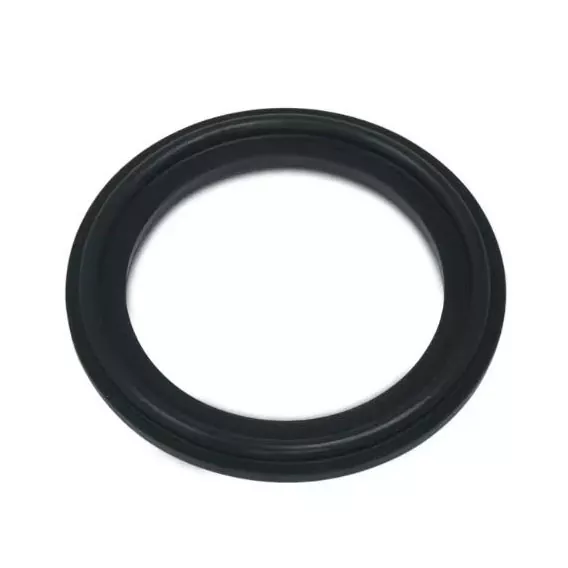
When process engineers specify sanitary connections for demanding lines, the first question is often whether a Viton Clamp Gasket can withstand the combined stresses of elevated pressure, temperature, and frequent cleaning. At DINGYUE, we manufacture Viton Clamp Gasket solutions for hygienic service and routinely test them against the operating conditions that matter most in pharmaceutical, food, and bioprocessing plants. This article examines the material science, performance limits, and practical selection criteria that determine whether a Viton Clamp Gasket is the right choice for your high-pressure sanitary system.
Understanding the Pressure Challenge in Sanitary Systems
Sanitary clamp connections (often Tri-Clamp or TC style) rely on a gasket compressed between two ferrules. Under pressure, the gasket must maintain sealing force while resisting extrusion into the clamp gap. Viton Clamp Gasket performance depends on four interacting factors:
-
Material hardness – typically 70–75 Shore A for standard service; 80–90 Shore A for higher pressure
-
Temperature – Viton retains useful elasticity from roughly −20 °C to 200 °C, but pressure capability declines as temperature rises
-
Clamp integrity – correct torque and undamaged ferrules prevent uneven compression
-
Media compatibility – swelling or softening from aggressive chemicals reduces seal strength
DINGYUE recommends evaluating all four together rather than treating pressure rating as a single number.
Performance Comparison: Viton vs. Common Sanitary Gasket Materials
| Property | Viton Clamp Gasket | Silicone | EPDM | PTFE |
|---|---|---|---|---|
| Continuous service temperature | −20 to 200 °C | −50 to 200 °C | −40 to 150 °C | −100 to 260 °C |
| Typical pressure capability (TC, 1–2 in) | Moderate to high | Low to moderate | Moderate | High |
| Chemical resistance | Excellent (oils, fuels, acids) | Poor to fair | Good (water, steam) | Outstanding |
| Compression set resistance | Excellent | Good | Good | Fair |
| Steam/hot water resistance | Fair | Fair | Excellent | Excellent |
| Cost | Moderate to high | Low | Low | High |
The table shows why a Viton Clamp Gasket is frequently selected for solvent, oil, and acid service, while EPDM is preferred for saturated steam. For high-pressure hygienic lines, hardness grade and clamp condition often matter more than the base polymer alone.
Practical Pressure Guidance
Based on typical sanitary clamp geometry and 70–75 Shore A material, DINGYUE offers the following general guidance for a Viton Clamp Gasket:
-
1–1.5 in connections: suitable for moderate pressures, with reduced ratings above 120 °C
-
2–3 in connections: pressure capability decreases as diameter grows; verify against application data
-
4 in and larger: high-pressure service generally requires reinforced or higher-durometer seals
These values are indicative only. Actual limits depend on temperature, media, clamp torque, and surface finish, so always confirm with DINGYUE engineering before commissioning.
Installation and Maintenance Best Practices
-
Inspect ferrules for scratches, dents, and product buildup before assembly.
-
Use the correct clamp size and tighten to the manufacturer's specified torque.
-
Replace the Viton Clamp Gasket at scheduled intervals; compression set is cumulative.
-
Confirm media compatibility using swelling data, not guesswork.
-
Avoid reusing gaskets after CIP/SIP cycles that exceed the rated temperature.
Frequently Asked Questions
Q: Can a Viton Clamp Gasket handle high-pressure sanitary applications?
A: Yes, within defined limits. A Viton Clamp Gasket in 70–75 Shore A is generally suitable for moderate pressures in small-diameter clamp connections, and higher-durometer grades extend capability. Pressure rating falls as temperature and diameter increase, so always validate against your specific operating envelope with DINGYUE.
Q: What temperature range does a Viton Clamp Gasket tolerate?
A: Standard Viton Clamp Gasket grades operate from about −20 °C to 200 °C. Prolonged exposure near the upper limit accelerates compression set and reduces pressure capability. For continuous high-temperature service, specify the appropriate Viton grade and confirm with DINGYUE.
Q: Is a Viton Clamp Gasket suitable for CIP and SIP cleaning?
A: It performs well in many CIP regimes but is only fair in saturated steam SIP compared with EPDM. Where repeated steam sterilization dominates, evaluate EPDM or a specialty compound. DINGYUE can recommend the right Viton Clamp Gasket grade for your cleaning cycle.
Conclusion
A Viton Clamp Gasket can absolutely handle high-pressure sanitary applications when the grade, hardness, clamp condition, and operating temperature are correctly matched. DINGYUE supplies tested Viton Clamp Gasket solutions with documented material data and application support to help you specify with confidence. Contact us today to discuss your pressure, temperature, and media requirements, and let our engineers recommend the right Viton Clamp Gasket for your sanitary system.
