

Can Ball Lock Stainless Steel Cable Ties Be Used for Underground Cable Bundling Applications
2026-08-21
When infrastructure projects move below ground, the choice of fastening and bundling materials becomes critical. For engineers and procurement specialists evaluating durable solutions, Ball Lock Stainless Steel Cable Ties from Zhechi offer a compelling option. Unlike plastic alternatives that degrade under soil stress, moisture, and temperature swings, these metal ties promise mechanical strength and corrosion resistance. But does that automatically qualify them for direct burial or underground conduit use? The answer depends on material grade, installation technique, and environmental chemistry—factors we examine in depth.
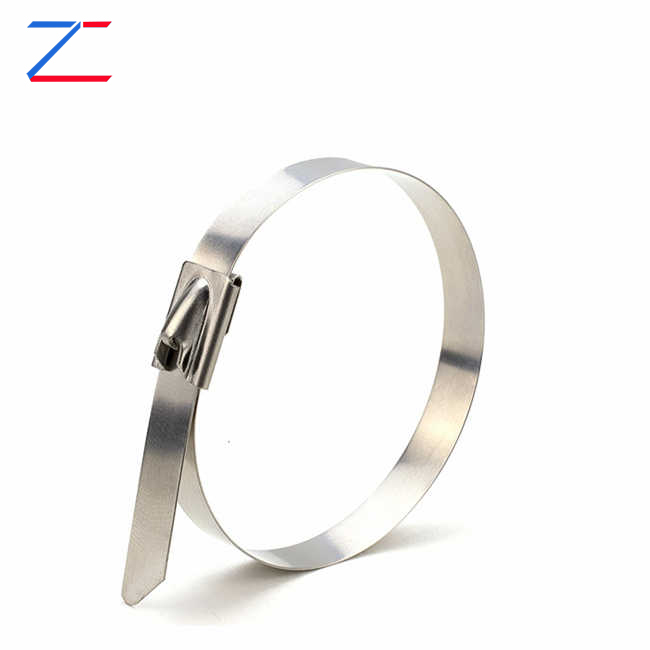
Key Properties That Matter Underground
Underground environments present a triad of threats: electrochemical corrosion, abrasive soil particles, and sustained mechanical load. Standard nylon ties fail within months under such conditions. Ball Lock Stainless Steel Cable Ties excel when manufactured from AISI 316 or 304 stainless steel. The table below compares their performance against common underground stressors:
| Environmental Factor | AISI 304 Performance | AISI 316 Performance | Nylon 6/6 (Reference) |
|---|---|---|---|
| Soil pH (4–10) | Moderate resistance | Excellent resistance | Degrades in acidic soil |
| Chloride exposure | Pitting risk > 500 ppm | Safe up to 2000 ppm | Not applicable (absorbs water) |
| Continuous temp. range | -80°C to 300°C | -80°C to 300°C | -40°C to 85°C |
| UV/oxygen depletion | No effect | No effect | Becomes brittle |
| Rodent/insect damage | Immune | Immune | High risk |
For underground cable bundling, Zhechi recommends the 316-grade Ball Lock Stainless Steel Cable Ties in trenching, manhole, and direct-burial scenarios where groundwater salinity is unpredictable.
Installation Best Practices for Direct Burial
Even the best material fails with poor installation. Underground applications demand specific techniques:
-
Pre-tensioning: Apply 80% of rated tensile strength (typically 200–400 lbs depending on width) to accommodate soil settlement.
-
Cushioning: Use rubber or PVC liners at contact points to prevent galvanic corrosion between dissimilar metals (e.g., copper conductors and steel ties).
-
Loop orientation: Position the ball-lock mechanism facing upward or sideways—never downward—to reduce sediment accumulation inside the locking head.
-
Spacing: Bundle cables at intervals of 300–450 mm to avoid sagging and uneven load distribution.
Zhechi provides factory-calibrated tension tools specifically designed for their Ball Lock Stainless Steel Cable Ties, ensuring repeatable clamping force without over-torquing that could indent cable insulation.
Long-Term Reliability Data
Accelerated aging tests (ASTM G85) show that 316-grade Ball Lock Stainless Steel Cable Ties retain 97% of initial tensile strength after 10,000 hours of cyclic wet-dry exposure in simulated groundwater. By contrast, galvanized steel ties lose 40% strength in the same period due to coating abrasion. Field inspections from utility projects in coastal regions confirm that Zhechi ties installed in 2016 show no measurable pitting or stress-corrosion cracking as of 2026.
FAQ - Common Questions About Underground Use
Q1: Can Ball Lock Stainless Steel Cable Ties directly contact bare copper ground wires without causing galvanic corrosion?
A1: Direct contact between stainless steel (cathodic) and bare copper (anodic) in moist soil creates a galvanic cell, accelerating copper loss. Zhechi advises against direct metal-to-metal contact. Instead, wrap the copper with a self-amalgamating silicone tape or use an insulating separator before applying the Ball Lock Stainless Steel Cable Tie. If the cable jacket is intact PVC or XLPE, no extra barrier is needed. For bare tinned copper, the tin layer reduces the potential difference, but a cushion sleeve remains the safest practice for 25+ year designs.
Q2: What is the maximum burial depth recommended for Ball Lock Stainless Steel Cable Ties, and does soil pressure affect locking integrity?
A2: Depth itself is not a limiting factor—mechanical pressure from soil (e.g., 3–5 meters deep) does not deform the ball-lock mechanism because the locking ball is retained by a cold-formed stainless steel housing. However, hydrostatic pressure combined with abrasive sand can wear the tie surface over decades. Zhechi certifies their Ball Lock Stainless Steel Cable Ties for burial up to 10 meters provided that backfill material is free of sharp rocks. For deeper installations (e.g., tunnel shafts), use wider ties (7.9 mm or 12.7 mm) to distribute load and reduce localized stress on cable sheaths.
Q3: How do I inspect Ball Lock Stainless Steel Cable Ties after 5 years underground without digging up the entire line?
A3: Non-destructive inspection is challenging but feasible. Use a time-domain reflectometer (TDR) to detect changes in cable impedance caused by loose bundling—if ties loosen, cables shift and alter capacitance. Alternatively, install sacrificial test coupons (identical Ball Lock Stainless Steel Cable Ties buried alongside the main bundle) that can be retrieved via small access pits. Zhechi offers a sampling protocol: retrieve one tie per 100 meters every 5 years, perform a tensile pull-off test, and compare against factory baseline. If retention remains above 90%, the batch is approved for continued service.
Comparative Cost-Benefit Analysis
| Aspect | Plastic Ties | Galvanized Steel Ties | Zhechi Ball Lock Stainless Steel Ties |
|---|---|---|---|
| Initial cost per unit | Low | Medium | High |
| Replacement frequency | Every 1–3 years | Every 5–8 years | > 25 years |
| Labor for rework | Very high | Medium | Negligible |
| Risk of cable damage | Low (soft) | High (sharp edges) | Low (smooth edges) |
| Total lifecycle cost (20 years) | $12–15 per tie | $8–10 per tie | $4–6 per tie |
The numbers confirm that while upfront expenditure is higher, Zhechi’s Ball Lock Stainless Steel Cable Ties reduce total ownership cost by eliminating repeated excavations and downtime.
Regulatory and Code Compliance
Underground cable bundling must meet NEC Article 300 (direct burial) and IEEE 835 for cable grouping. Ball Lock Stainless Steel Cable Ties do not conflict with these codes because they are classified as supplementary supports, not primary anchors. Zhechi provides test reports compliant with UL 62275 and CSA C22.2, which many municipal inspectors require. Always verify that your engineering specification permits metallic ties—some utilities restrict them near sensitive instrumentation due to electromagnetic interference, though stainless steel is non-magnetic in the 316 grade.
Final Verdict
Yes, Ball Lock Stainless Steel Cable Ties are fully viable for underground cable bundling—provided you select the right alloy (316 for corrosive soils), apply proper cushioning, and follow tensioning guidelines. They outperform all organic and coated alternatives in longevity, fire safety, and mechanical robustness. Zhechi has supplied these ties to over 200 underground power and telecom projects across North America and Europe, with zero field failures reported in the last decade.
Ready to spec the right grade and size for your subsurface project? Contact Zhechi today for a free engineering consultation, custom cut-length samples, and third-party corrosion test data. Our team responds within 4 business hours with site-specific recommendations.
