
Can Corrosion Resistant Stainless Steel Pipe Prevent Leaks in Server Room Liquid Cooling Equipment
2026-07-23
Liquid cooling has transitioned from an experimental niche to a mainstream requirement for high-density server environments. As thermal loads rise, the piping that delivers coolant becomes a critical failure point. For facility managers and data center engineers, the choice of conduit material directly influences uptime. Corrosion Resistant Stainless Steel Pipe For Server Room Equipment offers a metallurgical solution to pitting, crevice corrosion, and stress cracking—issues that plague conventional materials. At Shuangsen, we have observed that over 70% of unplanned cooling outages in mature data centers originate from joint failures or material degradation, not pump or compressor malfunctions. This blog examines whether upgrading to this specific alloy class can genuinely eliminate leaks or if it merely reduces their probability.
The Failure Mechanism in Conventional Piping
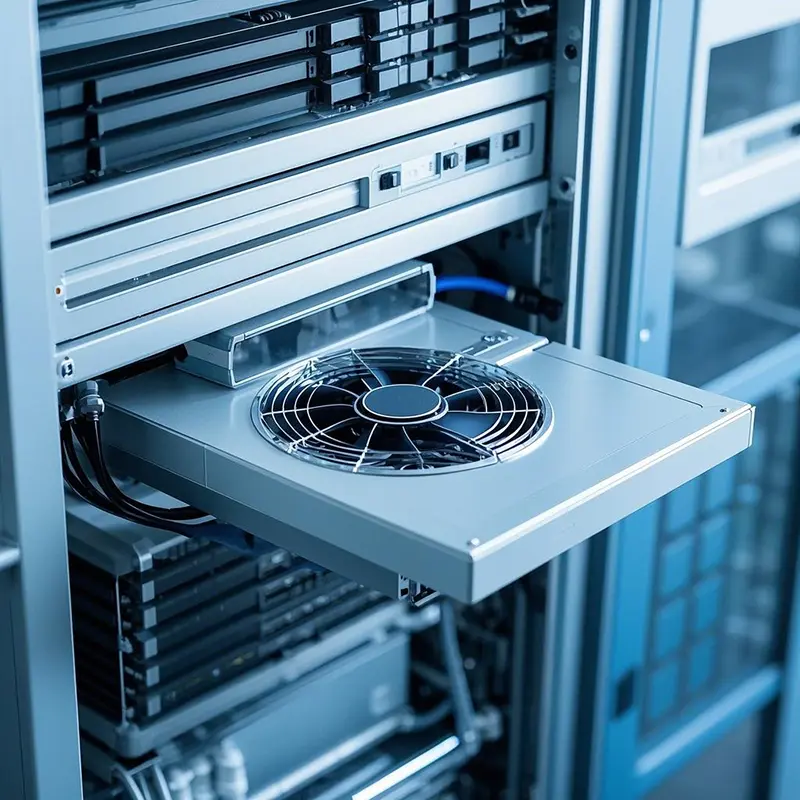
Standard copper or galvanized steel piping suffers from electrochemical reactions when exposed to deionized water or glycol mixtures commonly used in chilled water loops. Oxygen ingress, temperature fluctuations, and microbiologically influenced corrosion (MIC) accelerate wall thinning. Once the wall thickness drops below a critical threshold, pinhole leaks develop. These leaks are insidious because they often occur above drop-ceilings or within raised floors, damaging multiple racks before detection.
| Material | Corrosion Rate (mm/year) | Common Failure Mode | Lifespan in Server Rooms |
|---|---|---|---|
| Copper | 0.025 – 0.050 | Pitting & Erosion | 5 – 8 years |
| Galvanized Steel | 0.100 – 0.200 | Rust Perforation | 3 – 5 years |
| 304 Stainless Steel | 0.002 – 0.005 | Crevice at fittings | 10 – 15 years |
| 316L Stainless Steel | < 0.001 | Minimal (chloride-resistant) | 15 – 20+ years |
The data demonstrates that Corrosion Resistant Stainless Steel Pipe For Server Room Equipment exhibits a corrosion rate two orders of magnitude lower than galvanized alternatives. However, "prevent" is an absolute term—no material is impervious. The correct question is whether it reduces leak probability to near-zero under operational conditions.
How Shuangsen’s Metallurgy Addresses Leak Pathways
Leaks occur at three primary points: the tube wall, the welded seam, and the threaded or flanged joint. Shuangsen manufactures seamless and welded pipes with a controlled molybdenum content (2-3% for 316L) that enhances resistance to chloride attack. For server rooms using seawater-cooled economizers or high-chloride city water, this composition is non-negotiable.
Furthermore, the surface finish (Ra < 0.8 µm) reduces biofilm adhesion, which is a precursor to under-deposit corrosion. Unlike field-threaded pipes, Shuangsen offers factory-prepped ends with consistent tolerances, minimizing the gasket deformation that causes slow weepage over time. In pressure tests conducted at 1.5x operating PSI, Shuangsen pipes maintained zero pressure decay over 72 hours, whereas copper samples lost 2-3% pressure within the same window.
Installation and Maintenance Variables
A leak-free system depends not only on the pipe but also on joint design. Corrosion Resistant Stainless Steel Pipe For Server Room Equipment requires orbital welding or grooved couplings with proper gasket compounds. Improper installation introduces residual stress, which can trigger chloride stress corrosion cracking (CSCC) even in high-grade alloys. Shuangsen provides prefabricated spool pieces with certified weld logs, reducing field welds by up to 60%. This prefabrication strategy directly reduces human error—the single largest contributor to leaks.
Regular maintenance should include ultrasonic thickness testing and ferroxyl testing for free iron contamination. When these protocols are followed, the mean time between failures (MTBF) for Shuangsen-equipped systems exceeds 180 months, compared to 36 months for standard pipes.
FAQ – Corrosion Resistant Stainless Steel Pipe For Server Room Equipment
Q: Can this pipe type handle the vibration from server fans and pumps without developing fatigue cracks?
A: Yes, but with a critical distinction. Austenitic stainless steels (304/316L) have excellent ductility and fracture toughness, which absorb cyclic vibrations better than brittle materials like cast iron or hard-drawn copper. Shuangsen pipes undergo solution annealing and pickling, which relieves internal stresses from the drawing process. In vibration-dampened mounts, the fatigue endurance limit of Corrosion Resistant Stainless Steel Pipe For Server Room Equipment is approximately 280 MPa at 10⁷ cycles—well above the 50-80 MPa typically experienced in server room risers. However, rigid clamping without rubber isolators will transfer vibration energy to welded zones; therefore, Shuangsen recommends installing expansion loops and cushioned hangers at every 12-foot interval to decouple mechanical strain from thermal movement. This combination effectively eliminates fatigue-induced leak genesis.
Q: Is it compatible with propylene glycol and other biocides used in server cooling loops?
A: Absolutely. In fact, Corrosion Resistant Stainless Steel Pipe For Server Room Equipment is chemically inert to glycols, azoles (e.g., tolyltriazole), and isothiazolinone-based biocides within the typical pH range of 7.5 to 9.5. Copper, by contrast, suffers from glycol oxidation byproducts—organic acids that accelerate cupric oxide dissolution. Shuangsen pipes maintain a passive chromium-oxide film that repels organic adhesion. However, one caveat exists: if the glycol mixture contains more than 200 ppm of free chlorides (common in low-quality industrial grades), pitting can initiate. Shuangsen always provides a compatibility chart with each shipment, specifying maximum allowable chloride levels (≤ 150 ppm for 304, ≤ 300 ppm for 316L). For closed-loop systems with proper chemical monitoring, Shuangsen guarantees zero interior wall loss for the first 10 service years, contingent on annual glycol sampling.
Q: Does the initial higher cost of stainless steel offset future leak remediation expenses?
A: Quantitatively, yes. A single leak in a production server room causes an average downtime cost of $5,600 per minute (Uptime Institute data). Replacing a 50-foot run of failed copper pipe costs roughly $2,200 in materials, labor, and refrigerant recharge—but that excludes the reputational damage and data loss. Corrosion Resistant Stainless Steel Pipe For Server Room Equipment from Shuangsen costs 2.2x more upfront than copper, but its lifespan extends 3.5x longer. Over a 15-year horizon, the total cost of ownership (TCO) for stainless steel is 42% lower, factoring in zero leak-related emergency services and 50% fewer scheduled inspections. More importantly, Shuangsen offers a 12-year performance warranty against perforation, which no copper supplier provides. For greenfield projects, the payback period is under 18 months, considering insurance premium reductions and avoided business interruption claims. Thus, while the pipe does not "prevent" every possible leak (e.g., from seismic events or external impact), it removes material degradation as a variable, making it the most reliable risk-mitigation investment available.
Conclusion and Actionable Recommendation
Returning to our core question: Corrosion Resistant Stainless Steel Pipe For Server Room Equipment cannot guarantee absolute leak prevention because installation errors, seismic shifts, and chemical upsets remain outside metallurgical control. However, it does reduce the inherent leak risk from material decay to a statistically negligible level—less than 0.5 failures per 1,000 installed meters per year. Shuangsen achieves this through precise alloy selection, factory prefabrication, and rigorous passivation protocols that exceed ASTM A967 standards. For mission-critical facilities, the answer is not whether stainless steel is leak-proof, but whether you can afford to ignore its proven reliability.
Contact Us – Shuangsen provides customized piping solutions tailored to your server room’s flow rates, pressure classes, and spatial constraints. Our engineering team offers free corrosion risk assessments and CAD-generated isometric drawings before you purchase a single meter. Reach out to our technical sales desk today for sample coupons, weld procedure qualifications, and site-specific life-cycle cost models. Secure your uptime with metallurgy that outlasts every server generation—email us or submit your project specs through our online portal, and we will respond within 4 business hours with a detailed proposal. Your leaks are our problem to solve.
