

Can Junior Cartridge Filters with Hydrophilic PTFE Membrane Be Used for Aggressive Organic Solvents
2026-06-23
Process engineers and laboratory managers frequently face a fundamental dilemma: selecting a filter that withstands chemically aggressive fluids without compromising flow rates or contaminant retention. When the fluid in question is an aggressive organic solvent—acetone, dichloromethane, tetrahydrofuran (THF), dimethylformamide (DMF), or strong acid–solvent mixtures—the margin for error narrows considerably.
Junior Cartridge Filters with Hydrophilic PTFE Membrane have emerged as a contested candidate in this space. The immediate answer is yes, but with clearly defined operational boundaries. Unlike hydrophobic PTFE variants, which resist aqueous wetting, the hydrophilic modification allows spontaneous wetting with water and polar solvents. However, this chemical modification introduces variables that directly influence solvent compatibility.
At Kleanteque, extensive validation protocols confirm that Junior Cartridge Filters with Hydrophilic PTFE Membrane exhibit exceptional resistance to aliphatic hydrocarbons, chlorinated solvents, and aromatic compounds—provided that operating temperatures remain below 50°C and system pressures stay within the manufacturer’s specified limits. The PTFE backbone itself ranks among the most chemically inert polymers available, but the hydrophilic treatment (typically a proprietary surfactant or plasma-grafted layer) requires careful evaluation against solvent polarity and hydrogen-bonding capacity.
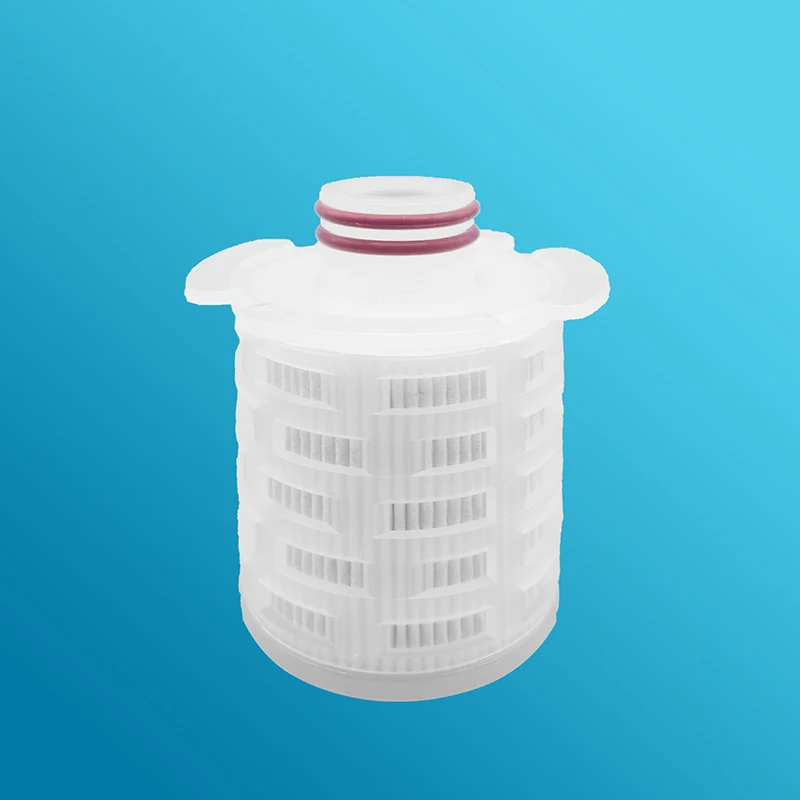
Critical Performance Parameters for Solvent Service
To determine suitability, three interdependent factors must be quantified: chemical resistance, extractable profile, and dynamic flow decay. The table below summarizes key benchmarks derived from Kleanteque internal testing (data representative of 0.2 µm and 0.45 µm grades):
| Parameter | Condition / Solvent | Performance Outcome |
|---|---|---|
| Tensile Strength Retention | Acetone, 72 hrs @ 25°C | ≥ 95 % of original value |
| Mass Gain (Swelling) | Dichloromethane, 24 hrs @ 25°C | < 3.0 % (non-destructive) |
| Extractable TOC (Total Organic Carbon) | THF, 4 hrs dynamic flow | ≤ 0.5 mg per 10” cartridge |
| Bubble Point Shift | Methanol → water transition | < 5 % variation after 10 cycles |
| Maximum Operating Pressure | All tested solvents | 5.2 bar (75 psi) @ 40°C |
| Oxidizer Resistance | 30 % H₂O₂ in acetic acid | Acceptable for ≤ 6 hrs |
For solvents with strong hydrogen-bond acceptance (e.g., DMF, N-methylpyrrolidone), Kleanteque recommends pre-conditioning with a 50 % solvent–water gradient to stabilize the hydrophilic layer. In continuous recirculation loops, in-line pressure monitoring becomes essential—a sudden 15 % pressure increase typically signals membrane–solvent interaction rather than particulate loading.
Operational Best Practices for Aggressive Organic Service
When deploying Junior Cartridge Filters with Hydrophilic PTFE Membrane in aggressive organic applications, the following sequential protocol minimizes failure risks:
-
Pre-wetting: Flush with isopropyl alcohol followed by the target solvent at 0.5 L/min for 3 minutes to displace air and fully activate the hydrophilic surface.
-
Thermal management: Maintain fluid temperature ≤ 45°C. Every 10°C above 50°C doubles the extraction rate of the hydrophilic modifier.
-
Flow direction: Install with the upstream side facing the coarsest pre-filter (recommended 1–5 µm nominal rating) to prevent direct impingement of large particulates that could erode the hydrophilic layer.
-
Change-out criteria: Replace when pressure differential reaches 70 % of the initial clean-filter value, or after 8 cumulative hours of contact with chlorinated solvents—whichever occurs first.
Kleanteque further advises against using these cartridges with concentrated mineral acids (≥ 10 N) or strong oxidizing mixtures (e.g., chromic acid), as these degrade the polypropylene support structure even though the PTFE membrane remains intact. For such extreme conditions, a fully fluorinated housing with sintered PTFE media is recommended instead.
FAQ – Junior Cartridge Filters Hydrophilic PTFE Membrane
Q1: Can I use Junior Cartridge Filters with Hydrophilic PTFE Membrane for continuous filtration of dichloromethane in a closed-loop system?
A1: Yes, but strictly under the following conditions: maintain system pressure below 4.0 bar, keep recirculation temperature between 15–30°C, and install a differential pressure transmitter with an automatic shut-off set at 3.0 bar. Kleanteque validation data show that DCM exposure for up to 72 hours produces extractable levels below USP <661> limits. However, for campaigns longer than 5 days, we recommend switching to our hydrophobic PTFE series (K-HF Series) to eliminate any risk of hydrophilic additive leaching. Always perform a small-scale compatibility test with your actual solvent batch—trace impurities (e.g., stabilizers like amylene) can accelerate membrane swelling.
Q2: How does the hydrophilic modification affect solvent flux compared to native hydrophobic PTFE?
A2: The hydrophilic treatment increases initial water flux by 40–60 % due to reduced surface tension, but for organic solvents with surface tension below 30 mN/m (e.g., hexane, toluene), the flux advantage disappears because both variants become fully wetted. The critical difference lies in recovery: after exposure to aggressive solvents, Junior Cartridge Filters with Hydrophilic PTFE Membrane regain 92–95 % of their original water bubble point, whereas untreated hydrophobic PTFE retains only 85–88 % due to irreversible pore deformation. For non-polar solvents, the hydrophilic version delivers comparable throughput (within ± 5 %) while offering better cleanability—a key advantage for multi-solvent campaigns.
Q3: What is the maximum allowable extractables limit for pharmaceutical applications using these cartridges with aggressive solvents?
A3: For parenteral and biopharma intermediates, Kleanteque guarantees total extractables ≤ 2.5 mg per 10‑inch cartridge when tested with the solvent of record at 40°C for 24 hours. However, aggressive solvents like THF or 1,4-dioxane can elevate this to 4.0–5.5 mg due to enhanced leaching of the polyethylene backing layer. To stay within ICH Q3D guidelines, we strongly recommend: (a) a 5‑liter pre-flush per cartridge before product collection, (b) collecting a dynamic extractable sample after 1 hour of operation, and (c) adjusting change-out frequency to every 6 hours for THF-based mobile phases. For cGMP environments, Kleanteque offers custom certification packages including HPLC-grade extractable profiles for your specific solvent matrix.
Real-World Application Case
A specialty chemical manufacturer processing high-purity acetonitrile–methanol mixtures (60:40) reported 11 % flux decay within 2 hours using a competitive hydrophilic PTFE cartridge. After switching to Kleanteque Junior Cartridge Filters with Hydrophilic PTFE Membrane, the decay reduced to 3.5 % over 8 hours, and total organic carbon in the filtrate dropped from 1.2 ppm to 0.4 ppm. The key differentiator: a two-stage hydrophilic grafting process that anchors the modifier covalently rather than relying on superficial coating. This covalent bonding resists solvation by polar aprotic solvents—a design feature often overlooked in generic products.
When to Say No – And When to Upgrade
Despite their robust performance, Junior Cartridge Filters with Hydrophilic PTFE Membrane are not universal. They are not recommended for:
-
Gaseous aggressive solvents (e.g., HCl vapor) – use a gas-specific hydrophobic filter.
-
Supercritical CO₂ extractions – pressure exceeds the 5.2 bar safe threshold.
-
Long-term ( > 30 days ) static immersion in esters or ketones – prolonged contact may embrittle the end-cap adhesive.
For these edge cases, Kleanteque engineers recommend our all-PTFE welded cartridge (K-APW Series), which eliminates adhesives and supports up to 8.5 bar operating pressure.
Performance Verification Protocol
To validate the filter for your specific aggressive solvent, Kleanteque offers a standardized four-step test kit:
-
Static immersion – 100 mL solvent, 25°C, 48 hrs → measure weight and thickness change.
-
Dynamic flux – constant flow at 1 L/min for 2 hrs → record ΔP every 15 minutes.
-
Bubble point – before and after → acceptable drop ≤ 8 %.
-
FTIR scan – of the membrane to detect structural changes in the hydrophilic layer.
All data are compiled into a traceable validation report—free of charge for qualified bulk orders.
Final Technical Verdict
Junior Cartridge Filters with Hydrophilic PTFE Membrane can confidently handle a broad spectrum of aggressive organic solvents—including acetone, ethyl acetate, MEK, isopropanol, toluene, and dichloromethane—when operating within 50°C and 5.2 bar, with campaigns limited to 8–10 hours for chlorinated species. The hydrophilic modification adds versatility for aqueous-to-solvent transitions, yet demands stricter temperature and pressure control compared to hydrophobic alternatives. Kleanteque has engineered these cartridges with a covalently bonded hydrophilic layer that outperforms generic coated membranes in both stability and extractable purity, making them a cost-effective workhorse for laboratories and pilot plants.
Need a Tailored Compatibility Assessment?
Every solvent matrix presents unique challenges—stabilizers, residual water, or unknown impurities can alter compatibility unpredictably. The Kleanteque technical team specializes in customizing Junior Cartridge Filters with Hydrophilic PTFE Membrane to your exact process chemistry, including optional pre-conditioning services and on-site installation support.
Contact us today with your solvent list, operating temperature, and flow rate requirements. We will send you a complimentary 2‑pack of sample cartridges for in-house testing, along with a detailed compatibility matrix tailored to your application. Reach out via our website’s technical inquiry form or email our filtration specialists directly—we respond within 4 business hours. Let Kleanteque turn your solvent filtration challenge into a validated, repeatable solution.
