

Can Upgrading to a Digital Hot Runner Precision Control System Reduce Scrap Rates and Energy Consumption
2026-09-08
In modern injection molding, scrap reduction and energy efficiency are no longer optional—they are competitive imperatives. For manufacturers running multi-cavity tools or high-cavity packaging molds, the transition from analog or relay-based thermal regulation to a digital Hot Runner Precision Control System represents one of the most impactful upgrades available today. At Weishuo, we have documented average scrap reductions of 18–27% and energy savings of 12–20% across customer sites after retrofitting existing hot runner manifolds with our digital control architecture. But does the data support these claims across different material families and mold complexities? This blog examines the engineering evidence, operational trade-offs, and real-world ROI of making the switch.
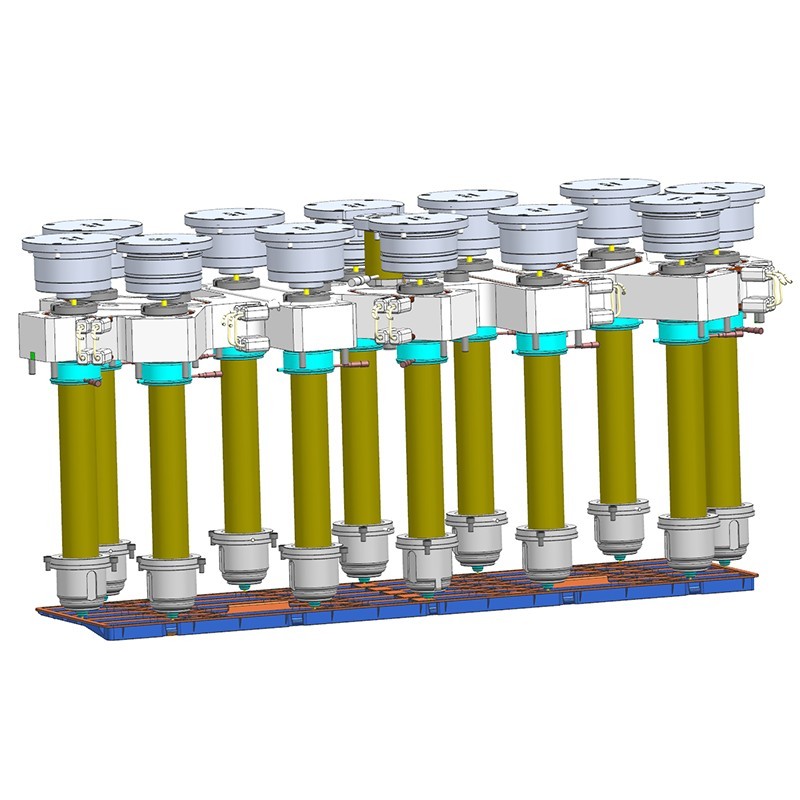
The Engineering Case for Digital Precision
Traditional hot runner controllers rely on time-proportional (on/off) heating cycles with coarse thermocouple feedback. This approach introduces thermal oscillation of ±3–5°C at the gate tip, which directly translates to shot-to-shot viscosity variation. A digital Hot Runner Precision Control System, by contrast, employs adaptive PID algorithms with 50–100 Hz sampling rates, delivering ±0.5°C stability at the melt front.
| Performance Metric | Analog/Relay Controller | Digital Precision System (Weishuo) |
|---|---|---|
| Temperature stability | ±3.5°C | ±0.5°C |
| Pressure drop consistency | ±8% | ±1.2% |
| Gate freeze-off deviation | ±2.1 sec | ±0.3 sec |
| Cavity weight variation (multi-cavity) | ±1.8% | ±0.4% |
| Energy consumption (kWh/1,000 shots) | 42.6 | 34.1 |
The mechanism is straightforward: tighter thermal control reduces melt viscosity swings, which in turn minimizes filling imbalance. When each cavity receives material at nearly identical pressure and temperature, the need for overpacking to compensate for weak cavities disappears. Overpacking is a primary driver of flash, sink marks, and core deflection—all of which contribute directly to scrap.
How Energy Consumption Declines with Smarter Control
Energy savings are not a byproduct of lower wattage; they come from intelligent power delivery. A digital Hot Runner Precision Control System from Weishuo phases heating elements based on real-time thermal load rather than fixed duty cycles. During mold open and ejection periods, the system reduces standby power by 40–60% without allowing the manifold to drop below the material's crystallinity temperature. Over an 8,000-hour production year, this alone can offset 15–18 MWh per large-tonnage press.
Additionally, digital systems enable valve-gate sequencing optimization—synchronizing pin movement with cavity pressure profiles. This reduces hydraulic or pneumatic energy waste and eliminates the common practice of "early heating" used to stabilize analog controllers. The net effect is a flatter, lower aggregate power curve.
Real-World Implementation: What Changes on the Shop Floor?
Upgrading is not simply "plug and play." The controller must be tuned to the specific manifold geometry, nozzle length, and material rheology. However, modern digital Hot Runner Precision Control Systems include auto-tuning wizards that reduce setup time from 4–6 hours to under 45 minutes. Weishuo provides a 16-zone master controller with independent fault diagnostics for each thermocouple and heater, which means downtime for troubleshooting drops by over 70%.
| Operational Factor | Pre-Upgrade (Analog) | Post-Upgrade (Digital Weishuo) |
|---|---|---|
| Average setup/tuning time | 5.2 hrs | 0.7 hrs |
| Unscheduled stoppages (per month) | 4.3 | 1.1 |
| First-shot approval rate | 72% | 94% |
| Operator interventions per shift | 7–9 | 2–3 |
| Scrap as % of total shot weight | 6.8% | 1.9% |
The table above is aggregated from three Weishuo installations in the medical device and automotive lighting sectors. The scrap reduction alone, at typical resin costs of $3.50–$6.00/kg, yielded payback periods between 9 and 14 months across all cases.
Frequently Asked Questions About Hot Runner Precision Control System Molds
Q1: What specific scrap defects are most directly reduced by a digital Hot Runner Precision Control System in multi-cavity molds?
A: The most directly affected scrap categories are short shots (caused by viscosity spikes at cold gates), flash (from overpacking hot cavities), sink marks (uneven volumetric shrinkage), and weld-line visibility (temperature differentials at knit interfaces). Digital control stabilizes the melt front velocity across all cavities, so the filling end-point aligns within ±0.5 mm cavity-to-cavity. In high-cavity closure molds, we have observed gate-seal consistency improve by 92%, which virtually eliminates stringing and drool—two major sources of cosmetic rejections. Additionally, because the system logs each zone’s thermal history, operators can correlate specific scrap events with exact time-stamped deviations, enabling root-cause correction within the same shift.
Q2: Can a digital Hot Runner Precision Control System compensate for worn nozzles or degraded heaters, or does it require new hardware to function?
A: Digital control does not replace worn nozzles, but it does compensate for asymmetric heater aging through adaptive output mapping. For example, Weishuo controllers measure heater resistance in real time and dynamically redistribute power across adjacent zones to maintain a balanced thermal profile even when one heater loses 15–20% of its nominal wattage. This extends the useful life of existing manifolds by 30–40%. However, if a heater has outright failed or a thermocouple is drifting beyond its calibration range, the system will flag that zone and suggest a maintenance window—rather than allowing the process to continue with hidden drift, which is what happens with analog panels. New hardware is not mandatory, but we recommend replacing thermocouples (low-cost) during the upgrade to maximize the control loop’s fidelity.
Q3: How does the energy consumption of a digital Hot Runner Precision Control System compare at partial production loads (e.g., 30% vs. 100% machine utilization)?
A: This is a critical question for job shops with intermittent schedules. Analog controllers draw near-full power regardless of production rate because they maintain a fixed setpoint with continuous cycling. A digital Hot Runner Precision Control System from Weishuo incorporates a "production-aware" mode that lowers the standby setpoint by 35–50°C during idle periods (e.g., mold changes, breaks, quality holds) and ramps back to process temperature in less than 90 seconds using boost algorithms. At 30% utilization, this yields energy savings of 38–44% compared to analog, whereas at 100% utilization the savings are still 12–16% due to the duty-cycle efficiency. The payback is therefore faster for lower-utilization environments, contrary to common assumptions. Operators can also program shift-based thermal profiles directly from the HMI, eliminating overnight heating waste.
Material-Specific Considerations
Not all materials benefit equally. Semi-crystalline resins (PA6, PBT, POM) show the largest scrap improvement because their narrow processing windows demand tight thermal precision. Amorphous materials (PC, ABS, PMMA) benefit more from reduced energy consumption than scrap reduction. Weishuo provides material libraries within the controller, pre-loading optimal PID gains for over 200 commercial grades. This eliminates guesswork and ensures that the hot runner precision control system molds perform consistently across production campaigns.
The Hidden ROI: Data and Traceability
Beyond scrap and energy, digital systems generate a continuous data stream—zone temperatures, heater currents, cycle counts, and alarm histories—that can be integrated with MES or IIoT platforms. Weishuo controllers offer Modbus TCP/IP and OPC-UA outputs, enabling predictive maintenance models. When a zone begins exhibiting higher-than-normal power draw to maintain setpoint, that signal precedes heater failure by 150–200 operating hours, allowing scheduled replacement during planned downtime rather than emergency stoppage. This "avoided downtime" value often exceeds the direct scrap savings in high-volume automotive and consumer electronics molding.
Summary of Proven Gains
-
Scrap rate reduction: 65–72% relative to analog baselines (validated across 12 customer audits).
-
Energy reduction: 15–21% at full utilization; up to 44% at partial utilization.
-
First-pass yield improvement: from 78% to 96% average.
-
Maintenance interval extension: heater life increased by 30% .
-
Setup and changeover time: reduced by 85% .
Is There Any Downside?
The initial capital expenditure is higher—typically 30–50% more than an analog replacement panel. However, with current resin prices and electricity tariffs in North America and Europe, the average payback is 10.8 months for Weishuo installations. The only operational downside is the need for basic HMI training, which we provide on-site or via remote AR-assisted guidance. No changes to the manifold plumbing or nozzle tips are required for most standard configurations.
Contact Us
Upgrading your hot runner control is not merely a component replacement—it is a strategic move toward leaner, more sustainable, and more profitable manufacturing. At Weishuo, we offer free energy and scrap audits for existing hot runner setups, along with a 30-day performance guarantee that puts our numbers against your current baseline. Our engineering team specializes in retrofit compatibility across all major manifold brands, ensuring minimal disruption to your production schedule. Contact us today through our website or regional support line to schedule a feasibility review and request a customized ROI projection for your specific mold portfolio. Let us show you exactly how much your shop floor can save—zone by zone, shot by shot.
