

Cycle Time Optimization: Breakthroughs in High-Speed Blow Molding Machine Design
2026-03-26
Why Is Cycle Time the Core KPI in Modern Bottle Manufacturing?
In today’s high-volume packaging sector, cycle time has become the defining metric for operational efficiency. From contract manufacturers in the Midwest to packaging suppliers across Western Europe, production managers track seconds per cycle as closely as output volume. A shorter cycle directly translates into higher throughput, improved machine utilization, and lower cost per unit.
In our factory, we see that optimizing cycle time is not about pushing machines to extreme speeds, but about achieving stable and repeatable performance. This approach ensures that production lines can maintain consistent output over long shifts without quality fluctuations. Our engineering philosophy focuses on real-world operating conditions, where reliability is just as important as speed.
Ningbo Kinggle Machinery Co., Ltd. has worked closely with global clients to refine machine configurations based on actual production feedback. This allows our systems to align with operator expectations and industry practices, ensuring smooth integration into existing workflows.
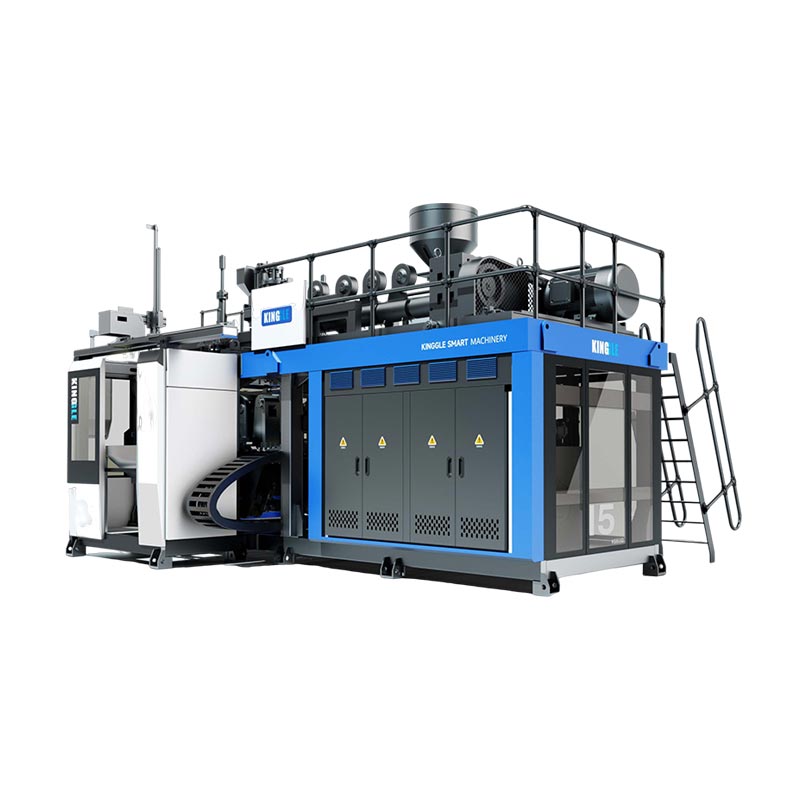
How Do Integrated Cooling Systems Deliver Measurable Cycle Time Reduction?
Cooling efficiency is a critical factor in reducing cycle time in any Blow Molding Machine. Traditional systems often rely on external cooling units with limited control over heat distribution. Modern designs, however, integrate advanced cooling channels directly into the mold and machine structure.
Our factory implements multi-zone cooling layouts that allow precise temperature management across different sections of the mold. This ensures faster and more uniform heat dissipation, reducing the time required for material solidification. As a result, mold opening can occur earlier without compromising product integrity.
Field applications have demonstrated that optimized cooling systems can reduce cycle time by up to 15 percent. This improvement not only increases production capacity but also lowers energy consumption per unit, which is especially valuable in regions with high electricity costs.
In addition, Ningbo Kinggle Machinery Co., Ltd. focuses on maintaining thermal stability during continuous operation. Consistent temperature control minimizes variation between cycles, ensuring predictable performance throughout long production runs.
What Technical Parameters Define High-Speed Blow Molding Performance?
Achieving high-speed production requires a balanced combination of mechanical precision, control systems, and process optimization. A well-designed Blow Molding Machine must maintain consistent performance across all operating parameters, from extrusion to cooling and ejection.
In our factory, we prioritize stable torque output, accurate parison control, and synchronized motion systems. These elements work together to ensure that each cycle is completed efficiently without introducing variability in product quality.
| Parameter | Standard Configuration | High-Speed Optimized Configuration |
| Cycle Time | 12 seconds | 10.2 seconds |
| Clamping Force | 180 kN | 220 kN |
| Extrusion Capacity | 70 kg per hour | 90 kg per hour |
| Wall Thickness Variation | ±8 percent | ±3 percent |
| Machine Stability | Standard | Enhanced servo control |
These parameters highlight how incremental improvements across multiple systems contribute to overall cycle time optimization. Rather than relying on a single upgrade, performance gains are achieved through integrated design enhancements.
How Does Precision Parison Control Improve Material Efficiency?
Parison control plays a vital role in ensuring consistent wall thickness and reducing material waste. In high-speed Blow Molding Machine operations, uneven material distribution can lead to defects, increased rejection rates, and unnecessary resin consumption.
Our systems utilize servo-driven parison programming, allowing operators to adjust material distribution in real time. This ensures that critical areas of the product receive adequate material while avoiding excessive thickness in less demanding sections.
In our factory, we also emphasize repeatability. Operators can store optimized production profiles for different molds, reducing setup time and ensuring consistent results across production batches. This is particularly beneficial for manufacturers handling multiple product lines.
Ningbo Kinggle Machinery Co., Ltd. integrates these capabilities into user-friendly control systems designed to match the expectations of operators in international markets. The result is improved efficiency without increasing operational complexity.
Why Are Energy Efficiency and Sustainability Driving Machine Innovation?
Energy consumption has become a major concern for manufacturers worldwide. Modern Blow Molding Machine designs address this challenge by incorporating high-efficiency components and optimized system architecture.
Our factory adopts servo motors and optimized pneumatic systems to reduce energy usage while maintaining high output levels. These improvements not only lower operating costs but also support sustainability goals by reducing overall carbon emissions.
Shorter cycle times further enhance energy efficiency by decreasing the amount of energy required per unit produced. When combined with precise material control, manufacturers can achieve significant reductions in both energy consumption and raw material usage.
| Feature | Conventional Design | Optimized Design |
| Energy Consumption per Cycle | 1.0 kWh | 0.82 kWh |
| Compressed Air Usage | Baseline | Reduced by 15 percent |
| Cooling Efficiency | Standard | Multi-zone optimized |
| Material Utilization | Standard | Improved by 8 percent |
These advancements demonstrate how engineering improvements can align productivity with environmental responsibility, a key requirement in global packaging markets.
FAQ: Cycle Time Optimization: Breakthroughs in High-Speed Blow Molding Machine Design
Q1: What are the most effective ways to reduce cycle time in high-speed blow molding?
The most effective methods include improving cooling efficiency, optimizing parison control, and enhancing machine synchronization. Integrated cooling systems allow faster heat removal, while precise control systems ensure consistent material distribution. Together, these factors reduce cycle duration without compromising product quality.
Q2: How does cycle time optimization impact production scalability?
Reducing cycle time increases the number of units produced per hour, making it easier to scale production without adding additional machines. This improves return on investment and allows manufacturers to respond more quickly to market demand.
Q3: Is it possible to maintain product quality at higher production speeds?
Yes, maintaining quality at higher speeds is achievable with proper system design. Advanced control systems, stable mechanical structures, and precise cooling ensure that each production cycle remains consistent. The key is to balance speed with process stability rather than exceeding optimal operating conditions.
Conclusion: How Can Manufacturers Turn Cycle Time Optimization into Long-Term Value?
Cycle time optimization is a strategic advantage in modern packaging production. By integrating advanced cooling systems, precision control technologies, and energy-efficient components, manufacturers can significantly improve productivity while reducing costs.
Our factory focuses on delivering practical, reliable solutions that align with real production needs. With continuous engineering improvements and close collaboration with clients, we help manufacturers achieve consistent high-speed performance.
