

Do I Need a Special Permit to Install a Charging Pillar for E-Bike in My Garage
2026-06-22
As electric bicycles surge in popularity, more homeowners are asking whether they can simply mount a Charging Pillar for E-Bike on their garage wall and plug it in. The short answer is: it depends. But the longer answer—covering local codes, electrical loads, insurance, and safety—is what this guide unpacks. At Xinzhongsen, we have supplied thousands of residential and commercial Charging Pillar for E-Bike units, and permit questions are the #1 hurdle we help customers clear. Here is the professional, code-conscious breakdown you need before drilling any holes.
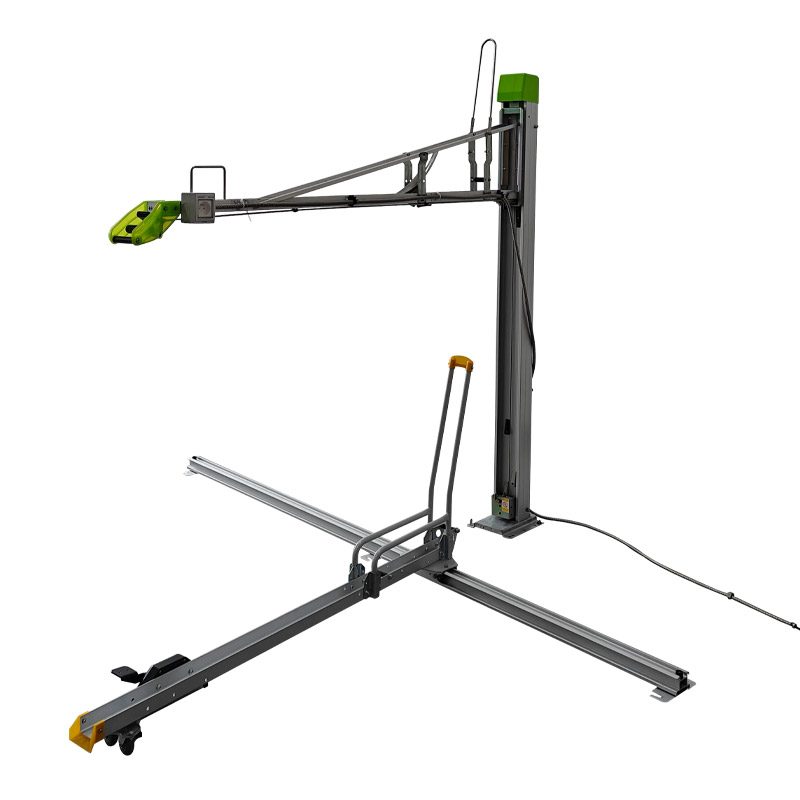
What Exactly Is a Charging Pillar for E-Bike (in Electrical Terms)?
Unlike a standard 120V outlet, a dedicated Charging Pillar for E-Bike typically includes:
-
A dedicated 20A–50A circuit (depending on output)
-
GFCI/RCBO protection for wet-location safety
-
Hardwired or plug-in weatherproof enclosure (NEMA 3R or higher)
-
Optional smart metering and load balancing modules
Because of these components, most building departments classify it as a permanent electrical installation—not a portable appliance. That classification is precisely why permits enter the picture.
When Do You DEFINITELY Need a Permit?
| Scenario | Permit Required? | Why |
|---|---|---|
| Hardwiring a Charging Pillar for E-Bike to your main panel | Yes | Alters fixed wiring; requires inspection per NEC Article 625 |
| Adding a new dedicated circuit (even with an existing outlet box) | Yes | Load calculation and breaker sizing must be verified |
| Installing outdoors or in an attached garage (US/Canada) | Yes | Must meet moisture, grounding, and disconnect rules |
| Replacing an existing EV/ebike charger with a higher-amp Charging Pillar for E-Bike | Yes | Upgrading amps may overload existing conductors |
| Simply plugging a portable charger into an existing 15A garage outlet | No | No permanent modification—but check if the outlet is dedicated |
Critical note: Even if your local inspector says “no permit needed,” your homeowner’s insurance may still require an electrical sign-off. Xinzhongsen always recommends pulling a permit—it protects your property and resale value.
The 3-Step Permit Process (Simplified)
-
Load Calculation – An electrician measures your panel’s spare capacity. A 30A Charging Pillar for E-Bike needs ~7.2 kW; older 100A panels often need an upgrade.
-
Plan Submission – Submit a single-line diagram showing breaker size, wire gauge (e.g., 10 AWG for 30A), and disconnect location.
-
Inspection – After installation, the inspector checks torque on terminals, grounding continuity, and GFCI trip time.
Skipping any step can lead to fines, forced removal, or denied fire claims.
What About “Minor Work” Exemptions?
Some jurisdictions exempt low-power devices under 20A or 240V. However, a Charging Pillar for E-Bike often operates at 240V/30A to future-proof for cargo e-bikes and light mopeds. Even at 120V/20A, if it’s hardwired, the exemption rarely applies. Xinzhongsen provides a compliance datasheet with every unit—showing exact amp draw, duty cycle, and environmental ratings—which speeds up permit applications significantly.
3 Charging Pillar for E-Bike FAQ (Frequently Asked Questions)
Q1: Can my regular handyman install a Charging Pillar for E-Bike without a licensed electrician, as long as I get a permit later?
A1: No. Most states require that any new fixed-wiring work be performed by a licensed electrical contractor who pulls the permit before work begins. A handyman can mount the pillar and run conduit, but final connections to the panel must be made by a licensed electrician who will sign the permit application. If you backdate the permit, inspectors can require you to open walls for re-inspection. Xinzhongsen advises hiring a local electrician familiar with Article 625 of the NEC—they know exactly how to ground the Charging Pillar for E-Bike and size the overcurrent device.
Q2: How much does a permit for a Charging Pillar for E-Bike typically cost, and how long does approval take?
A2: Permit fees range from $50 to $300 in the US, depending on your county. Plan review takes 1–5 business days for residential work; over-the-counter permits are faster (same day) if you bring a complete load calculation. Inspection scheduling adds another 1–3 days. Total timeline: usually 5–10 working days from electrician visit to final approval. Compare that to the $500–$2,000 cost of unpermitted work being red-tagged and removed—the permit is a bargain. Xinzhongsen includes a pre-filled permit checklist in every commercial shipment to streamline this step.
Q3: If I sell my house later, will the buyer’s appraiser ask for the permit for the Charging Pillar for E-Bike?
A3: Absolutely. In many states, sellers must disclose unpermitted electrical modifications. Appraisers and home inspectors actively look for EV/ebike charging equipment because they signal heavy electrical loads. Without a closed permit, buyers may demand a price reduction or require you to retroactively obtain a permit—which can involve opening drywall and exposing hidden junctions. Xinzhongsen has seen multiple real-estate deals delayed over missing e-bike charger permits. Save the headache: file the permit, keep the final inspection certificate, and attach it to your home’s electrical panel.
Permit vs. No-Permit – Decision Matrix
| Factor | With Permit | Without Permit |
|---|---|---|
| Insurance claim validity | Fully covered | High risk of denial |
| Resale value | Adds value; documented capacity | Potential liability |
| Inspection time | 1–5 days (plan) + 1 day (field) | 0 days (but risk of forced rework) |
| Electrician cost | $200–$600 (including permit fee) | $150–$400 (but no inspection) |
| Peace of mind | Maximum | Minimal |
Why Xinzhongsen Recommends Permits for Every Charging Pillar for E-Bike
We engineer our Charging Pillar for E-Bike units with UL 2231 and CSA C22.2 compliance—but even the safest hardware cannot overcome an unsafe installation. A permitted installation ensures:
-
Correct wire temperature ratings (75°C or 90°C)
-
Proper torque on terminals (preventing arcing fires)
-
Ground-fault detection that actually trips within 25 ms
-
Adequate clearance from combustible materials
Our technical team provides free single-line diagram templates and permit application guides for North American customers. We have helped over 1,200 homeowners pass inspection on the first try.
Final Verdict – Do You Need That Permit?
Yes, in 9 out of 10 garages. If your garage already has a dedicated 30A circuit with a NEMA 6-30 receptacle and you are simply plugging in a portable Charging Pillar for E-Bike, you may skip the permit—but only if your local AHJ (Authority Having Jurisdiction) explicitly exempts plug-in equipment. For hardwired, recessed, or outdoor-mounted pillars, the permit is non-negotiable.
Contact Us – Get Your Installation Right the First Time
Still unsure about your panel capacity, local codes, or permit forms? Xinzhongsen offers free 15-minute consultation calls with our in-house electrical engineers. We will review your garage photos, panel label, and desired Charging Pillar for E-Bike model—and send you a customized pre-permit package.
