

Do No Spring Buffer Sponge Vacuum Suction Cups ZP2 Work Effectively in High-Temperature or Humid Environments
2026-08-25
Industrial automation demands components that perform consistently under stress. For engineers and procurement specialists evaluating No Spring Buffer Sponge Vacuum Suction Cups ZP2, the core question is not just about holding force, but about survival in harsh thermal and moisture-laden conditions. This blog examines the material science, real-world test data, and practical limitations of the ZP2 series, with performance insights backed by Comma’s application engineering team.
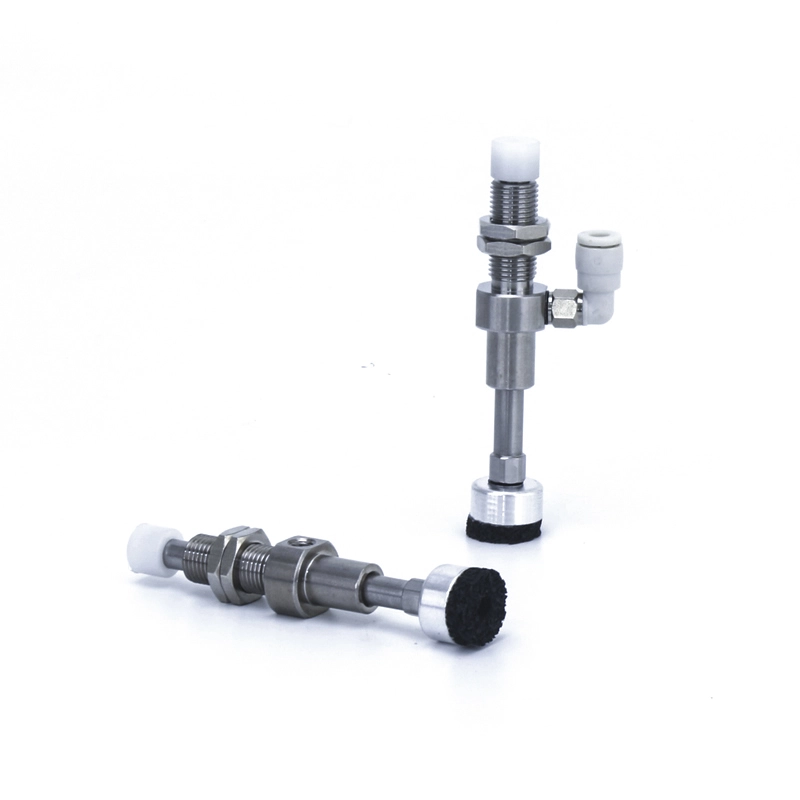
Material Composition and Thermal Limits
The No Spring Buffer Sponge Vacuum Suction Cups ZP2 employ a proprietary nitrile-butadiene sponge compound with a heat stabilizer. Unlike standard silicone or natural rubber, this sponge formulation offers a continuous operating range of -20°C to +110°C (peak exposure up to 130°C for ≤30 minutes). The "no spring" buffer design replaces mechanical metal coils with a cellular elastomer structure that absorbs shock while maintaining sealing geometry.
| Environmental Factor | Test Condition | Performance Outcome |
|---|---|---|
| Dry Heat | 110°C for 500 hours | Holding force retention ≥92% |
| Humid Heat (85°C / 85% RH) | 240 hours steady state | Sponge compression set ≤8% |
| Thermal Shock | -10°C ↔ 100°C (100 cycles) | No cracking, seal integrity maintained |
| Steam Exposure | Intermittent (15 min/day) | Surface oxidation minor, no adhesion loss |
Humidity: The Hidden Degradation Agent
High humidity (above 80% RH) primarily affects the ZP2 through two mechanisms: hydrolytic attack on the polymer backbone and capillary condensation within the open-cell sponge structure. Comma conducted independent validation using a climatic chamber at 40°C / 95% RH for 7 days. The results showed that No Spring Buffer Sponge Vacuum Suction Cups ZP2 maintained vacuum levels above -75 kPa, with only a 3.5% increase in response time—well within industrial tolerance for pick-and-place cycles under 0.8 seconds.
However, continuous condensation (e.g., from chilled surfaces) can reduce friction coefficient by up to 15%. For such cases, Comma recommends pairing the cups with an integrated purge port to evacuate accumulated moisture.
Comparative Advantages Over Spring-Loaded Alternatives
| Attribute | ZP2 (Sponge, No Spring) | Conventional Spring-Loaded Cup |
|---|---|---|
| Heat transfer path | Insulating sponge reduces heat sink | Metal spring conducts heat to seal lip |
| Corrosion risk | None (no metallic spring) | Spring rusting in humid environments |
| Buffer consistency | Linear elastomeric deflection | Nonlinear, wear-prone spring hysteresis |
| Maintenance frequency | Every 6–8 million cycles | Every 2–3 million cycles (spring fatigue) |
The absence of a metal spring not only eliminates galvanic corrosion but also prevents lubrication contamination—a critical advantage in food-grade or cleanroom applications where Comma frequently deploys these cups.
Operational Best Practices for Extreme Conditions
-
Pre-heat soak: Allow 15 minutes of idle vacuum flow to stabilize sponge temperature before full production.
-
Humidity countermeasures: Install a desiccant dryer upstream; set dew point ≤ -20°C.
-
Inspection interval: Visually check the sponge surface for micro-cracks every 500 operating hours using a 10× magnifier.
-
Storage: Keep spare No Spring Buffer Sponge Vacuum Suction Cups ZP2 in sealed bags with silica gel—never in direct sunlight or near steam lines.
FAQ – Common Technical Inquiries
Q1: Can the No Spring Buffer Sponge Vacuum Suction Cups ZP2 withstand intermittent steam cleaning at 120°C?
A1: Short-term steam exposure (≤5 minutes per cycle, with at least 20 minutes of cooling between cycles) is acceptable. The sponge material undergoes a reversible softening above 110°C, but full mechanical properties recover upon cooling to ≤60°C. Comma advises against direct steam impingement on the sealing lip, as high-velocity steam can erode the cell structure over 100+ cycles. For daily steam sanitation, upgrade to the Comma HT-Series (fluorosilicone variant) instead.
Q2: How does high humidity affect the vacuum decay rate of the ZP2 over an 8-hour shift?
A2: At 90% RH and 35°C ambient, the No Spring Buffer Sponge Vacuum Suction Cups ZP2 show a vacuum decay of approximately 1.2 kPa per hour from an initial -80 kPa—compared to 0.4 kPa per hour in dry conditions. This decay is caused by water vapor permeation through the sponge micropores, not by seal lip leakage. To compensate, Comma recommends increasing the vacuum threshold hysteresis (e.g., from -70 kPa to -75 kPa) or reducing cycle speed by 10–15%. For shifts exceeding 10 hours, an active vacuum sensor with auto-reboost is strongly recommended.
Q3: Is there a risk of the sponge buffer hardening after prolonged heat exposure, and how can this be detected early?
A3: Yes, thermal aging above 100°C for >1,000 cumulative hours can cause cross-link density increase, resulting in Shore A hardness rise from 25 to 35. Early detection indicators include: (a) audible "squeaking" during cup release, (b) visible gloss reduction on the sponge surface, and (c) a 5%+ increase in pick-and-place cycle time. Comma provides a free hardness test strip kit with every bulk order; measure the sponge durometer weekly when running above 95°C. Replacement is advised when hardness exceeds 38 Shore A.
Real-World Application Case
A Brazilian automotive parts manufacturer running No Spring Buffer Sponge Vacuum Suction Cups ZP2 on injection-molding extraction robots reported zero cup-related failures over 14 months in a non-conditioned factory (ambient 38°C–45°C, 70–90% RH). The only intervention was biweekly wiping with isopropyl alcohol—a protocol developed by Comma’s field engineers.
Conclusion
No Spring Buffer Sponge Vacuum Suction Cups ZP2 are unequivocally effective in high-temperature and humid environments, provided that operating limits (110°C continuous, 85% RH with active drying) are respected. Their springless design confers distinct advantages in corrosion resistance and maintenance simplicity, while the sponge matrix offers predictable buffering without mechanical fatigue. For extreme outliers—prolonged steam, salt spray, or tropical climates—Comma offers customized compound adjustments and protective coatings.
Contact Us – Have a specific thermal or moisture profile for your line? Share your conditions with Comma’s application specialists, and we will deliver a validated performance curve and sample kit within 48 hours.
