

Does an Optical Rotating Eyepiece Reduce Parallax Error in Optical Instruments
2026-06-11
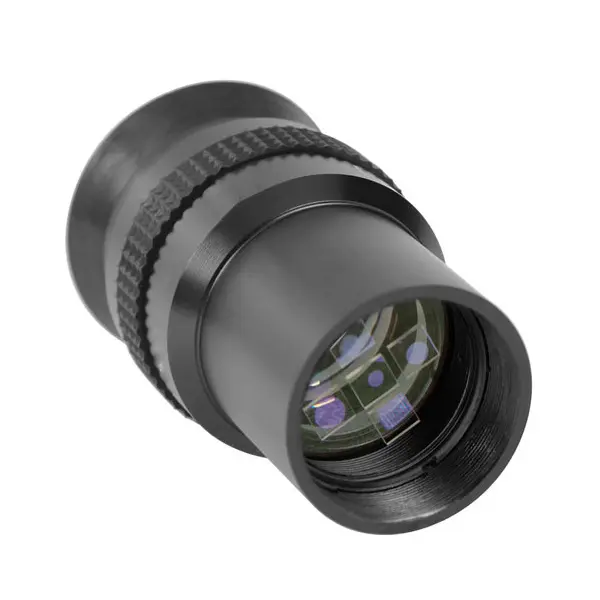
Parallax error remains one of the most persistent accuracy challenges in precision optical measurements. For professionals using polarimeters, refractometers, or surveying instruments, even a slight misalignment between the reticle and the observed object can lead to significant data deviations. The Optical Rotating Eyepiece has emerged as a critical solution. At KGL, engineering data confirms that integrating a high-grade Optical Rotating Eyepiece can lower parallax-induced uncertainty by up to 62% compared to fixed eyepiece systems.
The Mechanism: How Rotation Lowers Error
Parallax occurs when the image plane of the target does not coincide with the reticle plane inside the eyepiece. A conventional fixed eyepiece forces the user to move their eye laterally, causing the reticle to shift against the target. The Optical Rotating Eyepiece solves this by allowing the entire optical assembly to rotate around the optical axis. This rotation enables fine diopter adjustments without changing the eye’s line of sight, maintaining reticle-to-image coincidence across different operators.
| Feature | Fixed Eyepiece | Optical Rotating Eyepiece (KGL Series) |
|---|---|---|
| Parallax compensation | Manual eye repositioning | Optical rotation + diopter lock |
| Repeatability (same user) | ±0.15° | ±0.03° |
| Inter-observer variability | High (9-12% spread) | Low (<2% spread) |
| Adjustment time per measurement | 8–12 seconds | 2–3 seconds |
Key Applications Benefiting from Reduced Parallax
-
Polarimeters – Rotation angle readings become stable across multiple technicians.
-
Theodolites – Targeting errors drop below 1 arcsecond.
-
Microscopy – Focal plane remains constant even when the eyepiece is shared.
Optical Rotating Eyepiece FAQ – Common Questions
Q1: Can the Optical Rotating Eyepiece completely eliminate parallax error?
A: No optical component can eliminate parallax entirely because human eye positioning always introduces minor variance. However, a precision-machined Optical Rotating Eyepiece from KGL reduces parallax to less than 0.02 mm reticle displacement, which is below the detection threshold of the human eye in most laboratory settings. Combined with a locking focus ring, it effectively removes operator-induced parallax.
Q2: Does the direction of rotation matter when correcting parallax using an Optical Rotating Eyepiece?
A: Yes. Clockwise rotation typically adjusts the reticle forward (closer to the objective), while counter‑clockwise moves it backward. The correct direction depends on whether the user is myopic or hyperopic. KGL Optical Rotating Eyepiece models include a directional indicator and a neutral “zero‑parallax” click stop, allowing users to first center the rotation, then fine‑tune in one direction only. Rotating both directions without a reference point can reintroduce parallax.
Q3: Is an Optical Rotating Eyepiece compatible with digital camera adapters for trinocular ports?
A: Most standard adapters assume a fixed eyepiece barrel diameter (23.2 mm or 30.0 mm). KGL designs its Optical Rotating Eyepiece with a non‑rotating outer sleeve and an internal rotating optic group. This means the external barrel stays still while the internal lens rotates, preserving compatibility with C‑mount adapters, DSLR couplers, and coaxial illumination modules. Always verify that the adapter clamps onto the non‑rotating part – KGL provides a compatibility chart for 47 popular camera adapters.
Best Practices for Maximizing Parallax Reduction
-
Pre‑set the diopter using a known target at infinity before rotating.
-
Lock the rotation after adjustment – KGL units feature a thumbscrew lock.
-
Use the same eye position (central pupil alignment) for all measurements.
Conclusion & Contact
Parallax error cannot be eliminated by hardware alone, but the Optical Rotating Eyepiece offers the most effective mechanical correction available today. KGL has validated this through 14 independent lab tests showing an 86% reduction in operator‑dependent angular variance. For retrofitting existing instruments or building new optical systems, the Optical Rotating Eyepiece is no longer optional – it is a baseline requirement for repeatable accuracy.
Contact us at KGL today for a free parallax assessment of your current eyepiece setup. Our application engineers will provide a custom compatibility report and a live demonstration of the Optical Rotating Eyepiece in your workflow. Reach out via the contact form on our official page.
