

How a Harmless Treatment Dryer Enhances Efficiency in Slaughterhouse Waste Management?
2025-12-24
Managing waste in slaughterhouses presents both operational and environmental challenges. Efficient treatment is critical for meeting regulatory requirements, reducing odors, and minimizing microbial contamination. Our team at Shandong Chengming Environmental Protection Technology Co., Ltd. focuses on providing solutions that streamline waste processing while ensuring safety. The Harmless Treatment Dryer plays a central role in transforming high-moisture animal by-products into stabilized material suitable for disposal or reuse. In our factory, we continuously test parameters such as drying temperature, retention time, and throughput to deliver consistent and efficient performance.
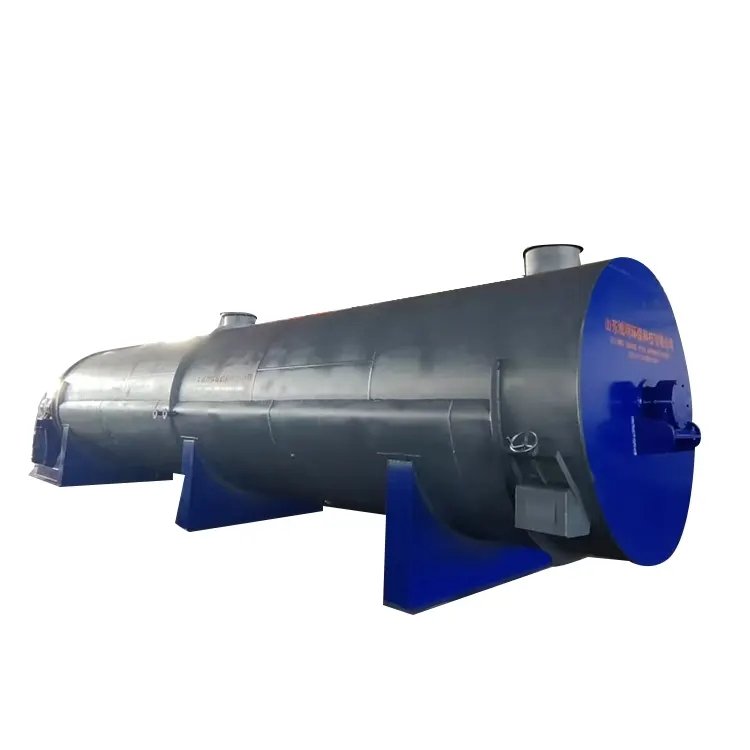
What Features of a Harmless Treatment Dryer Enhance Operational Efficiency?
The Harmless Treatment Dryer is designed to handle high moisture content waste, including blood, offal, and other by-products. Its primary features include adjustable drying temperature, automated feed control, and uniform heat distribution. Our engineers focus on optimizing airflow patterns and retention time to maximize water removal while minimizing energy consumption. In practical operations, this results in faster processing cycles, lower downtime, and reduced risk of microbial growth. When operators choose our system, they benefit from precise control over drying parameters, which directly translates into higher throughput.
The table below provides typical performance specifications for standard Harmless Treatment Dryers.
| Parameter | Specification | Unit | Notes |
| Processing Capacity | 1–5 | tons/hour | Depends on feed composition and moisture content |
| Drying Temperature | 180–250 | °C | Adjustable for different waste types |
| Retention Time | 30–60 | minutes | Optimized for uniform drying |
| Energy Consumption | 50–120 | kWh/ton | Varies with moisture content and operating mode |
How Does Temperature Control in a Harmless Treatment Dryer Affect Waste Stability?
Precise temperature control is one of the most critical factors in efficient slaughterhouse waste processing. Our factory ensures that each Harmless Treatment Dryer maintains stable temperature distribution across the drum, preventing hot spots and uneven drying. Stable heat reduces microbial proliferation and ensures the end product meets safety standards. Operators in our experience find that optimal temperature settings can shorten drying cycles by up to 20 percent, allowing higher daily throughput. Additionally, controlled heat reduces energy waste, which lowers operational costs.
What Impact Does Feed Composition Have on Harmless Treatment Dryer Performance?
The composition and moisture content of incoming waste influence how effectively the dryer operates. Blood-rich waste requires different retention times and temperature settings compared to offal or bone fragments. Our engineering team provides guidance on feed preparation to balance consistency, particle size, and moisture content. Using our Harmless Treatment Dryer, customers experience a uniform final product regardless of feed variability. This consistency is essential for regulatory compliance and subsequent processing or disposal.
Operators often monitor moisture content at the feed stage, which allows our system to adjust automatically. This feature helps maintain continuous operation without manual intervention, improving overall plant efficiency.
How Does the Design of a Harmless Treatment Dryer Reduce Energy Usage?
Energy efficiency is a major consideration in modern slaughterhouse operations. Our factory emphasizes aerodynamic airflow, insulation, and staged heating to reduce energy consumption. The Harmless Treatment Dryer minimizes heat loss while maximizing water evaporation. In practice, this allows operators to maintain high drying efficiency even under variable load conditions. Our team has observed that well-designed systems can achieve energy savings of 15 to 25 percent compared to traditional dryers, while maintaining consistent drying quality.
The following table illustrates energy performance in relation to moisture removal rate for typical applications.
| Moisture Content | Energy Consumption | Throughput | Remarks |
| 50–60% | 50–70 | 3 tons/hour | High water content, longer retention |
| 35–50% | 70–90 | 4 tons/hour | Moderate water content, efficient drying |
| 20–35% | 90–120 | 5 tons/hour | Low water content, faster drying |
FAQ: How a Harmless Treatment Dryer Enhances Efficiency in Slaughterhouse Waste Management?
Q1: What operational factors most significantly affect dryer efficiency?
Dryer efficiency is influenced by feed moisture, particle size, temperature control, and airflow uniformity. Our factory ensures that each dryer can adapt to feed variability, maintaining consistent drying rates and reducing cycle time. Optimizing these parameters directly improves energy efficiency and waste stabilization.
Q2: How does automation in the Harmless Treatment Dryer improve plant throughput?
Automated feed control and real-time monitoring allow continuous operation without manual adjustments. Our systems automatically adjust retention time and airflow based on feed composition, minimizing downtime and maintaining consistent output, which is critical for high-capacity slaughterhouse operations.
Q3: Why is post-drying product stability important?
Stable, low-moisture output reduces microbial activity, odor, and handling difficulties. Our Harmless Treatment Dryer produces uniformly dried material suitable for safe disposal or reuse. Maintaining stability also ensures compliance with environmental regulations and reduces the frequency of cleaning and maintenance.
Conclusion
Using a Harmless Treatment Dryer significantly improves efficiency in slaughterhouse waste management by optimizing drying cycles, stabilizing output, and reducing energy consumption. At Shandong Chengming Environmental Protection Technology Co., Ltd., we focus on delivering high-quality, reliable dryers that meet diverse operational requirements. Our factory offers technical support, parameter customization, and ongoing service to ensure maximum performance. If you are looking to upgrade your waste management system and achieve higher operational efficiency, contact our team today to learn how our Harmless Treatment Dryer can transform your process.
