

How Can Cement Concrete Brick Mold Wear Affect Brick Dimensions?
2026-10-20
A quality inspector at a concrete block plant reviews the monthly dimension report. At the beginning of the month, 98 percent of the bricks were within the ±2 mm tolerance. At the end of the month, only 85 percent were within tolerance, and the average width had increased by 1.5 mm. The operator had not changed the mix design or the vibration parameters. The inspector measured the Cement Concrete Brick Mold and found that the side plates had worn by 0.8 mm on the wear surface. The wear increased the cavity width, which increased the brick width. This is a common and predictable failure mode. This guide explains how mold wear affects brick dimensions and how to manage it.
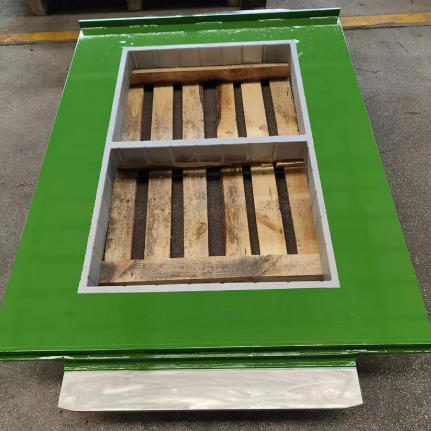
1. Where Does Wear Occur in a Cement Concrete Brick Mold?
A Cement Concrete Brick Mold consists of side plates, end plates, and a core or punch. The wear occurs at the surfaces that contact the concrete during filling, compaction, and ejection. The most severe wear is at the edges of the side plates, where the concrete slides against the steel during ejection. The second most severe wear is on the face of the side plates, where the concrete is compacted under pressure. The end plates experience less wear because the concrete movement is primarily perpendicular to the plate surface. The table below shows the typical wear locations and rates.
| Wear location | Wear mechanism | Typical wear rate (mm per 100,000 cycles) | Effect on brick dimension |
| Side plate edges | Abrasion during ejection | 0.3 – 0.5 | Increases brick width |
| Side plate faces | Compaction pressure | 0.1 – 0.2 | Increases brick width and height |
| End plate faces | Compaction pressure | 0.05 – 0.1 | Increases brick length |
| Core / punch | Abrasion during ejection | 0.2 – 0.4 | Changes hole dimensions |
In our factory, we manufacture Cement Concrete Brick Mold units from wear-resistant steel with a hardness of 50 to 55 HRC. The side plates are machined to a tolerance of ±0.05 mm. We recommend that the plant measure the mold dimensions every 50,000 cycles to track the wear rate. PRO Industry Group Co., Ltd. has been manufacturing brick molds for over 15 years and provides wear measurement templates for our customers.
2. How Does Wear Translate Into Brick Dimension Deviation?
The brick dimension is determined by the cavity dimension in the mold. When the side plate wears, the cavity becomes larger, and the brick becomes larger. The relationship is direct: a 0.5 mm wear on each side plate increases the brick width by 1.0 mm. The table below shows the relationship between mold wear and brick dimension deviation for a standard 200 mm brick.
| Mold wear (mm per side) | Cavity width (mm) | Brick width (mm) | Deviation from nominal (mm) | Within ±2 mm tolerance? |
| 0 | 200.0 | 200.0 | 0 | Yes |
| 0.3 | 200.6 | 200.6 | +0.6 | Yes |
| 0.6 | 201.2 | 201.2 | +1.2 | Yes |
| 1.0 | 202.0 | 202.0 | +2.0 | Marginal |
| 1.5 | 203.0 | 203.0 | +3.0 | No |
Quality inspector's note: The tolerance limit for a standard concrete brick is ±2 mm. When the mold wear reaches 1.0 mm per side, the brick is at the limit of the tolerance. At this point, the mold should be replaced or reworked. If the mold is not replaced, the bricks will be oversized, which causes problems during masonry. The mortar joint thickness must be increased to accommodate the larger bricks, which increases the risk of cracking and reduces the wall strength.
3. What Other Factors Accelerate Mold Wear?
The wear rate of a Cement Concrete Brick Mold is not constant. It depends on the abrasiveness of the concrete mix, the compaction pressure, the ejection speed, and the mold material. The table below shows the effect of these factors on the wear rate.
| Factor | Low wear condition | High wear condition | Wear rate increase |
| Aggregate type | River sand and gravel | Crushed granite or slag | 2 – 3x |
| Compaction pressure | Low (standard block) | High (paver or high-strength block) | 1.5 – 2x |
| Ejection speed | Slow | Fast | 1.2 – 1.5x |
| Mold material hardness | 55 HRC | 45 HRC | 2 – 3x |
| Lubrication | Regular mold release agent | No release agent | 3 – 5x |
In our factory, we recommend that the plant use a mold release agent on every cycle. The release agent reduces the friction between the concrete and the mold, which reduces the wear on the side plate edges. We also recommend that the plant monitor the aggregate type and adjust the mold material if the aggregate is highly abrasive. PRO Industry Group Co., Ltd. offers molds in three material grades: standard (50 HRC), premium (55 HRC), and extra-premium (60 HRC) for highly abrasive mixes.
4. How Should Mold Wear Be Managed in Production?
Mold wear is inevitable, but it can be managed. The first step is to establish a measurement schedule. The mold dimensions should be measured every 50,000 cycles or every month, whichever comes first. The measurement should include the cavity width, the cavity length, and the core diameter. The second step is to set a wear limit. The wear limit is the point at which the brick dimension approaches the tolerance limit. For a ±2 mm tolerance, the wear limit is 1.0 mm per side. The third step is to plan the replacement. The replacement should be scheduled before the wear limit is reached, not after. The table below shows the recommended management schedule.
| Production cycle | Action | Acceptance criteria |
| Every 50,000 cycles | Measure cavity dimensions | Record wear; compare to baseline |
| Every 200,000 cycles | Inspect side plate edges for rounding | Edge radius < 0.3 mm |
| At 1.0 mm wear per side | Schedule mold replacement | Order new mold or rework |
| At 1.5 mm wear per side | Stop production with this mold | Brick out of tolerance |
In our factory, we provide a wear log template with every Cement Concrete Brick Mold. The template allows the plant to record the measurements and to track the wear rate over time. We also offer a mold rework service that restores the cavity dimensions to the original specification. The rework involves welding the worn surfaces and re-machining to the original tolerance. PRO Industry Group Co., Ltd. can rework molds up to three times before the base material is too thin.
Frequently Asked Questions About Cement Concrete Brick Mold Wear and Brick Dimensions
Summary for Brick Plant Quality Inspectors
Cement Concrete Brick Mold wear is a predictable and manageable phenomenon. The wear occurs primarily on the side plate edges and faces. The wear increases the cavity dimension, which increases the brick dimension. The tolerance limit is reached when the wear is 1.0 mm per side. The wear rate is accelerated by abrasive aggregates, high compaction pressure, and lack of lubrication. The mold should be measured every 50,000 cycles and replaced or repaired before the wear limit is reached. By managing mold wear, the plant can maintain brick dimensions within tolerance and avoid the cost of rejection and rework. PRO Industry Group Co., Ltd. has been manufacturing Cement Concrete Brick Mold units for over 15 years and provides full wear management support for our customers.
PRO Industry Group Co., Ltd. manufactures Cement Concrete Brick Mold units in standard, premium, and extra-premium material grades. We provide wear log templates, measurement guides, and mold repair services for all of our products.
