

How Can Chemical Storage Cabinets Be Matched to Different Chemical Inventory Requirements?
2026-11-11
A laboratory safety officer is reviewing a chemical inventory list before ordering new Chemical Storage Cabinets. The list contains forty items: solvents, acids, bases, oxidizers, and a small quantity of highly toxic compounds. The officer has one empty cabinet in the corridor and a budget for two more. The question is not which cabinet is the best. The question is which cabinet matches which group of chemicals, and which groups cannot share a cabinet. This guide explains how to convert a chemical inventory list into a cabinet specification, so that each cabinet is matched to the inventory it will actually hold.
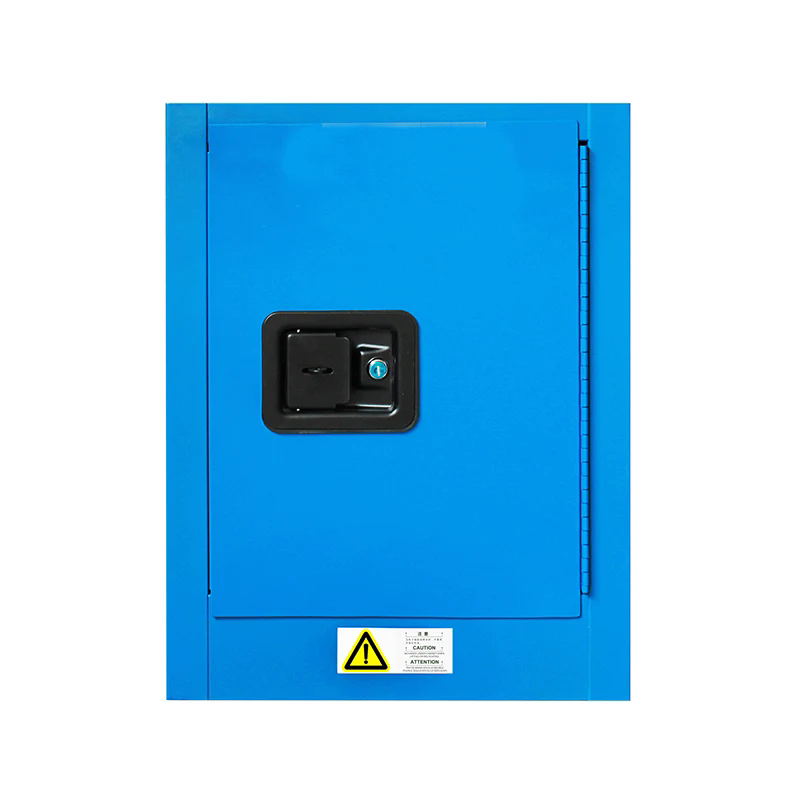
1. Why Does a Chemical Inventory List Need to Be Converted Into a Cabinet Specification?
A chemical inventory list records what is stored. A cabinet specification records what the cabinet must do to store it safely. The two are not the same. The inventory list may show that a solvent has a flash point of 12 degrees Celsius, but the cabinet specification must translate that flash point into a fire rating, a venting requirement, and a bonding requirement. The inventory list may show that an acid is concentrated nitric acid, but the cabinet specification must translate that into a stainless steel liner, a separate acid cabinet, and an oxidizer separation distance. In our factory, we ask the customer to send the inventory list before we quote a cabinet. Guangsheng Technology Wuxi Co., Ltd. has been manufacturing Chemical Storage Cabinets for over 12 years.
The conversion has three steps. The first is to group the chemicals by hazard class: flammable, corrosive, oxidizer, toxic, and compressed gas. The second is to identify the incompatible pairs that must be separated. The third is to size the cabinet for the container format and the quantity. The inventory list becomes a cabinet specification only after all three steps are complete.
2. Which Cabinet Construction and Liner Material Suit Which Chemical Families?
The cabinet construction and liner material must resist the chemicals stored inside. A flammable cabinet is typically made from 1.0 to 1.2 millimeter cold-rolled steel with a powder coating. The coating resists solvents but is not suitable for concentrated acids. A corrosive cabinet is made from steel with a polypropylene or polyethylene liner, or from solid polypropylene. The liner resists acids and bases but may not be fire rated. An oxidizer cabinet is made from stainless steel or from a coated steel with a non-combustible interior. The table below matches the cabinet construction to the chemical family.
| Chemical family | Recommended cabinet construction | Interior liner | Ventilation | Fire rating |
| Flammable solvents | Cold-rolled steel, powder coated | None (steel) | Optional, with flame arrestor | 30 – 90 minutes |
| Corrosive acids and bases | Steel with polypropylene liner, or solid polypropylene | Polypropylene | Required, corrosion resistant | Not required (but check local code) |
| Oxidizers | Stainless steel or coated steel | Stainless steel | Required, separate from flammable exhaust | 30 – 60 minutes |
| Toxic compounds | Steel with sealed gasket | Epoxy or phenolic | Required, with filtration | 30 – 60 minutes |
In our factory, we manufacture cabinets with all four construction types. We also manufacture a dual-purpose cabinet with a polypropylene liner inside a fire-rated steel body, which is used when a single cabinet must hold both flammables and small quantities of corrosive reagents. Guangsheng Technology Wuxi Co., Ltd. provides a chemical compatibility chart with each cabinet and can review the customer's inventory list against the chart before shipment.
3. How Do Ventilation, Fire Rating, and Containment Sumps Match Inventory Risk?
Ventilation, fire rating, and containment sumps are the three cabinet features that are matched to the inventory risk. Ventilation removes vapors that could ignite or that could corrode the cabinet interior. A flammable cabinet may be vented to the outside through a flame arrestor, or it may be unvented if the local code allows. A corrosive cabinet must be vented because the vapors attack the steel. The fire rating is matched to the flash point and the quantity of the flammable inventory. A cabinet with a 90 minute fire rating is used when the inventory includes low flash point solvents in large quantities. The containment sump is matched to the largest container in the cabinet. The sump must hold at least 110 percent of the largest container volume, or the total volume of the containers, whichever is greater. In our factory, we calculate the sump capacity from the inventory list and we mark the capacity on the cabinet. Guangsheng Technology Wuxi Co., Ltd. provides the sump calculation with each quotation.
The ventilation and fire rating must also be coordinated with the room. A fire-rated cabinet installed in a room without fire separation does not provide the intended protection. A vented cabinet connected to a shared exhaust duct can spread vapors to other areas if the duct is not designed for the chemical load.
4. Why Does Cabinet Size and Shelving Configuration Follow the Container Format, Not the Room Size?
The cabinet size is often selected by the room size, but it should be selected by the container format. A cabinet that is too deep wastes floor space and makes the rear containers difficult to reach. A cabinet that is too shallow cannot hold the containers upright. A cabinet with fixed shelves cannot accommodate tall containers. A cabinet with adjustable shelves can be reconfigured when the inventory changes. In our factory, we ask for the container dimensions, the container count, and the shelf load. We then calculate the number of shelves and the shelf spacing. We also check the door opening width against the widest container. Guangsheng Technology Wuxi Co., Ltd. supplies adjustable shelves with a 75 millimeter increment and a shelf load rating of 150 kilograms per shelf.
The container format also determines the door type. A cabinet with two full-height doors provides a wide opening but requires more aisle space. A cabinet with a combination of a full-height door and a half-height door provides a smaller opening for small containers and a wider opening for large containers. The door type must match the way the containers are handled in the laboratory.
5. How Should Buyers Verify a Chemical Storage Cabinet Against Their Inventory and Local Code?
The buyer should verify four things before accepting the cabinet. The first is the construction and liner match against the inventory list. The second is the ventilation and fire rating match against the hazard class and the quantity. The third is the sump capacity match against the largest container. The fourth is the cabinet label and the certification match against the local code. The verification should include a review of the material certificate, the liner certificate, the fire test report, and the sump calculation. In our factory, we provide a verification package with each cabinet that includes all four documents. Guangsheng Technology Wuxi Co., Ltd. also offers a pre-purchase inventory review, where our engineers review the customer's inventory list and recommend the cabinet grouping and the cabinet specification.
We recommend that the buyer check the local fire code before selecting a fire rating. Some jurisdictions require a 90 minute rating for any flammable cabinet, while others accept a 30 minute rating for small quantities. The cabinet must also be labeled with the hazard class and the maximum quantity, and the label must match the inventory that is actually stored.
Frequently Asked Questions About Matching Chemical Storage Cabinets to Inventory
Summary for Laboratory Safety Planners and Buyers
Chemical Storage Cabinets are matched to chemical inventory requirements by grouping the inventory by hazard class, selecting the cabinet construction and liner for each group, matching the ventilation and fire rating to the hazard and quantity, sizing the sump for the largest container, and sizing the cabinet and shelves for the container format. The buyer should verify the construction, the liner, the ventilation, the fire rating, the sump capacity, and the label against the inventory and the local code before accepting the cabinet. Guangsheng Technology Wuxi Co., Ltd. has been manufacturing Chemical Storage Cabinets for over 12 years and provides full inventory review and verification support for our customers.
