

How Can Curtain Finials Transform Window Design?
2026-01-30
Article Summary
Curtain finials are often perceived as minor decorative accessories, yet they play a critical role in both the functional stability and visual balance of curtain systems. From defining interior style to improving curtain rod performance, finials influence durability, safety, and spatial aesthetics. This article provides a comprehensive overview of curtain finials, focusing on their structure, materials, installation logic, and real-world applications. It aims to address common buyer concerns such as compatibility, longevity, design matching, and maintenance while offering practical guidance for residential and commercial environments.
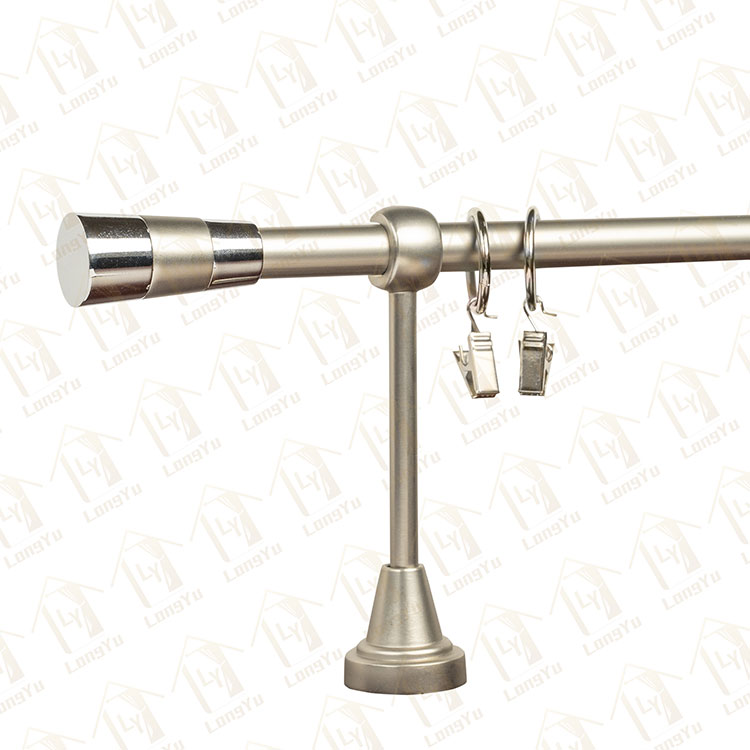
Table of Contents
- Overview of Curtain Finials
- Core Functions in Curtain Systems
- Common Types and Design Styles
- Materials and Manufacturing Considerations
- Key Product Parameters
- How to Select the Right Curtain Finials
- Application Scenarios
- Frequently Asked Questions
- Conclusion and Contact Us
Overview of Curtain Finials
Curtain finials are decorative end pieces installed at both ends of a curtain rod. While their visual contribution is immediately noticeable, their structural role is often underestimated. Properly designed finials help secure curtains in place, prevent slippage, and complete the visual termination of the rod. In modern interior design, finials are no longer purely ornamental; they are engineered components that must align with rod diameter, load-bearing requirements, and long-term usage conditions.
Core Functions in Curtain Systems
Understanding the functional value of curtain finials helps avoid common installation and performance issues. Their primary functions include:
- Preventing curtain panels from sliding off the rod ends
- Enhancing visual symmetry and balance of window treatments
- Providing structural reinforcement for extended curtain rods
- Serving as style indicators aligned with interior themes
In high-traffic or large-window environments, finials also contribute indirectly to safety by maintaining rod stability and reducing accidental dislodgement.
Common Types and Design Styles
Curtain finials are available in a wide range of styles to suit different architectural and decorative preferences. Common design categories include:
- Minimalist geometric finials for modern interiors
- Classic round or ball-shaped finials for universal compatibility
- Floral and carved designs for traditional or vintage spaces
- Industrial-style finials with matte or brushed finishes
The design selection should consider not only appearance but also scale. Oversized finials may overpower small windows, while undersized finials may appear visually incomplete on wide spans.
Materials and Manufacturing Considerations
Material choice directly affects durability, finish stability, and load-bearing performance. High-quality curtain finials are typically produced using one of the following materials:
- Aluminum alloy for lightweight strength and corrosion resistance
- Zinc alloy for intricate detailing and solid feel
- Steel for heavy-duty applications requiring higher load capacity
- Resin or composite materials for cost-effective decorative use
Precision casting, surface polishing, and coating processes play a crucial role in ensuring long-term performance, especially in humid or sun-exposed environments.
Key Product Parameters
| Parameter | Specification Range |
|---|---|
| Compatible Rod Diameter | 16mm / 19mm / 25mm / Custom |
| Material Options | Aluminum, Zinc Alloy, Steel, Resin |
| Surface Finish | Electroplated, Painted, Brushed, Matte |
| Installation Method | Screw-in or Locking Mechanism |
| Application Environment | Residential, Hotel, Office, Retail |
How to Select the Right Curtain Finials
Selecting curtain finials requires balancing aesthetics with engineering compatibility. Key considerations include rod diameter accuracy, curtain weight, wall bracket spacing, and interior design language. Mismatched finials can result in poor alignment, visual imbalance, or reduced service life.
For large-span windows or layered curtain systems, heavier finials made from metal alloys are recommended. In contrast, lightweight decorative finials may be sufficient for sheer curtains or short rods.
Application Scenarios
Curtain finials are widely used across multiple settings:
- Residential living rooms and bedrooms requiring cohesive decor
- Hotels where durability and consistent style are essential
- Commercial offices emphasizing clean and professional aesthetics
- Retail spaces seeking visual framing for display windows
Manufacturers such as Ningbo LongYu Decor Co., Ltd. develop finial solutions tailored to these varied environments, ensuring compatibility with global curtain rod standards and interior trends.
Frequently Asked Questions
What is the primary purpose of curtain finials?
Curtain finials secure curtain panels on the rod while providing a finished visual endpoint that enhances overall window presentation.
Do curtain finials affect curtain rod strength?
While finials are not load-bearing components, properly fitted finials help maintain rod alignment and reduce lateral movement, contributing to system stability.
Are curtain finials universally compatible?
Compatibility depends on rod diameter and connection type. Accurate measurement is essential before selection.
How should curtain finials be maintained?
Routine dusting and periodic surface cleaning are sufficient. Metal finials may benefit from occasional polishing depending on finish type.
Conclusion and Contact Us
Curtain finials represent a small but decisive component in window treatment systems. Their impact extends beyond decoration, influencing functionality, safety, and long-term usability. By understanding their structure, materials, and selection logic, buyers can avoid common pitfalls and achieve balanced, durable installations.
For customized curtain finial solutions, material guidance, or project-based support, Ningbo LongYu Decor Co., Ltd. provides professional manufacturing capabilities and consistent quality standards. If you are planning to upgrade or source curtain finials for residential or commercial projects, contact us today to explore tailored options and reliable supply support.
