

How Can Modified PTFE Sheets Improve Industrial Sealing Reliability?
2026-10-16
A sealing engineer at a chemical plant investigates a recurring leak on a heat exchanger flange. The flange is sealed with a standard PTFE gasket. The leak appears after three months of operation. The engineer replaces the gasket, and the leak reappears after another three months. The bolt torque is correct. The flange surface is within specification. The problem is the gasket material. Standard PTFE creeps under the bolt load at elevated temperature. The gasket thins, the bolt load drops, and the seal fails. The engineer switches to a Modified PTFE Sheets gasket. The new gasket has been in service for 18 months without leakage. This guide explains how modified PTFE improves sealing reliability.
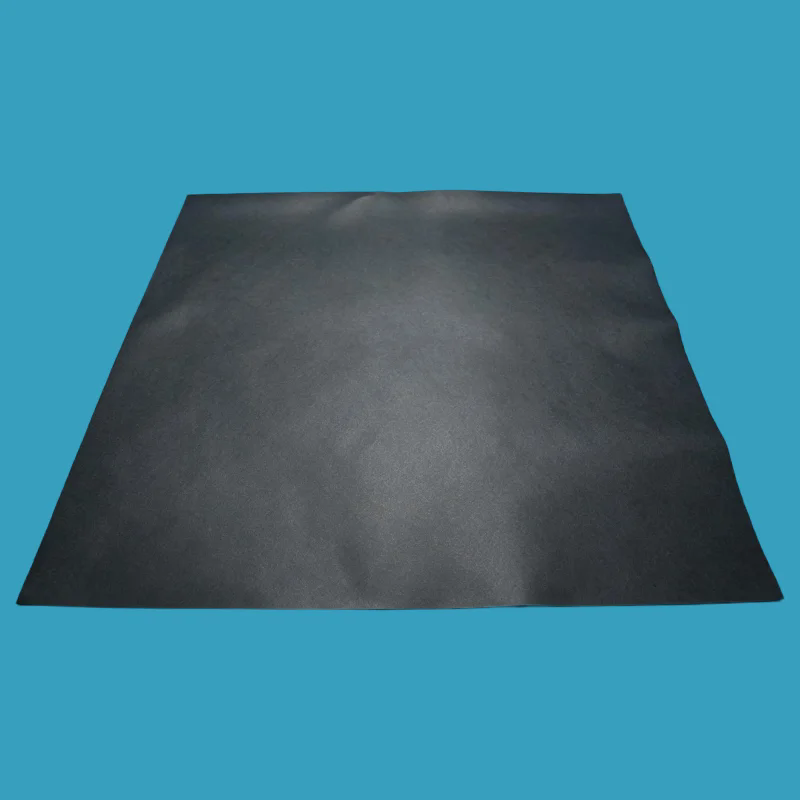
1. What Is the Difference Between Standard PTFE and Modified PTFE?
Standard PTFE is a linear polymer of tetrafluoroethylene. It has excellent chemical resistance and a low coefficient of friction. However, it has poor creep resistance. Under a compressive load, especially at elevated temperature, standard PTFE deforms permanently. This deformation is called cold flow or creep. Modified PTFE is produced by adding a small amount of a comonomer, typically perfluoropropyl vinyl ether, during polymerization. The comonomer creates a branched molecular structure that resists creep. The chemical resistance is virtually unchanged. The table below compares the properties of standard PTFE and modified PTFE.
| Property | Standard PTFE | Modified PTFE |
| Creep resistance | Poor | Excellent (3 – 5x better) |
| Cold flow | High | Low |
| Tensile strength (MPa) | 25 – 30 | 30 – 35 |
| Elongation at break (%) | 300 – 400 | 250 – 350 |
| Chemical resistance | Excellent | Excellent (virtually identical) |
| Temperature range | -200°C to +260°C | -200°C to +260°C |
| Weldability | Good | Excellent (better fusion) |
In our factory, we manufacture Modified PTFE Sheets with a comonomer content of 1 to 3 percent. The comonomer content is optimized for creep resistance without sacrificing the elongation and impact strength. Ningbo Taifno PTFE Plastic Products Co., Ltd. has been producing modified PTFE sheets for over 12 years.
2. How Does Modified PTFE Resist Creep and Cold Flow?
The creep resistance of modified PTFE is determined by the molecular structure. The comonomer creates side branches that entangle with the neighboring polymer chains. These entanglements act as physical crosslinks that resist the sliding of the chains under load. The result is a material that deforms less under the same compressive stress. The table below shows the creep deformation of standard and modified PTFE under different loads and temperatures.
| Condition | Standard PTFE creep (%) | Modified PTFE creep (%) |
| 10 MPa, 23°C, 1000 hours | 8 – 12 | 2 – 4 |
| 10 MPa, 100°C, 1000 hours | 15 – 20 | 5 – 8 |
| 20 MPa, 23°C, 1000 hours | 15 – 20 | 5 – 8 |
| 20 MPa, 100°C, 1000 hours | 25 – 35 | 10 – 15 |
| 30 MPa, 23°C, 1000 hours | 20 – 30 | 8 – 12 |
Sealing engineer's note: The creep resistance is most important at elevated temperatures. At 100°C and 20 MPa, the modified PTFE creeps 10 to 15 percent, while the standard PTFE creeps 25 to 35 percent. This means that the bolt load retention is much better with the modified material. The gasket does not thin out, and the seal remains tight. In our factory, we have tested modified PTFE gaskets in a flange rig at 150°C and 40 bar for 5,000 hours with zero leakage.
3. What Other Properties Are Improved in Modified PTFE?
In addition to creep resistance, modified PTFE offers three other improvements. The first is weldability. The branched structure of modified PTFE allows better fusion during welding. This is important for large gaskets that are welded from multiple sheets. The second is surface smoothness. Modified PTFE sheets can be produced with a lower surface roughness, which improves the sealing contact. The third is dielectric strength. The modified material has a higher dielectric strength, which is important for electrical applications. The table below compares these properties.
| Property | Standard PTFE | Modified PTFE |
| Weld strength (MPa) | 15 – 20 | 25 – 30 |
| Surface roughness (Ra, µm) | 0.8 – 1.2 | 0.4 – 0.8 |
| Dielectric strength (kV/mm) | 20 – 25 | 25 – 30 |
| Porosity | Higher | Lower (denser sheet) |
In our factory, we produce Modified PTFE Sheets with a density of 2.16 to 2.20 g/cm³. The sheets are skived from a molded billet or produced by paste extrusion. We also offer filled grades with glass, carbon, or bronze for applications that require higher compressive strength or thermal conductivity. Ningbo Taifno PTFE Plastic Products Co., Ltd. provides material certificates and test reports for all of our products.
4. How Should Modified PTFE Sheets Be Specified for Industrial Sealing?
When specifying Modified PTFE Sheets for industrial sealing, the engineer should consider four parameters: thickness, width, temperature, and chemical environment. The thickness determines the compressibility and the creep resistance. A thicker sheet provides more compressibility but may creep more. A thinner sheet is more resistant to creep but requires a smoother flange surface. The table below shows the recommended thickness for different flange conditions.
| Flange condition | Recommended thickness | Compressibility | Creep resistance |
| Smooth, flat (Ra < 3.2 µm) | 1.0 – 1.5 mm | Moderate | Excellent |
| Standard (Ra 3.2 – 6.3 µm) | 1.5 – 2.0 mm | Good | Very good |
| Rough or warped (Ra > 6.3 µm) | 2.0 – 3.0 mm | Excellent | Good |
| High temperature (> 150°C) | 1.5 – 2.0 mm | Good | Excellent (modified) |
In our factory, we recommend that the customer specify the flange surface roughness and the operating temperature when ordering Modified PTFE Sheets. We also recommend a compression test to determine the optimal gasket thickness. Ningbo Taifno PTFE Plastic Products Co., Ltd. provides a free consultation service to help customers select the right material and thickness.
Frequently Asked Questions About Modified PTFE Sheets for Industrial Sealing
Summary for Sealing Engineers and Maintenance Planners
Modified PTFE Sheets improve industrial sealing reliability by resisting creep and cold flow, maintaining bolt load, and providing a tighter seal over a longer service life. The branched molecular structure of modified PTFE reduces creep by 3 to 5 times compared to standard PTFE. The material also offers better weldability, smoother surfaces, and higher dielectric strength. When specifying modified PTFE for sealing, consider the thickness, the flange condition, and the operating temperature. By selecting the right material and thickness, engineers can extend the mean time between failures and reduce maintenance costs. Ningbo Taifno PTFE Plastic Products Co., Ltd. has been manufacturing modified PTFE sheets for over 12 years and provides full material data and application support.
Ningbo Taifno PTFE Plastic Products Co., Ltd. manufactures Modified PTFE Sheets in thicknesses from 0.5 to 10 mm, in virgin and filled grades, and in FDA and USP Class VI compliant versions. We provide material certificates, creep test data, and flange design recommendations.
