

How Can Thermal Expansion Be Controlled in Precision Molds for Powder Molding Equipment
2026-05-08
Temperature variation is a silent enemy in powder metallurgy. When a Precision Mold for Powder Molding Machine undergoes thermal expansion, critical dimensions shift, leading to defective parts and costly downtime. For manufacturers like XGIMI, mastering thermal control is not optional—it is the foundation of micron-level accuracy. This guide explores proven engineering strategies to stabilize heat behavior inside compacting tools.
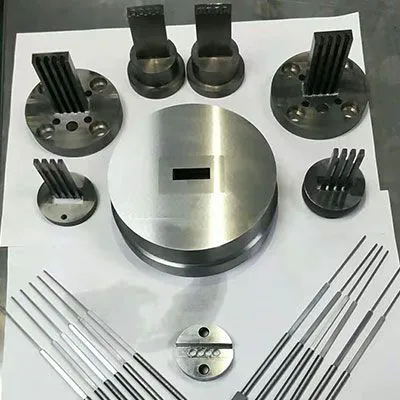
The Core Challenge of Heat in Powder Compaction
During high-speed pressing, friction between powder particles and mold walls generates substantial heat. Without intervention, steel components expand unevenly. A Precision Mold for Powder Molding Machine may see die bore diameters increase by 0.02–0.05 mm at operating temperature—enough to scrap an entire batch of tolerance-critical components.
Four Proven Methods to Control Thermal Expansion
XGIMI implements the following engineering controls across its mold design workflow:
| Control Method | Application | Typical Result |
|---|---|---|
| Matched thermal coefficients | Selecting carbide or tool steel with expansion rates mirroring powder material | Reduces diametral drift by 60% |
| Integral cooling channels | Conformal circuits circulating oil or water near forming zones | Maintains ±1°C steady state |
| Pre-heating protocols | Raising mold temperature to operational level before first stroke | Eliminates warm-up rejections |
| Expansion compensation geometry | Tapered or pre-stressed features that deform predictably under heat | Stabilizes part length within 5 µm |
Practical Implementation Steps
XGIMI recommends embedding thermocouples at four critical nodes of any Precision Mold for Powder Molding Machine: upper punch, lower punch, die wall, and core rod. Real-time data feeds into a closed-loop chiller that adjusts flow rate dynamically. For ultra-high precision work, carbide molds reduce absolute expansion by 50% compared to conventional tool steel, though at higher initial cost.
Frequently Asked Questions
What is the most common sign of thermal expansion failure in a precision mold for powder molding machine
The clearest indicator is progressive diameter variation along the part height. If pressed components show a barrel shape—larger at the middle than at ends—the die bore has expanded more at its thermal center. Other signs include punch binding, increased ejection force, and micro-cracking on molded green parts.
How often should cooling channels be inspected in a precision mold for powder molding machine
XGIMI advises inspection after every 50,000 strokes or weekly for continuous production. Cooling passages accumulate powder residue and lubricant varnish, reducing heat transfer by up to 40% before visible clogging. Use borescope examination and flow rate testing; clean chemically or with ultrasonic baths. Neglected channels cause localized hot spots that permanently warp mold components.
Can mold coating help reduce thermal expansion effects in a precision mold for powder molding machine
Yes, but indirectly. Coatings like TiAlN or DLC do not change the substrate’s expansion coefficient. However, they lower friction by 30–50%, which reduces frictional heat generation at the powder-wall interface. Less heat means less expansion to manage. For high-speed applications, XGIMI combines a low-friction coating with active cooling as a dual-layer defense.
Maintaining Long-Term Stability
Beyond hardware, XGIMI emphasizes temperature logging as a standard practice. Every Precision Mold for Powder Molding Machine should have a thermal log recording starting temperature, peak temperature, and cooling recovery time. When expansion trends appear, predictive maintenance adjusts coolant parameters before parts go out of tolerance.
Contact Us
Take control of thermal stability in your powder forming line. Contact XGIMI today for a comprehensive thermal audit of your molds and a customized cooling solution engineered to your production volume and material types.
