

How Can You Achieve Precision in Machining PEEK Part?
2026-07-06
Abstract
Machining PEEK (Polyether Ether Ketone) parts requires a precise understanding of the material’s thermal stability, mechanical strength, and machining behavior. Unlike conventional plastics or metals, PEEK presents unique challenges such as heat sensitivity during cutting, tool wear acceleration, and dimensional instability if parameters are not controlled correctly. This article provides a comprehensive technical guide on how to machine PEEK parts effectively, covering material characteristics, machining strategies, tooling selection, parameter optimization, defect prevention, and industrial applications. It is designed to help engineers, procurement specialists, and manufacturers achieve high-precision results while reducing cost and production risk.
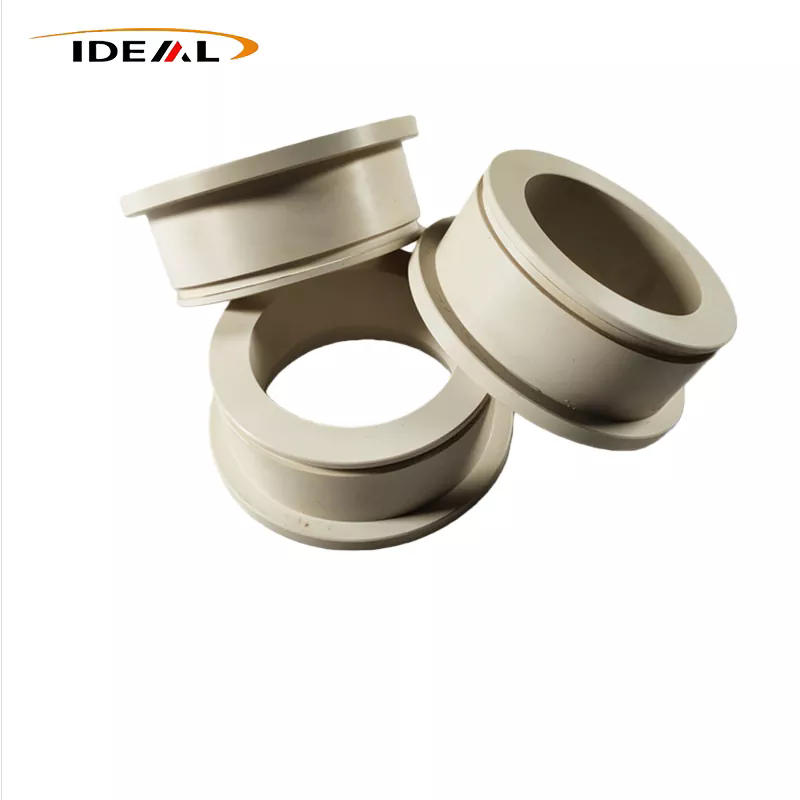
Table of Contents
- 1. Overview of Machining PEEK Parts
- 2. Key Material Properties of PEEK
- 3. Major Machining Challenges
- 4. Recommended Machining Methods
- 5. Tool Selection Strategy
- 6. Machining Parameters Guide
- 7. Common Defects and Solutions
- 8. Industrial Applications
- 9. Quality Control Considerations
- 10. Why GuangZhou Ideal factory
- 11. FAQ
- 12. Conclusion
1. Overview of Machining PEEK Parts
PEEK is a high-performance engineering thermoplastic widely used in aerospace, medical devices, automotive systems, and semiconductor industries. Machining PEEK parts involves subtractive manufacturing processes such as CNC milling, turning, drilling, and precision finishing. Due to its semi-crystalline structure and high melting point, machining requires strict control of temperature, cutting speed, and feed rate.
Unlike injection molding, machining allows tight tolerances and rapid prototyping for complex geometries. However, improper machining strategies can lead to warping, internal stress, or surface degradation.
2. Key Material Properties of PEEK
Understanding PEEK’s material behavior is critical before machining begins. Its performance advantages also introduce machining complexity.
- High melting point (~343°C)
- Excellent chemical resistance
- High mechanical strength and stiffness
- Low moisture absorption
- Thermal stability under continuous load
These properties make PEEK ideal for extreme environments, but also mean heat management during machining is essential to avoid deformation.
3. Major Machining Challenges
Machining PEEK parts introduces several production challenges that must be addressed systematically:
- Heat accumulation: Excess heat can cause softening and surface melting.
- Tool wear: Abrasive fillers (glass/carbon fiber grades) accelerate tool degradation.
- Dimensional instability: Internal stress release can cause warping after machining.
- Chip control issues: Stringy chips may interfere with surface finish.
Proper process optimization significantly reduces these risks and improves repeatability.
4. Recommended Machining Methods
Several CNC-based processes are commonly used for PEEK components:
- CNC Milling: Ideal for complex geometries and tight tolerances.
- CNC Turning: Suitable for cylindrical or symmetrical parts.
- Drilling: Requires sharp tools and controlled feed rates.
- Grinding/Finishing: Used for high-precision surface finishing.
Each method must be adjusted based on part geometry, tolerance requirements, and PEEK grade selection.
5. Tool Selection Strategy
Tool selection plays a decisive role in machining quality and efficiency. Recommended tooling practices include:
- Use sharp carbide tools for clean cutting edges
- Polished flutes to reduce friction and heat buildup
- Coated tools (TiAlN or DLC) for extended tool life
- Avoid dull or worn tools to prevent surface tearing
For fiber-reinforced PEEK grades, diamond-coated tooling is often preferred to withstand abrasive wear.
6. Machining Parameters Guide
Proper parameter optimization ensures dimensional accuracy and surface integrity. Below is a general guideline:
| Parameter | Recommended Range | Notes |
|---|---|---|
| Cutting Speed | 100 – 250 m/min | Lower speeds reduce heat buildup |
| Feed Rate | 0.05 – 0.3 mm/rev | Adjust based on tool sharpness |
| Depth of Cut | 0.5 – 3 mm | Avoid excessive load on tool |
| Cooling Method | Air / Minimal coolant | Avoid thermal shock from heavy coolant |
7. Common Defects and Solutions
Machining errors can be minimized by understanding root causes:
- Surface melting: Reduce cutting speed and improve chip evacuation
- Burr formation: Use sharper tools and optimize feed rates
- Warping: Implement stress-relief annealing before machining
- Poor surface finish: Reduce vibration and ensure rigid fixturing
8. Industrial Applications
Machined PEEK parts are widely used in high-performance industries:
- Aerospace structural components
- Medical implants and surgical instruments
- Semiconductor wafer handling systems
- Automotive transmission and sealing components
- Oil and gas high-pressure environments
The material’s durability and chemical resistance make it indispensable in extreme engineering applications.
9. Quality Control Considerations
Quality assurance is critical in machining PEEK parts, especially for industries requiring tight tolerances. Key inspection methods include:
- CMM dimensional inspection
- Surface roughness measurement
- Visual defect inspection under magnification
- Stress testing for functional components
Consistency in raw material sourcing and machining environment also contributes significantly to final product reliability.
10. Why GuangZhou Ideal factory
GuangZhou Ideal factory specializes in high-precision CNC machining of engineering plastics, including advanced PEEK components for global industries. With extensive experience in thermal-sensitive material processing, the company focuses on delivering stable quality, tight tolerances, and cost-efficient manufacturing solutions.
Its engineering team emphasizes process optimization, toolpath programming accuracy, and strict inspection protocols to ensure every machined PEEK part meets industrial performance standards. Whether for prototyping or mass production, GuangZhou Ideal factory provides scalable solutions tailored to customer requirements.
11. FAQ
Q1: Can PEEK be machined like metal?
PEEK can be machined using similar CNC equipment, but cutting parameters must be adjusted due to its lower thermal conductivity and sensitivity to heat.
Q2: Is coolant necessary when machining PEEK?
Minimal or air cooling is preferred. Excess coolant may cause thermal shock or dimensional instability.
Q3: What is the best tool for machining PEEK?
Sharp carbide tools or diamond-coated tools are recommended depending on whether the material is filled or unfilled PEEK.
Q4: Why does PEEK warp after machining?
Warping is typically caused by internal stress release or uneven heat distribution during machining.
12. Conclusion
Machining PEEK parts requires a precise balance of tool selection, machining parameters, and thermal control. When properly executed, it enables the production of highly durable, dimensionally stable, and chemically resistant components suitable for demanding industrial applications. By understanding material behavior and applying optimized machining strategies, manufacturers can significantly improve yield and part performance.
GuangZhou Ideal factory continues to support global customers with advanced machining capabilities and engineering expertise in PEEK components, ensuring consistent quality and reliable delivery across industries.
For professional support, technical consultation, or customized machining solutions, contact us today to start your project with GuangZhou Ideal factory.
