

How Can You Choose the Right Pipe Fitting Tee for Your Project?
2026-02-28
Article Summary
Pipe fitting tees are fundamental components in piping systems, enabling the branching of flow into different directions and supporting complex network designs. Whether in industrial, commercial, or residential applications, selecting the correct tee fitting influences system performance, safety, and longevity. This comprehensive guide examines types of pipe fitting tees, material considerations, sizing standards, installation challenges, and common customer pain points. By providing clear insights and practical selection criteria, this article helps engineers, plumbers, and project managers make informed decisions.
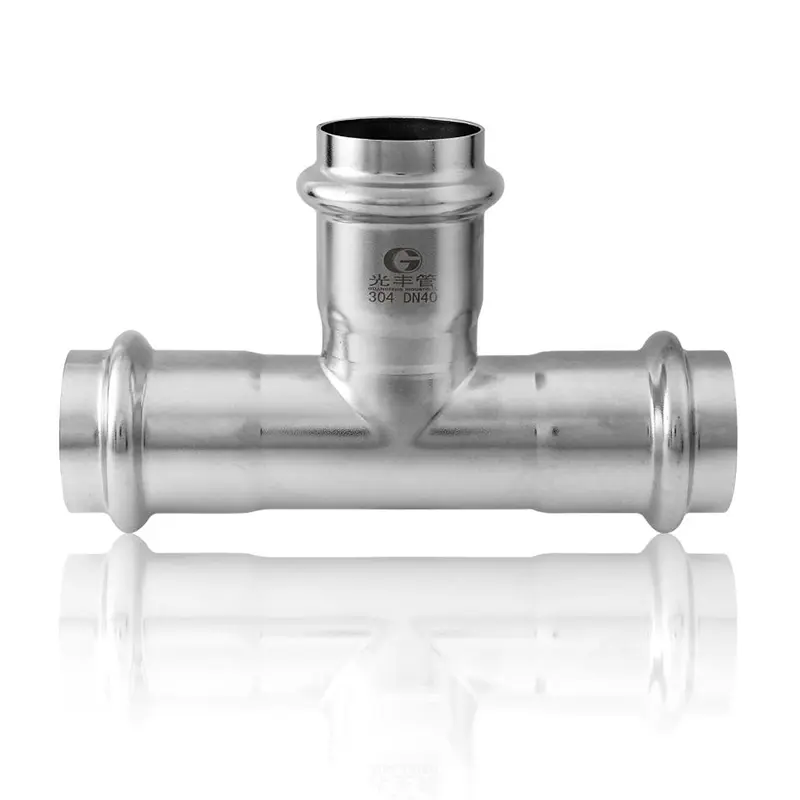
Table of Contents
- Content Outline
- Overview of Pipe Fitting Tees
- Common Customer Challenges
- Types of Pipe Fitting Tees
- Material Selection and Performance
- Sizing and Industry Standards
- Installation and Best Practices
- Pipe Fitting Tee Comparison Table
- Frequently Asked Questions
- Conclusion and Contact Us
Content Outline
- Understanding the role of pipe fitting tees in piping systems
- Identifying common customer pain points
- Comparing different tee types and materials
- Exploring sizing standards and selection criteria
- Installation guidance and troubleshooting
Overview of Pipe Fitting Tees
A pipe fitting tee is a T-shaped connector that joins three sections of pipe at a 90-degree angle, allowing fluid or gas to flow in two directions. Tees are essential when branching off a main line, splitting flow, or redirecting pressure in a system. Their use spans plumbing, petrochemical, HVAC, water treatment, and industrial process systems.
The performance of a tee fitting depends on its design, material properties, wall thickness, and manufacturing quality. High-quality tees should withstand system pressures, resist corrosion, and maintain leak-free joints under operating conditions.
Common Customer Challenges
Customers often face issues when specifying or installing pipe fitting tees. Recognizing these challenges helps reduce mistakes and improve system reliability:
- Incorrect sizing leading to pressure drop or misalignment
- Material mismatch causing corrosion or premature failure
- Inadequate wall thickness for high-pressure applications
- Poor joint sealing and leakage risks
- Difficulty choosing between welded, threaded, or socket connections
Many of these challenges stem from gaps in technical knowledge or unclear understanding of project requirements. Clear selection criteria and careful planning improve outcomes.
Types of Pipe Fitting Tees
Pipe fitting tees are categorized based on connection type and flow configuration. Understanding these distinctions aids correct application.
- Equal Tee – All three outlets have the same diameter, suitable for straight-line flows with equal branch distribution
- Reducing Tee – The branch outlet has a smaller diameter, used when flow transitions to a smaller line
- Threaded Tee – Features threaded ends for mechanical connection without welding
- Socket Weld Tee – Pipes are inserted and welded in place, ideal for high-pressure systems
- Butt Weld Tee – Ends are bevelled and welded to system pipes for permanent, high-integrity joints
Material Selection and Performance
The material of a pipe fitting tee directly influences its mechanical strength, corrosion resistance, and suitability for specific media. Common materials include:
- Carbon Steel – High strength and pressure resistance, widely used in industrial systems
- Stainless Steel – Excellent corrosion resistance, ideal for aggressive environments
- Alloy Steel – Enhanced performance at elevated temperatures or under stress
- Copper and Brass – Often used in plumbing and HVAC applications for thermal conductivity
- Plastic (PVC/CPVC) – Corrosion-free and lightweight for water and chemical service
Choosing the right material involves balancing factors such as operating pressure, temperature, media compatibility, and cost.
Sizing and Industry Standards
Pipe fitting tee sizing follows industry standards to ensure interchangeability and performance consistency. Standards include ANSI/ASME, ASTM, and ISO specifications. Key considerations include:
- Nominal pipe size (NPS)
- Schedule number indicating wall thickness
- Tolerance requirements for precision fit
- Conformity to pressure class ratings
Complying with these standards ensures that tees integrate seamlessly with piping components and perform reliably under design conditions.
Installation and Best Practices
Proper installation practices minimize leakage risks and enhance structural integrity. Best practices include:
- Confirming correct orientation and alignment before welding or threading
- Using appropriate gaskets or sealants for threaded or flanged joints
- Ensuring weld quality through certified procedures and inspection
- Verifying pressure ratings match system requirements
- Testing joints under controlled conditions before full operation
Attention to detail during installation prevents costly rework and extends system service life.
Pipe Fitting Tee Comparison Table
| Tee Type | Connection Method | Best For | Typical Use Cases |
|---|---|---|---|
| Equal Tee | Threaded/Butt Weld | Equal flow distribution | General piping networks |
| Reducing Tee | Butt Weld/Socket Weld | Branch to smaller line | Supply and distribution lines |
| Threaded Tee | Threaded | Low-pressure applications | Residential plumbing |
| Butt Weld Tee | Welded | High-pressure service | Industrial process piping |
Frequently Asked Questions
What size tee do I need?
Determine tee size based on the nominal pipe size and flow requirements of your system.
Can I use a reducing tee for high-pressure applications?
Yes, if the material and wall thickness meet the pressure and temperature design conditions.
What is the difference between socket weld and butt weld tees?
Socket weld tees involve inserting pipe into a socket before welding, while butt weld tees have bevelled ends for direct welding. Butt weld provides stronger joints for higher pressures.
How do I ensure leak-free connections?
Follow correct installation practices, use approved sealants/gaskets, and perform pressure testing after assembly.
Conclusion and Contact Us
Choosing the right pipe fitting tee requires understanding application requirements, material properties, design standards, and installation techniques. Whether you are working on industrial process systems, commercial plumbing, or residential piping, careful selection and quality components reduce failures and improve system efficiency.
Guangfeng offers a comprehensive selection of pipe fitting tees manufactured to strict quality guidelines and engineered for durability and performance. If you need expert support or reliable products for your piping projects, contact us today to discuss your specific needs and how Guangfeng can help ensure project success.
