

How Concrete Block Moulds Technology Is Changing the Block Industry
2026-04-01
In today’s construction supply chain, manufacturers are under pressure to deliver consistent quality at higher volumes while keeping unit costs under control. One of the most significant shifts comes from advances in Concrete Block Moulds, where precision machining and material upgrades are transforming production output. In our factory, we have seen how improved cavity design and tighter tolerances directly influence cycle time and block uniformity.
Modern mould systems are no longer just forming tools. They are engineered components that integrate with automated block machines, allowing our production lines to run with reduced vibration and optimized compaction. This results in sharper edges, improved compressive strength, and better stacking performance on-site. For contractors and distributors, this translates into fewer breakages during transport and more reliable masonry performance.
At Quangong Machinery Co., Ltd., our engineering teams focus on real-world jobsite challenges. Our moulds are designed to handle varying aggregates and cement ratios commonly used across different regions, ensuring adaptability without sacrificing quality.
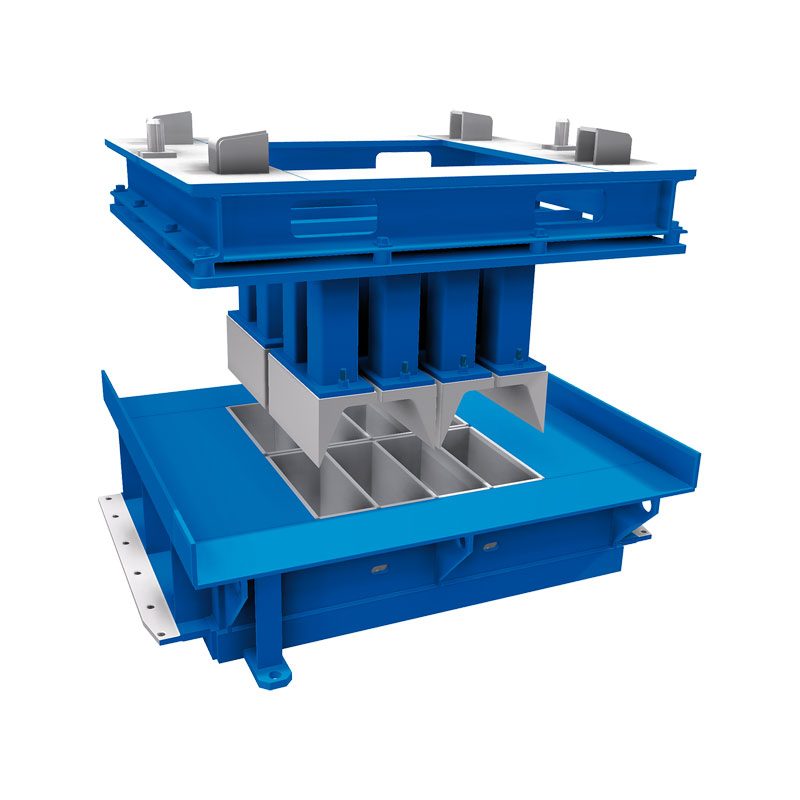
How Are Material Innovations Extending the Lifespan of Mould Systems?
Material selection has become a decisive factor in determining mould durability and performance. Traditional steel moulds often suffered from wear, deformation, and inconsistent output over time. Today, advanced alloys and heat treatment processes are addressing these issues.
Our factory adopts high-grade wear-resistant steel combined with precision heat treatment to improve hardness and structural stability. This ensures that our moulds maintain dimensional accuracy even after extended production cycles. The result is longer service life and reduced downtime for replacement.
| Parameter | Specification |
| Material Type | High-strength alloy steel |
| Surface Hardness | 58–62 HRC |
| Heat Treatment Process | Vacuum quenching and tempering |
| Wear Resistance | Enhanced through surface reinforcement |
| Expected Service Life | Over 120,000 production cycles |
These upgrades are particularly important in markets where abrasive aggregates are common. By improving wear resistance, our mould solutions reduce maintenance frequency and ensure consistent block dimensions across long production runs.
What Role Does Precision Manufacturing Play in Block Quality Consistency?
Precision manufacturing has become a defining factor in the evolution of Concrete Block Moulds. Even minor deviations in cavity dimensions can lead to inconsistent block sizes, affecting structural integrity and installation efficiency.
Our production process utilizes CNC machining and digital inspection systems to ensure that every mould meets strict dimensional tolerances. This level of precision allows our customers to achieve uniform block output, which is essential for modern construction standards and automated laying systems.
At Quangong Machinery Co., Ltd., we emphasize repeatability. Our moulds are designed so that each production cycle delivers identical results, minimizing variation and improving overall product reliability. This is especially valuable for large-scale projects where consistency is critical.
Additionally, our factory integrates modular design concepts, allowing customers to switch between different block types with minimal downtime. This flexibility supports diversified product lines without requiring extensive equipment changes.
How Is Automation Integration Transforming Mould Performance in Production Lines?
Automation is reshaping the way block manufacturing operates. Modern mould systems are designed to work seamlessly with fully automated block machines, improving efficiency and reducing manual intervention.
Our moulds are engineered to align with vibration systems, hydraulic presses, and automated handling equipment. This integration ensures optimal compaction and uniform density across each block. As a result, manufacturers can achieve higher output rates without compromising quality.
The compatibility of Concrete Block Moulds with automation systems also reduces labor dependency. In our factory experience, customers who adopt integrated mould solutions report significant improvements in production stability and cost control.
| Feature | Benefit |
| Precision Alignment Design | Ensures stable operation with automated machines |
| Optimized Vibration Compatibility | Improves compaction and block density |
| Quick Change System | Reduces downtime between product switches |
| Reinforced Structure | Handles high-pressure production environments |
| Custom Design Capability | Supports diverse block shapes and sizes |
These features allow our customers to respond quickly to market demand while maintaining consistent production standards.
Why Are Customization and Application-Specific Designs Becoming Industry Standards?
The block industry is no longer limited to standard shapes and sizes. Demand for specialized blocks such as hollow blocks, paving stones, and interlocking units is growing rapidly. This shift requires mould systems that can be tailored to specific applications.
Our approach focuses on customization. We work closely with clients to develop mould designs that match their target products and local construction requirements. Whether it is optimizing cavity geometry or adjusting material composition, our solutions are built to meet real operational needs.
The adaptability of Concrete Block Moulds allows manufacturers to expand their product range and enter new market segments. In our factory, we have seen how customized moulds enable businesses to differentiate themselves and improve profitability.
Quangong Machinery Co., Ltd. continues to invest in research and development to ensure that our mould technologies remain aligned with evolving industry demands. By combining engineering expertise with practical experience, we deliver solutions that support long-term growth.
FAQ
How does mould precision affect the final quality of concrete blocks?
Precision directly determines the dimensional accuracy and surface finish of the blocks. When mould cavities are manufactured with tight tolerances, each block produced will have consistent size and shape. This reduces alignment issues during construction and improves structural performance. High precision also minimizes material waste and enhances overall production efficiency.
What factors influence the lifespan of block moulds in industrial production?
The lifespan depends on material quality, heat treatment processes, operating conditions, and maintenance practices. High-strength alloy steel combined with proper surface hardening significantly improves durability. Regular cleaning and correct machine settings also prevent premature wear. Choosing well-engineered mould systems ensures longer service life and stable performance.
Why is automation compatibility important for modern mould systems?
Automation compatibility ensures that moulds can operate efficiently within high-speed production lines. Proper alignment with vibration and pressing systems improves block density and consistency. It also reduces manual handling, lowers labor costs, and minimizes production errors. This leads to higher output and more reliable product quality.
In summary, advancements in Concrete Block Moulds are reshaping the block manufacturing industry by improving efficiency, durability, and product quality. From material innovation to automation integration, these technologies provide manufacturers with the tools needed to stay competitive in a demanding market. Our commitment to engineering excellence ensures that our solutions deliver consistent results across diverse applications.
If you are looking to upgrade your production capabilities or explore customized mould solutions, our team is ready to assist. Contact our factory today to discuss your requirements and receive a tailored proposal that supports your business growth.
