

How Do 8-Inch Carbon Fiber Car Speakers Compare to Standard Polypropylene Speakers
2026-09-10
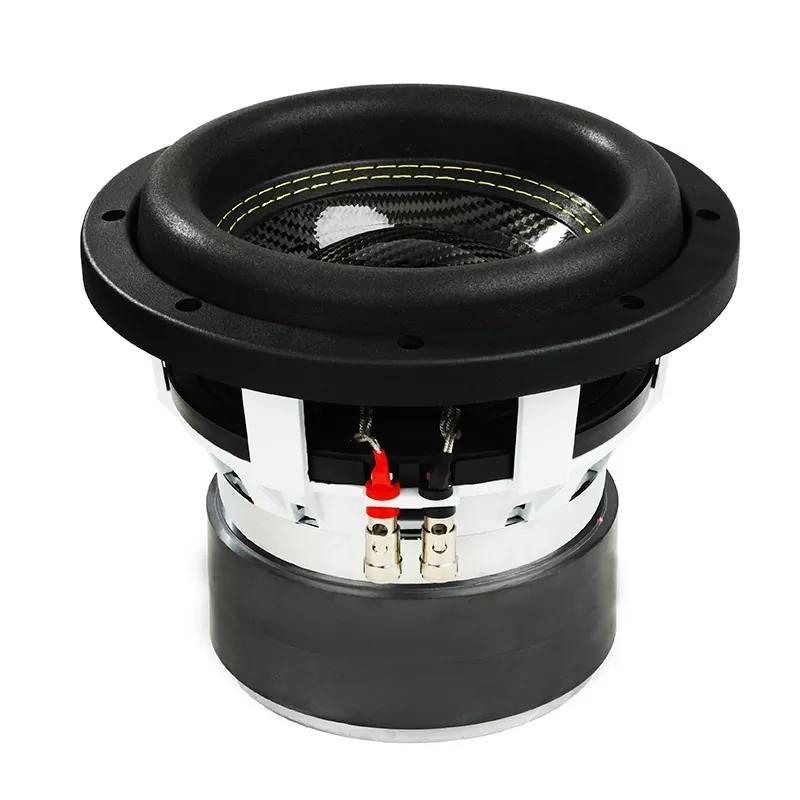
When upgrading a vehicle's audio system, the choice of speaker material plays a decisive role in sound accuracy, durability, and long-term performance. 8-inch Carbon Fiber Car Speaker options from Rodrock Enterprises have gained significant attention among audiophiles and everyday drivers alike, largely because carbon fiber offers a unique combination of stiffness, low weight, and resistance to distortion. Standard polypropylene speakers, by contrast, have been the industry's reliable workhorse for decades. Understanding how these two materials differ helps buyers make an informed decision rather than relying on marketing claims.
Material Properties and Acoustic Behavior
The diaphragm of a speaker is responsible for pushing air and reproducing sound. Its material determines how quickly it responds to a signal and how much it flexes under stress.
-
Carbon Fiber: Extremely rigid yet lightweight, carbon fiber resists flexing at high volumes, which reduces distortion and improves mid-bass accuracy.
-
Polypropylene: A softer, heavier plastic that is moisture-resistant and inexpensive, but tends to flex more under high excursion, especially in larger driver sizes.
-
Damping: Carbon fiber offers superior internal damping, meaning it absorbs unwanted resonances rather than transmitting them as coloration.
-
Weight: Lower moving mass in carbon fiber allows faster transient response and better efficiency.
Direct Comparison Table
| Feature | 8-inch Carbon Fiber Car Speaker | Standard Polypropylene Speaker |
|---|---|---|
| Rigidity | Very high | Moderate |
| Weight | Low | Moderate to high |
| Distortion at high volume | Minimal | Noticeable |
| Moisture resistance | Excellent | Excellent |
| Bass response | Tight, controlled | Boomy at times |
| Transient response | Fast | Average |
| Cost | Higher | Lower |
| Lifespan | Long | Long |
| Best for | Audiophile setups, high-power systems | Budget builds, factory replacements |
Power Handling and Efficiency
A 8-inch Carbon Fiber Car Speaker typically handles higher RMS wattage because the cone resists deformation when the voice coil drives it hard. Polypropylene cones may begin to flex or "break up" earlier, limiting clean output. However, polypropylene speakers often require less power to reach a given volume, making them suitable for head-unit-only systems. Rodrock Enterprises designs its carbon fiber line to balance sensitivity with power handling, so users do not need an excessively large amplifier to hear a clear improvement.
Installation and Compatibility
Both speaker types are available in standard 8-inch mounting footprints, but carbon fiber models are often deeper due to larger magnet assemblies and reinforced baskets. Buyers should verify mounting depth and cutout diameter before purchase. Polypropylene speakers are generally more forgiving in shallow factory locations.
Durability in Real-World Conditions
Heat, humidity, and UV exposure affect speaker materials over time. Polypropylene is naturally waterproof and stable, which is why it remains common in marine and budget automotive applications. Carbon fiber, when properly treated with a UV-resistant resin, resists moisture and temperature swings equally well while maintaining structural integrity far longer under high-excursion use.
Frequently Asked Questions
Are 8-inch Carbon Fiber Car Speakers better than polypropylene speakers for bass?
Yes, a 8-inch Carbon Fiber Car Speaker generally produces tighter, more controlled bass because the stiff cone resists flexing, while polypropylene tends to distort earlier at high volumes.
Do 8-inch Carbon Fiber Car Speakers require a powerful amplifier?
They benefit from a quality amplifier, but Rodrock Enterprises engineers its models with reasonable sensitivity so they perform well with moderate power, though a dedicated amp unlocks their full potential.
Are 8-inch Carbon Fiber Car Speakers worth the higher price compared to polypropylene?
For listeners who value clarity, low distortion, and longevity, yes, the 8-inch Carbon Fiber Car Speaker delivers measurable sonic advantages that justify the investment over standard polypropylene.
Conclusion
Choosing between these two speaker types comes down to budget, system goals, and listening habits. Polypropylene remains a dependable, affordable option for basic upgrades. For drivers seeking precision, durability, and superior high-volume performance, 8-inch Carbon Fiber Car Speaker technology from Rodrock Enterprises represents a clear step forward. Contact us today to discuss your vehicle's audio build and find the right carbon fiber solution for your needs.
