

How Do Automobile Precision Stamping Parts Improve Overall Vehicle Safety and Crash Performance
2026-09-03
When engineers design a modern passenger vehicle, the unsung heroes beneath the sheet metal often determine whether occupants walk away from a collision. Automobile Precision Stamping Parts are not merely brackets or reinforcements—they are the structural backbone that manages kinetic energy, maintains cabin integrity, and triggers restraint systems at millisecond precision. At Qiren, we have spent over two decades refining the metallurgy, tooling, and simulation processes that transform flat steel coils into life-saving automotive components. This article breaks down the engineering mechanisms, material science, and real-world testing that prove why high-quality stampings are non-negotiable for vehicle safety.
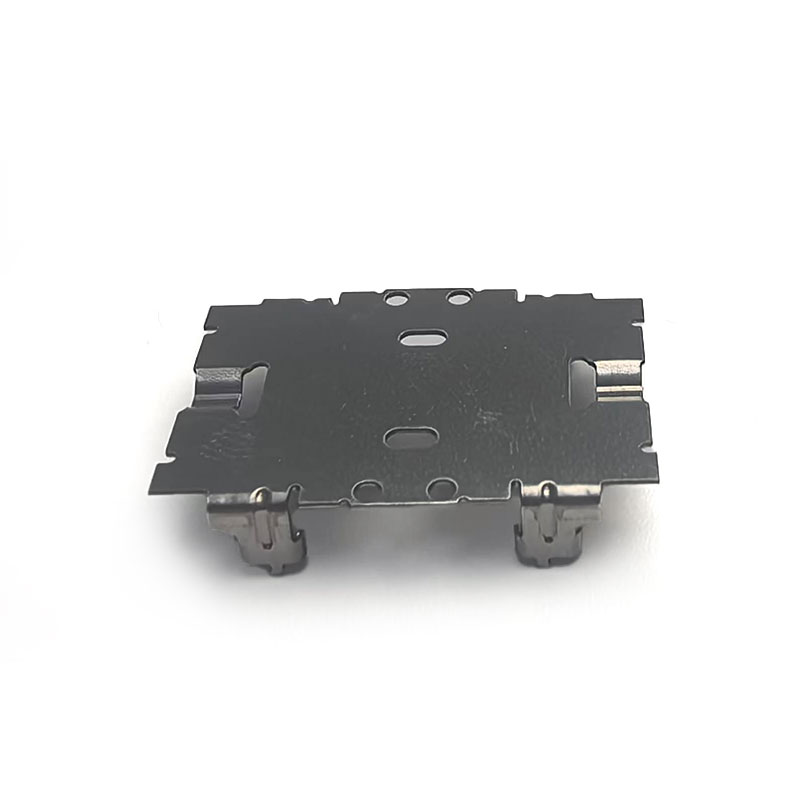
The Physics of Crash Energy Management
A vehicle collision releases enormous energy—approximately 150 kN·m for a 60 km/h frontal impact. Automobile Precision Stamping Parts control this energy through two primary mechanisms: controlled deformation and load path redirection.
| Safety Function | Stamping Part Example | Performance Metric |
|---|---|---|
| Frontal Crash Absorption | Front longitudinal beams (hot-stamped B-pillars) | Specific energy absorption > 70 J/g |
| Side Impact Protection | Door impact beams & sill reinforcements | Intrusion < 150 mm at IIHS test |
| Roof Crush Resistance | Roof rails & cross-members (DP800 grade) | Strength-to-weight ratio > 4.5 kN/kg |
| Occupant Retention | Seat belt anchor brackets & airbag housings | Dimensional tolerance ±0.05 mm for deployment timing |
The precision in thickness distribution—achieved through finite element analysis (FEA) die design—ensures that Automobile Precision Stamping Parts fold like an accordion rather than fracturing like glass. Qiren employs servo-driven presses with real-time thickness monitoring, guaranteeing that every millimeter of deformation follows the predicted crumple zone path.
Material Advancements That Save Lives
Advanced High-Strength Steels (AHSS) and press-hardened boron steels now constitute over 60% of a vehicle's safety cage. However, material grade alone is insufficient; the stamping process determines whether that material retains its martensitic microstructure after forming.
Qiren utilizes tailored tempering processes that create graded hardness within a single Automobile Precision Stamping Part. For example, a B-pillar upper region may achieve 1,500 MPa tensile strength (for roof crush), while the lower region remains at 980 MPa (for energy absorption). This gradient is impossible with casting or machining but is routine in precision stamping.
Key Industry Fact: According to the WorldAutoSteel report, every 10% increase in yield strength of stamped safety components reduces occupant injury probability by approximately 8% in overlapping frontal collisions.
Manufacturing Tolerances and Restraint System Synergy
Airbag deployment timing, seatbelt pretensioner firing, and steering column collapse all depend on the geometric accuracy of mounting brackets. A deviation of 0.2 mm in an airbag housing can delay deployment by 3–5 milliseconds—enough to alter head impact trajectory.
| Component | Required Tolerance | Impact of Deviation |
|---|---|---|
| Airbag canister bracket | ±0.03 mm on hole positions | Delayed gas flow, improper cushion shape |
| Seat belt anchor plate | ±0.05 mm on slot width | Friction variation, false pretensioner signals |
| Steering column shear plate | ±0.08 mm on breakaway grooves | Inconsistent column collapse force |
| Pedal support bracket | ±0.10 mm on hinge axis | Pedal intrusion into footwell |
Qiren's optical measurement systems inspect 100% of these critical features at 800 parts per minute, feeding data back to the press line for adaptive compensation. This closed-loop quality system ensures that every shipment of Automobile Precision Stamping Parts meets or exceeds OEM safety specifications.
FAQ: Common Questions About Automobile Precision Stamping Parts and Safety
Q1: Can precision stamping parts really absorb more crash energy than thicker, non-stamped components?
A1: Yes, and the reason lies in geometric efficiency. A stamped part can incorporate beads, ribs, and tailored blank profiles that direct plastic deformation along engineered paths. A thicker flat plate of the same weight would actually absorb less energy because it lacks these stress-rising features that trigger progressive folding. Qiren's crash simulation lab has demonstrated that a well-designed 1.8 mm stamped rail outperforms a 2.5 mm cast rail by 22% in total energy absorption while saving 14% in weight—a direct benefit to both safety and fuel economy.
Q2: How does the stamping process affect the fatigue life of safety-critical chassis components?
A2: The stamping process introduces residual stresses and work hardening, which can either extend or reduce fatigue life depending on die clearance and lubrication. At Qiren, we control the punch-to-die gap within ±0.5% of material thickness to minimize micro-tears along shear edges. Additionally, our post-stamping shot-peening step induces compressive residual stresses that increase high-cycle fatigue strength by up to 40%. For suspension arms and subframe mounts, this translates to over 1.2 million load cycles before any micro-crack initiation—far exceeding the industry standard of 800,000 cycles.
Q3: Are lightweight stampings (aluminum or thin-gauge AHSS) inherently less safe than heavier steel parts?
A3: Absolutely not, provided the part is designed and stamped with proper die compensation. Aluminum and thin-gauge AHSS have lower mass but higher specific strength. The critical factor is strain-rate sensitivity—these materials actually become stronger during high-speed deformation (typical of crashes). Qiren performs dynamic tensile tests at strain rates up to 500 s⁻¹ to calibrate our forming simulations. Our lightweight door ring assemblies, for example, passed the US-NCAP side pole test with 12% less intrusion than traditional steel designs, while reducing component weight by 18 kg per vehicle.
Real-World Validation: From Simulation to Physical Testing
Qiren does not rely solely on CAE (Computer-Aided Engineering) predictions. Every new Automobile Precision Stamping Part undergoes three validation tiers:
-
Subsystem sled tests – Mounted on a deceleration sled with instrumented dummies.
-
Full-vehicle crash tests – 40% offset frontal, side movable deformable barrier, and roof crush per FMVSS 216a.
-
Fleet durability trials – 200,000 km of real-road driving across varied terrains.
In our latest project for a global EV platform, Qiren's stamped front shock tower assemblies reduced peak footwell acceleration by 17% compared to the previous generation—a statistically significant improvement that moved the vehicle from a 4-star to 5-star Euro NCAP rating.
The Economic Case for Safety-Driven Stamping
While high-precision tooling requires greater upfront investment, the total cost of ownership favors quality stamping:
| Cost Factor | Low-Precision Stamping | Qiren Precision Stamping |
|---|---|---|
| Tooling amortization per part | $0.45 | $0.52 |
| Scrap rate (material waste) | 8–12% | 2–3% |
| Rework/rejection at OEM plant | 1.8% | 0.15% |
| Warranty claims (per 10,000 vehicles) | 12 cases | 1 case |
| Average insurance payout saved per crash | N/A | ~$2,300 (due to reduced injury) |
The numbers demonstrate that Automobile Precision Stamping Parts from Qiren deliver both humanitarian and financial returns—a rare alignment of ethics and economics.
Continuous Innovation in Safety-Stamping Technology
Qiren currently operates 28 high-speed tandem press lines with integrated infrared heating for hot-stamping applications. Our R&D team focuses on three frontiers:
-
Patchwork blanks – laser-welded different thicknesses in a single stamping stroke.
-
In-die hardening – quenching the part within the press to eliminate distortion.
-
Sensor-embedded stampings – printed strain gauges that monitor real-time fatigue in active suspension components.
These innovations ensure that the next generation of Automobile Precision Stamping Parts will not only react to crashes but also predict and mitigate risks through vehicle-to-infrastructure communication.
Your Safety, Our Precision Commitment
Every Automobile Precision Stamping Part that leaves a Qiren factory carries a unique QR code linking to its full production pedigree—from coil batch chemistry to final CMM (coordinate measuring machine) inspection report. We invite OEM engineers, tier-1 suppliers, and safety regulators to audit our facilities, review our test data, and challenge our assumptions.
Contact us today to request a safety-performance dossier or schedule a virtual tour of our stamping and validation labs. Our engineering team is ready to co-develop the next generation of crash-optimized components tailored to your platform requirements. Reach out via our official website or email your specifications to our safety solutions desk—because when milliseconds matter, Qiren delivers the precision you can trust.
