

How Do Block Machine Pallets Impact the Quality of Concrete Blocks?
2026-04-09
Why Does Pallet Performance Directly Influence Concrete Block Quality?
In modern masonry production, pallet performance is not just a supporting factor but a core determinant of finished block quality. During vibration and compaction cycles, the Block Machine Pallet acts as the primary load-bearing platform, transferring force evenly across the mold surface. Any deviation in flatness or rigidity can lead to dimensional inconsistency, edge defects, or density variation in concrete blocks.
From our field experience working with multiple production lines, stable pallets ensure consistent compaction pressure, which is essential for achieving uniform compressive strength. In high-output plants, our factory has observed that poor pallet performance often results in higher reject rates and increased machine downtime. This is why many manufacturers prioritize pallet selection as part of their quality control strategy.
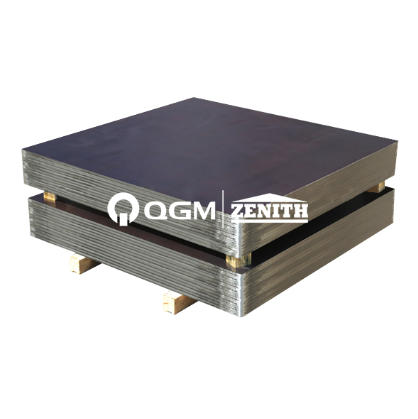
How Do Material Choices Affect Durability and Block Precision?
Material selection plays a decisive role in how pallets perform under repetitive stress and environmental exposure. Common materials include PVC, GMT fiber composite, and hardwood. Each material behaves differently under vibration, moisture, and temperature fluctuations.
Our engineering team at Zenith has optimized composite formulations to balance strength, elasticity, and wear resistance. Compared to traditional wooden pallets, composite solutions provide better resistance to water absorption and warping, which directly improves dimensional stability of blocks.
| Material Type | Durability | Moisture Resistance | Impact on Block Quality |
| Wood | Medium | Low | Prone to deformation affecting block edges |
| PVC | High | High | Maintains smooth surface and consistent dimensions |
| GMT Composite | Very High | Excellent | Ensures uniform density and surface finish |
In practical applications, our clients often report that switching to engineered composite pallets significantly reduces block cracking and improves overall surface quality. Our solutions are designed to meet the demands of automated block production systems.
How Does Structural Design Improve Load Distribution and Vibration Efficiency?
Beyond material, structural design determines how effectively a pallet distributes load during operation. Reinforced rib structures and optimized thickness profiles help maintain rigidity under high-frequency vibration.
A well-designed Block Machine Pallet ensures even force transmission, preventing localized stress points that could cause uneven compaction. This directly impacts block density, especially in hollow and interlocking block production where uniformity is critical.
Our factory incorporates finite element analysis during the design stage to simulate real-world operating conditions. This approach allows our products to maintain structural integrity even under continuous heavy-duty cycles. Quangong Machinery Co., Ltd. integrates these design principles to support long-term production stability.
Why Do Surface Flatness and Wear Resistance Matter in High-Volume Production?
Surface flatness is a critical parameter that directly influences block geometry. Even minor deviations can lead to uneven block height or poor stacking performance. Over time, wear and abrasion can degrade pallet surfaces, especially in plants producing large volumes daily.
The Block Machine Pallet must maintain a smooth and consistent surface to ensure proper mold contact. Our manufacturing process includes precision machining and surface treatment to enhance wear resistance. This helps maintain dimensional accuracy across extended production cycles.
In high-throughput environments, our customers rely on our factory to deliver pallets that can withstand continuous use without compromising performance. By reducing surface degradation, our solutions help maintain product consistency and reduce maintenance costs.
How Does Pallet Stability Influence Operational Efficiency and Cost Control?
Operational efficiency is closely tied to pallet reliability. Unstable pallets can lead to production interruptions, increased scrap rates, and higher maintenance requirements. Consistent pallet performance ensures smooth workflow and predictable output quality.
The Block Machine Pallet contributes to reducing cycle time variability, which is essential for automated production lines. Our systems are engineered to support seamless integration with modern block machines, improving throughput while maintaining quality standards.
At Quangong Machinery Co., Ltd., we focus on delivering solutions that balance performance and cost efficiency. Our factory continuously refines production techniques to ensure that our products meet international standards while remaining competitive in global markets.
FAQ: How Do Block Machine Pallets Impact the Quality of Concrete Blocks?
Q1: What is the most important factor when selecting a pallet for block production?
The most important factor is structural stability under vibration. A pallet must maintain flatness and rigidity during compaction to ensure uniform block density and shape. Material durability and resistance to moisture also play key roles in long-term performance.
Q2: How often should pallets be replaced in a high-volume production line?
Replacement frequency depends on material type and operating conditions. Composite pallets typically last significantly longer than wooden ones, often maintaining performance over extended cycles. Regular inspection for surface wear and deformation helps determine the optimal replacement schedule.
Q3: Can pallet quality really affect compressive strength of concrete blocks?
Yes, pallet quality directly influences compaction efficiency. Uneven or flexible pallets can result in inconsistent vibration transfer, leading to variations in density. This ultimately affects the compressive strength and durability of the finished blocks.
In summary, pallet performance is a critical factor that shapes the quality, consistency, and efficiency of concrete block production. From material selection to structural design and surface durability, every aspect plays a role in achieving reliable output. Our commitment is to provide engineered solutions that support long-term production success. If you are looking to optimize your production line, contact our team today to explore how our factory can deliver tailored solutions for your specific requirements.
