

How Do Deep Groove Ball Bearings Ensure Smooth Rotation?
2026-10-27
A maintenance engineer removes a bearing from an electric motor that has been running with abnormal vibration and a housing temperature 15 degrees above normal. The shaft turns freely by hand, but the raceways show a series of evenly spaced indentations, known as brinelling. The indentations are not from overload. They are from the mounting process, where the bearing was driven onto the shaft with a hammer instead of a press. This example shows that smooth rotation in Deep Groove Ball Bearings is not a single property. It is the result of the groove geometry, the contact angle, the cage design, the lubrication, and the installation method. Each of these factors can either support or destroy the smoothness. This guide explains how each factor contributes.
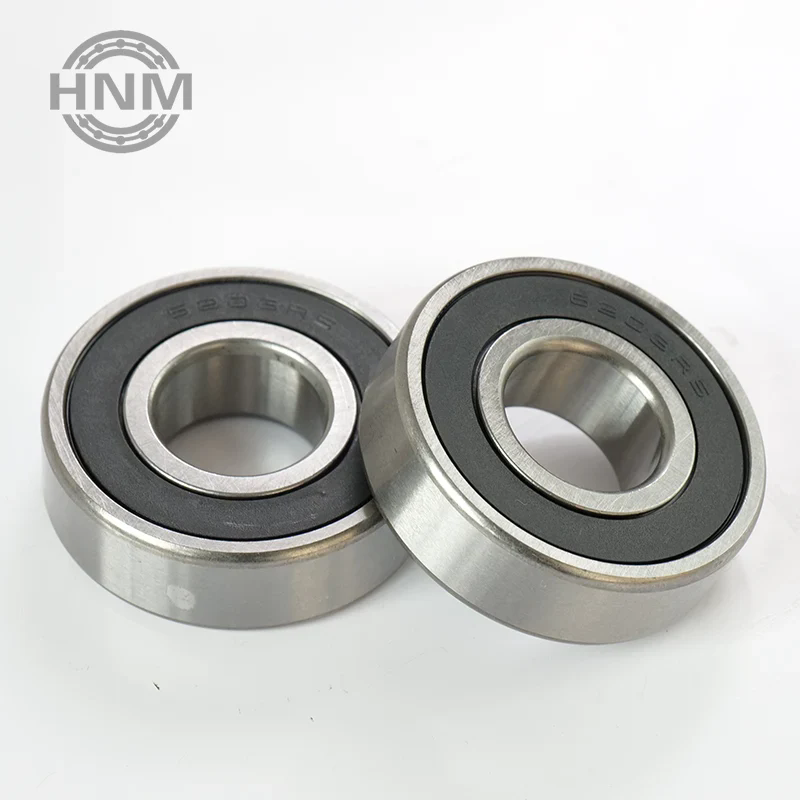
1. Why Does the Internal Geometry of Deep Groove Ball Bearings Matter for Smooth Rotation?
The internal geometry of a Deep Groove Ball Bearings is defined by the groove radius, the ball diameter, and the conformity ratio. The conformity ratio is the groove radius divided by the ball diameter. A typical value is 0.52 to 0.53. If the conformity ratio is too small, the ball contacts the groove over a large area, which increases the friction and the heat generation. If the conformity ratio is too large, the ball has too much freedom in the groove, which increases the vibration and reduces the load capacity. The optimal conformity ratio balances the contact stress and the friction torque. In our factory, we grind the grooves with a CNC grinder and measure the conformity ratio on every production lot. Cixi Hengji Bearing Co., Ltd. has been manufacturing Deep Groove Ball Bearings for over 12 years.
The groove geometry also determines the axial clearance and the radial clearance. The clearance affects the smoothness because it allows the ball to move slightly as the load changes. A small clearance is suitable for precision applications, while a larger clearance is suitable for applications with thermal expansion. The clearance is selected based on the application, and the groove geometry is adjusted to achieve the specified clearance.
2. What Role Does the Ball and Raceway Contact Angle Play in Reducing Friction?
The contact angle of a Deep Groove Ball Bearings is close to zero, which means the bearing primarily carries radial load. However, even a small contact angle affects the friction and the smoothness. The ball rolls along the raceway, but it also spins about the axis perpendicular to the contact area. The spin motion generates sliding friction, which is the main source of the bearing's friction torque. The spin-to-roll ratio depends on the conformity ratio and the load. A lower spin-to-roll ratio means lower friction and smoother rotation. The table below shows the effect of the conformity ratio on the contact stress, the friction torque, and the speed capability.
| Conformity ratio | Contact stress (MPa) | Friction torque (relative) | Speed capability (RPM) |
| 0.50 | 1,850 | 1.35 | 8,000 |
| 0.51 | 1,720 | 1.15 | 10,000 |
| 0.52 | 1,620 | 1.00 | 12,000 |
| 0.53 | 1,550 | 0.95 | 13,500 |
| 0.54 | 1,510 | 1.05 | 12,500 |
The data shows that the friction torque reaches a minimum at a conformity ratio of approximately 0.53. Below this value, the contact area is large and the friction is high. Above this value, the ball has too much freedom, and the contact becomes unstable. In our factory, we target a conformity ratio of 0.52 to 0.53 for our standard Deep Groove Ball Bearings. The specific value is selected based on the application's speed and load requirements.
3. How Does Cage Design Influence Vibration and Noise at High Speed?
The cage separates the balls and guides them along the raceway. The cage design affects the vibration and the noise, especially at high speed. There are three common cage materials: stamped steel, polyamide, and brass. A stamped steel cage is economical and suitable for moderate speeds. A polyamide cage is lightweight and has good sliding properties, which reduces the noise. A brass cage is the most durable and is suitable for high speeds and high temperatures. The table below compares the three cage materials.
| Cage material | Maximum speed (RPM) | Noise level (dB) | Temperature limit | Typical application |
| Stamped steel | 12,000 | 58 – 65 | 120°C | General purpose motors |
| Polyamide | 15,000 | 52 – 58 | 100°C | Appliances, fans |
| Brass | 20,000 | 60 – 68 | 200°C | High-speed spindles, gearboxes |
Bearing engineer's note: The cage clearance is as important as the cage material. If the clearance between the cage pocket and the ball is too large, the ball can rattle in the pocket, which increases the noise. If the clearance is too small, the cage can bind on the ball, which increases the friction. In our factory, we control the cage pocket clearance to within 0.05 mm of the design value. Cixi Hengji Bearing Co., Ltd. offers all three cage materials and can recommend the best choice for the application.
4. Why Does Lubrication Selection Determine the Actual Smoothness in Service?
The lubricant separates the rolling elements from the raceway and reduces the metal-to-metal contact. The lubricant also carries away the heat and protects the bearing from corrosion. The selection of the lubricant affects the friction torque, the noise, and the service life. The key parameters are the base oil viscosity, the thickener type, and the fill quantity. A lubricant with a base oil viscosity that is too low will not form a sufficient film, which increases the wear. A lubricant with a base oil viscosity that is too high will increase the friction torque, especially at low temperature. The fill quantity must be sufficient to lubricate the bearing but not so excessive that it causes churning. In our factory, we recommend the lubricant based on the speed, the load, and the temperature of the application. Cixi Hengji Bearing Co., Ltd. provides a lubrication selection guide with every bearing order.
For high-speed applications, we recommend a lubricant with a low base oil viscosity and a polyurea thickener. For low-speed, high-load applications, we recommend a lubricant with a higher base oil viscosity and a lithium thickener. For high-temperature applications, we recommend a synthetic lubricant with a high dropping point. The fill quantity is typically 20 to 30 percent of the free space in the bearing. The table below shows the recommended lubricant parameters for different operating conditions.
| Operating condition | Base oil viscosity (cSt at 40°C) | Thickener | Fill quantity |
| High speed, light load | 32 – 46 | Polyurea | 20% |
| Medium speed, medium load | 68 – 100 | Lithium | 25% |
| Low speed, heavy load | 150 – 220 | Lithium complex | 30% |
| High temperature | 100 – 150 (synthetic) | Polyurea or PTFE | 25% |
In our factory, we fill the bearings with the specified lubricant under controlled conditions. The fill quantity is verified by weighing the bearing before and after the fill. Cixi Hengji Bearing Co., Ltd. can provide the bearing with the customer's preferred lubricant or with our recommended lubricant.
5. How Should Engineers Verify Smoothness Before and After Installation?
The verification of smoothness should be performed at two stages: before installation and after installation. Before installation, the engineer should measure the vibration value, the friction torque, and the clearance. The vibration value is measured with a vibration meter while the bearing is rotated at a low speed. The friction torque is measured with a torque meter. The clearance is measured with a feeler gauge or a dial indicator. After installation, the engineer should measure the temperature rise and the vibration spectrum. The temperature rise should be less than 40 degrees above ambient after one hour of operation. The vibration spectrum should not show peaks at the ball pass frequency or the cage frequency. The table below shows the acceptance criteria for the pre-installation and post-installation checks.
| Check | Acceptance criteria | Measurement method |
| Vibration value (pre-installation) | < 40 dB (for standard grade) | Vibration meter at 1,800 RPM |
| Friction torque (pre-installation) | < 0.15 Nm (for 6205 size) | Torque meter at 100 RPM |
| Radial clearance (pre-installation) | 0.005 – 0.015 mm (CN) | Feeler gauge |
| Temperature rise (post-installation) | < 40°C above ambient | Infrared thermometer |
| Vibration spectrum (post-installation) | No peaks at BPFO or cage frequency | FFT analyzer |
In our factory, we perform the pre-installation checks on every production lot. The data is recorded and provided with the shipment. The post-installation checks are performed by the customer or by our service engineer. Cixi Hengji Bearing Co., Ltd. offers on-site support for critical installations.
Frequently Asked Questions About Smooth Rotation in Deep Groove Ball Bearings
Summary for Bearing Application Engineers
Smooth rotation in Deep Groove Ball Bearings is the result of five factors working together: the groove geometry, the contact angle and conformity ratio, the cage design, the lubrication, and the installation method. The groove geometry determines the contact stress and the friction. The conformity ratio determines the spin-to-roll ratio and the friction torque. The cage design determines the vibration and the noise at high speed. The lubrication determines the film thickness and the friction. The installation method determines whether the bearing operates within its design envelope. By verifying the vibration, the friction torque, the clearance, the temperature rise, and the vibration spectrum, engineers can ensure that the bearing delivers the smooth rotation that the application requires. Cixi Hengji Bearing Co., Ltd. has been manufacturing Deep Groove Ball Bearings for over 12 years and provides full application support for our customers.
