

How Do Heat Treatment Techniques Impact the Mechanical Properties of Cast Mixer Blades
2026-04-01
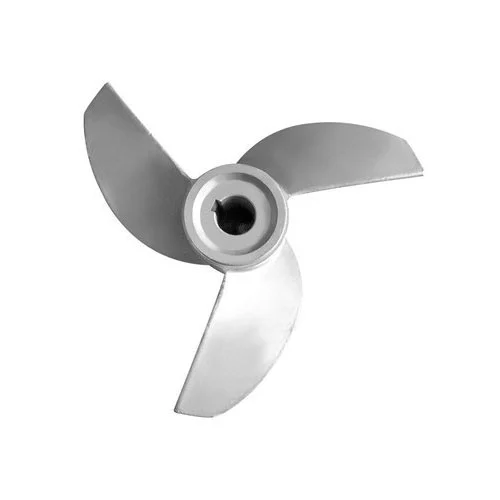
Heat treatment is a critical phase in the manufacturing of industrial mixing equipment, directly determining the performance, lifespan, and safety of Mixer Blades Casting. At Xiangxingxin, we have observed through decades of metallurgical practice that the precise application of heat treatment processes can elevate a standard casting into a high-performance component capable of withstanding extreme abrasion, corrosion, and mechanical fatigue. Understanding how these thermal processes alter the microstructure of alloys is essential for engineers seeking to optimize mixing operations.
The Metallurgical Foundation
The mechanical properties of Mixer Blades Casting—such as hardness, tensile strength, impact resistance, and ductility—are primarily governed by the crystalline structure of the metal. Heat treatment manipulates this structure through controlled heating and cooling cycles. For cast mixer blades, which often operate in aggressive environments like mining, chemical processing, and food production, the wrong heat treatment can lead to premature cracking or rapid wear, while the correct protocol can extend service life by several hundred percent.
Xiangxingxin utilizes a data-driven approach to match heat treatment cycles with specific alloy compositions and operational demands, ensuring that each blade delivers predictable, reliable performance.
Common Heat Treatment Techniques and Their Effects
The table below summarizes the primary heat treatment methods applied to Mixer Blades Casting and their specific impact on mechanical properties.
| Heat Treatment Technique | Process Summary | Impact on Mechanical Properties |
|---|---|---|
| Annealing | Heating to a critical temperature followed by slow furnace cooling. | Reduces internal stresses from casting; increases ductility and machinability; softens the material for subsequent shaping. |
| Normalizing | Heating above critical range and air cooling. | Refines grain structure; improves uniformity; enhances toughness without excessive hardness. |
| Quenching & Tempering | Rapid cooling (water/oil) followed by reheating to a moderate temperature. | Achieves an optimal balance of high hardness and impact resistance; maximizes wear resistance for high-abrasion environments. |
| Solution Treatment & Aging | Heating to dissolve alloying elements, followed by controlled precipitation. | Essential for stainless steel and superalloy blades; significantly boosts corrosion resistance and yield strength. |
Process Selection Criteria
Selecting the correct heat treatment protocol for Mixer Blades Casting requires analyzing three variables: the base alloy (e.g., high-chromium iron, stainless steel, or nickel-based alloys), the mixer’s operating environment (wet/dry, acidic/alkaline), and the failure risks (abrasion, impact, or thermal cycling). For example, a blade used in concrete mixing benefits from a high-hardness quenched structure, whereas a blade in a chemical reactor demands solution-annealed austenitic stainless steel to prevent pitting corrosion.
At Xiangxingxin, we employ advanced simulation and hardness profiling to validate that every batch of Mixer Blades Casting meets the required specification before leaving the facility.
Frequently Asked Questions About Mixer Blades Casting
What is the most common heat treatment failure in cast mixer blades and how can it be prevented?
The most common failure is inadequate tempering following quenching, which leaves the blade in a brittle martensitic state. This causes catastrophic cracking under operational shock loads. Prevention requires strict adherence to temperature uniformity during tempering and maintaining precise soaking times. Xiangxingxin mitigates this risk through automated furnaces with real-time temperature logging and post-treatment hardness testing to confirm the elimination of residual stress.
Can heat treatment compensate for poor alloy selection in Mixer Blades Casting?
No. Heat treatment enhances the inherent properties of an alloy but cannot fundamentally alter its chemical composition. If a low-alloy steel is selected for a highly corrosive application, no amount of heat treatment will provide adequate corrosion resistance. The correct approach is to match the alloy to the environment first, then apply heat treatment to optimize mechanical properties. Xiangxingxin provides metallurgical consulting to ensure the alloy and heat treatment are specified together for the intended application.
How does the cooling rate during quenching affect the dimensional stability of cast mixer blades?
The cooling rate directly determines the phase transformation within the metal. Excessively rapid or uneven cooling introduces non-uniform thermal gradients, leading to distortion, warping, or micro-cracking. For complex blade geometries, controlled quenching media (such as polymer quenchants) and fixture supports are used to maintain dimensional accuracy. Xiangxingxin employs specialized fixturing and gradient-controlled cooling to ensure that final dimensional tolerances remain within engineering specifications.
Quality Assurance and Traceability
Consistency in heat treatment is non-negotiable for high-reliability applications. Xiangxingxin maintains strict process control through programmable furnaces, calibrated pyrometers, and batch-specific traceability. Each batch of Mixer Blades Casting undergoes mechanical testing—including hardness verification and impact testing—to confirm that the heat treatment cycle achieved the intended results. This systematic approach aligns with the principles of EEAT (Experience, Expertise, Authoritativeness, and Trustworthiness), ensuring that every component is backed by verifiable process data.
Conclusion
The impact of heat treatment on the mechanical properties of Mixer Blades Casting cannot be overstated. From grain refinement to stress relief and hardness optimization, each thermal process directly influences how a blade performs under real-world operating conditions. By integrating scientific process control, alloy expertise, and rigorous testing, Xiangxingxin delivers cast mixer blades that offer superior wear resistance, structural integrity, and operational safety.
For more information on custom heat treatment solutions or to discuss your specific mixing application, contact us today. Our engineering team is ready to provide detailed technical support and tailored recommendations for your Mixer Blades Casting requirements.
