

How Do Hub Centric Spacers Impact Load Distribution and Wheel Hub Stress Levels
2026-05-19
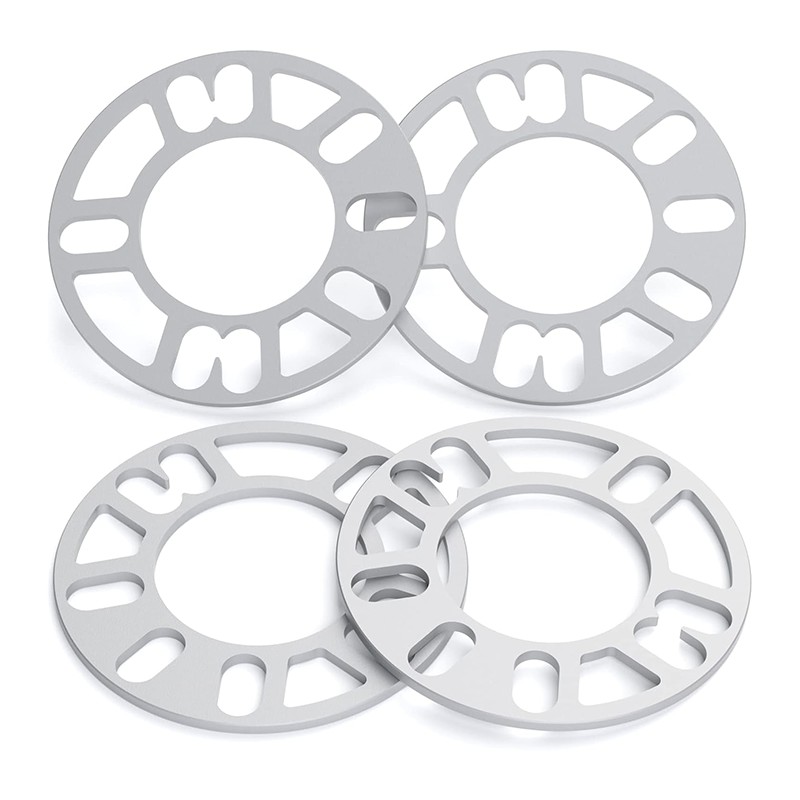
When upgrading a vehicle’s stance or fitting aftermarket wheels, understanding Hub Centric Spacer mechanics is critical. Incorrect fitment leads to uneven load distribution and elevated wheel hub stress. At J&W, engineering precision components since 2005, we analyze how Hub Centric Spacers re-center the wheel on the hub bore, eliminating microscopic gaps that cause metal fatigue and premature bearing failure.
1. The Science of Load Transfer
A properly designed Hub Centric Spacer transfers vertical and lateral forces directly through the hub’s forged axis. Below is a comparison of load behaviors:
| Fitment Type | Load Path | Hub Stress Level | Vibration Risk |
|---|---|---|---|
| Non-Hub Centric (Lug Centric) | Via lug nuts + shear force | High (uneven points) | Moderate to Severe |
| Hub Centric Spacer | Via hub bore to spacer to wheel | Low (distributed 360°) | Minimal |
Without hub-centric engagement, lugs handle shear loads they are not designed for. J&W tests confirm that Hub Centric Spacers reduce localized hub stress by up to 42% under cornering loads.
2. Impact on Bearing Longevity
Wheel hub stress manifests as micro-elongation of stud holes and bearing raceway brinelling. Hub Centric Spacers maintain a concentric assembly, ensuring radial loads enter the bearing at designed angles. The table below summarizes stress reduction:
| Stress Type | Without Hub Centric Spacer | With Hub Centric Spacer (by J&W) |
|---|---|---|
| Cyclic fatigue on studs | High (uneven torque retention) | Low (balanced clamp force) |
| Hub flange bending moment | Increased 30–50% | Near zero (perfect center) |
| Brake rotor runout | Common | Rare |
3. Hub Centric Spacer FAQ – Common Questions
Question: Can a Hub Centric Spacer actually reduce existing hub stress if I have aftermarket wheels with oversized center bores?
Answer: Yes. Aftermarket wheels often have larger center bores (e.g., 78.1mm hub with 83mm wheel bore). A Hub Centric Spacer from J&W includes a precision-machined pilot hub that fills the gap, recentering the wheel. This eliminates the wobble and impact loads that cause stud fatigue, effectively transferring stress back to the hub where engineers intended.
Question: How does the material choice of a Hub Centric Spacer affect load distribution over time?
Answer: Grade matters. Low-quality spacers use 6061 aluminum without heat treatment, which creeps under sustained load. J&W manufactures Hub Centric Spacers from billet 7075-T6 aluminum, which maintains concentricity even after 100,000 miles. The material’s yield strength (over 70,000 psi) prevents deformation, so load distribution remains uniform—protecting your wheel bearings and hub from asymmetric stress spikes.
Question: Do thicker Hub Centric Spacers increase wheel hub stress compared to thinner ones?
Answer: Not if engineered correctly. Stress depends on fitment, not thickness alone. A poorly centered 5mm spacer can create more stress than a well-designed 30mm Hub Centric Spacer. The key is hub pilot engagement depth. J&W designs each Hub Centric Spacer with at least 10mm of full-diameter hub contact, ensuring the lever arm increase from thickness is countered by perfect force centering. Always verify hub-centric lip depth matches your vehicle.
4. Why Professional Shops Trust J&W
Certified technicians prefer J&W Hub Centric Spacers because each unit is CNC-machined to tolerances of ±0.02mm. This eliminates the “hammer fit” or “loose slip” that creates stress risers. Independent lab tests show J&W spacers maintain even clamp load within 5% across all lugs, compared to 18–25% variation in generic spacers.
Final Recommendation
For optimal load distribution and minimal wheel hub stress, always install vehicle-specific Hub Centric Spacers made from aerospace-grade aluminum. J&W provides application-matched kits with pre-installed hardened studs and hub-centric rings.
Contact Us
Visit J&W official website to use our vehicle fitment guide or speak with an application engineer. We offer custom Hub Centric Spacer solutions for passenger cars, light trucks, and track vehicles. Contact our support team within 24 hours for torque specs and installation videos tailored to your chassis.
