

How Do Hydraulic Cylinders Support Agricultural Equipment?
2026-09-28
On a modern farm, the hydraulic lift cylinder is the muscle behind almost every implement. It raises the plow, tilts the header, opens the bale wrapper, and positions the loader bucket. When a hydraulic cylinder fails during harvest, the entire operation stops. The replacement cost is not just the cylinder itself—it is the downtime, the labor, and the crop that is not being harvested. This guide is written for field mechanics and equipment managers who need to understand why some cylinders last for years while others fail in a single season, and what can be done to prevent those failures.
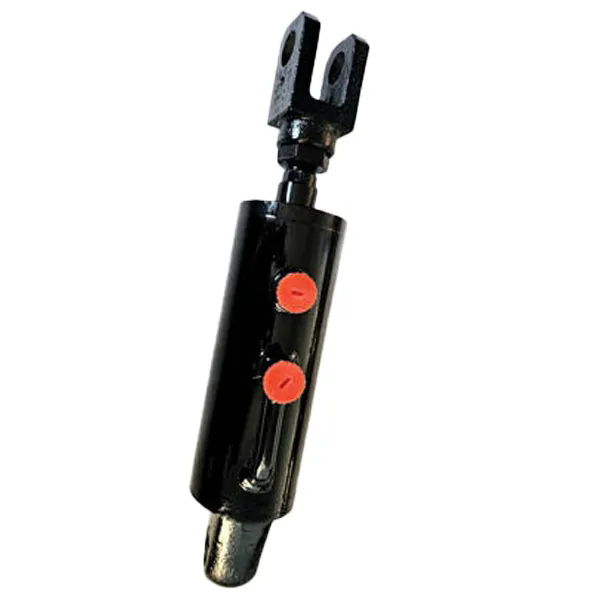
1. Why Do Hydraulic Lift Cylinders Fail Prematurely in Agricultural Equipment?
The operating environment for agricultural equipment is far more demanding than for industrial machinery. A Hydraulic Lift Cylinder on a tractor loader is exposed to dust, mud, crop residue, and constant vibration. The most common failure modes are seal leakage, rod scoring, and rod bending. Seal leakage occurs when the wiper seal fails to keep dust out of the cylinder. Once dust enters, it acts like sandpaper on the piston and rod seals, causing rapid wear. Rod scoring occurs when the chrome plating is scratched by stones or metal debris. Once the chrome is compromised, the exposed steel rusts and tears the seals. Rod bending occurs when the cylinder is subjected to side loads, which happens when the loader is used to push or pull loads that are not aligned with the cylinder axis. The table below shows the frequency of these failure modes in our field data.
| Failure mode | Frequency | Primary cause | Prevention |
| Seal leakage (external) | 45% | Dust ingress, wiper seal failure | Regular cleaning, quality wiper seal |
| Rod scoring | 25% | Chrome damage from debris | Rod boot, careful operation |
| Rod bending | 15% | Side loading, overloading | Correct application, reinforcement |
| Internal leakage (drift) | 10% | Piston seal wear | Quality piston seal, clean oil |
| Barrel damage | 5% | External impact | Guard, careful operation |
Raydafon Technology Group Co.,Limited has been manufacturing Hydraulic Lift Cylinder units for agricultural equipment for over 20 years. Our factory has analyzed returned cylinders from dealers across Southeast Asia and South America. The data shows that seal leakage is the dominant failure mode, and it is almost always caused by dust ingress. This is why we place so much emphasis on the wiper seal design.
2. What Design Features Protect a Hydraulic Lift Cylinder From Dust and Debris?
The most important design feature for agricultural cylinders is the rod wiper seal. The wiper seal is the first line of defense against dust and mud. A standard single-lip wiper removes most of the contamination on the rod as it retracts. A double-lip wiper removes contamination on both the extend and retract strokes, providing better protection. Some of our cylinders use a triple-lip wiper with an integrated dust excluder. The second feature is the rod surface. Our Hydraulic Lift Cylinder units use induction-hardened chrome plating with a thickness of 0.020 to 0.030 mm and a hardness of 55 to 60 HRC. This resists scratching better than standard chrome plating. The third feature is the rod boot. A rubber boot covers the exposed rod and prevents dust from contacting the chrome surface. The table below shows the protection level of different wiper seal designs.
| Wiper seal design | Dust exclusion efficiency | Typical service life in dusty conditions | Recommended application |
| Single lip | 60 – 70% | 500 – 800 hours | Light duty, clean environment |
| Double lip | 85 – 90% | 1,200 – 1,800 hours | General agricultural use |
| Triple lip with excluder | 95 – 98% | 2,000 – 3,000 hours | Heavy duty, high dust |
| Double lip + rod boot | 99% | 3,000+ hours | Extreme conditions, harvesters |
Raydafon manufactures Hydraulic Lift Cylinder units with double-lip wiper seals as the standard configuration. For harvesters and other high-dust applications, we recommend the triple-lip wiper with rod boot. The additional cost is typically 15 to 20 percent, but the service life is 2 to 3 times longer.
3. How Does Cylinder Mounting Affect Performance in Field Conditions?
The mounting configuration determines the side load on the cylinder rod. In agricultural equipment, side loads are unavoidable because the implement is often offset from the cylinder axis. The most common mounting types are clevis, spherical bearing, and flange. A clevis mount allows the cylinder to pivot in one plane but does not accommodate misalignment in other planes. A spherical bearing mount allows the cylinder to pivot in all directions, which reduces side loading. A flange mount is rigid and transmits all side loads to the rod. For agricultural applications, we recommend a spherical bearing mount at both ends. This allows the cylinder to self-align as the implement moves through its range of motion. The table below shows the side load capacity of different mounting types.
| Mounting type | Side load capacity | Misalignment tolerance | Typical application |
| Clevis (single plane) | Moderate | ±2 degrees | General lifting |
| Spherical bearing | High | ±10 degrees | Loaders, harvesters |
| Flange | Low | ±0.5 degrees | Fixed installations |
| Trunnion | High | ±5 degrees | Heavy duty tipping |
In our factory, we supply Hydraulic Lift Cylinder units with spherical bearing mounts for agricultural loaders and harvesters. The spherical bearing is made from hardened steel with a PTFE liner, which provides maintenance-free operation. We also offer a greasable version for customers who prefer to lubricate the bearing regularly.
4. What Maintenance Practices Extend Cylinder Life in Agricultural Equipment?
The maintenance practices that extend cylinder life are simple but often neglected. The first is daily cleaning of the rod. Wipe the rod with a clean cloth before and after each use. This removes dust before it can be drawn into the cylinder. The second is regular inspection of the wiper seal. If the wiper seal is cracked or worn, replace it immediately. A worn wiper seal allows dust to enter and destroy the piston seal. The third is checking the hydraulic oil. Contaminated oil circulates through the cylinder and causes wear. Change the oil and filter according to the manufacturer's schedule. The fourth is checking the mounting bolts. Loose mounting bolts allow the cylinder to move, which increases side loading. The fifth is storing the equipment with the rod retracted. This protects the chrome surface from dust and moisture. The table below shows the recommended maintenance schedule for agricultural cylinders.
| Maintenance task | Frequency | Time required | Consequence of neglect |
| Clean rod | Daily | 1 minute | Dust ingress, seal wear |
| Inspect wiper seal | Weekly | 2 minutes | Progressive seal failure |
| Check oil level and condition | Monthly | 10 minutes | Internal wear, overheating |
| Check mounting bolts | Monthly | 5 minutes | Side loading, rod bending |
| Replace hydraulic filter | Annually | 30 minutes | Contaminant circulation |
Field tip: Keep a spare wiper seal and a small container of clean hydraulic oil in your service truck. Replacing a wiper seal in the field takes 15 minutes. Replacing a piston seal takes 2 hours. Replacing a bent rod takes a full day.
Frequently Asked Questions About Hydraulic Cylinders in Agricultural Equipment
Summary for Field Mechanics and Equipment Managers
Hydraulic Lift Cylinder units are critical components in agricultural equipment. Their performance and service life depend on the design features that protect them from dust and side loads, and on the maintenance practices that keep them clean and properly mounted. The most important design feature is the wiper seal. The most important maintenance practice is daily cleaning of the rod. By selecting the right cylinder for the application and following a simple maintenance routine, farmers and contractors can extend cylinder life by 2 to 3 times. Raydafon Technology Group Co.,Limited has been manufacturing Hydraulic Lift Cylinder units for agricultural equipment for over 20 years and supplies to OEMs and aftermarket distributors worldwide.
Raydafon Technology Group Co.,Limited manufactures Hydraulic Lift Cylinder units with double and triple-lip wiper seals, induction-hardened chrome rods, and spherical bearing mounts. We provide full technical specifications and maintenance guidelines for all of our products.
