

How Do M12 Lenses Enhance Image Quality and System Performance?
2026-03-26
Article Summary
M12 lenses, also known as S-mount lenses, are widely used in compact imaging systems such as security cameras, machine vision devices, and IoT applications. Despite their small size, they offer flexible focal lengths, cost efficiency, and strong compatibility. This article provides a comprehensive guide to how M12 lenses work, how to select the right model, and how they solve common challenges such as image distortion, low-light performance, and installation limitations. Whether you are an engineer, purchaser, or system integrator, this guide will help you make informed decisions.
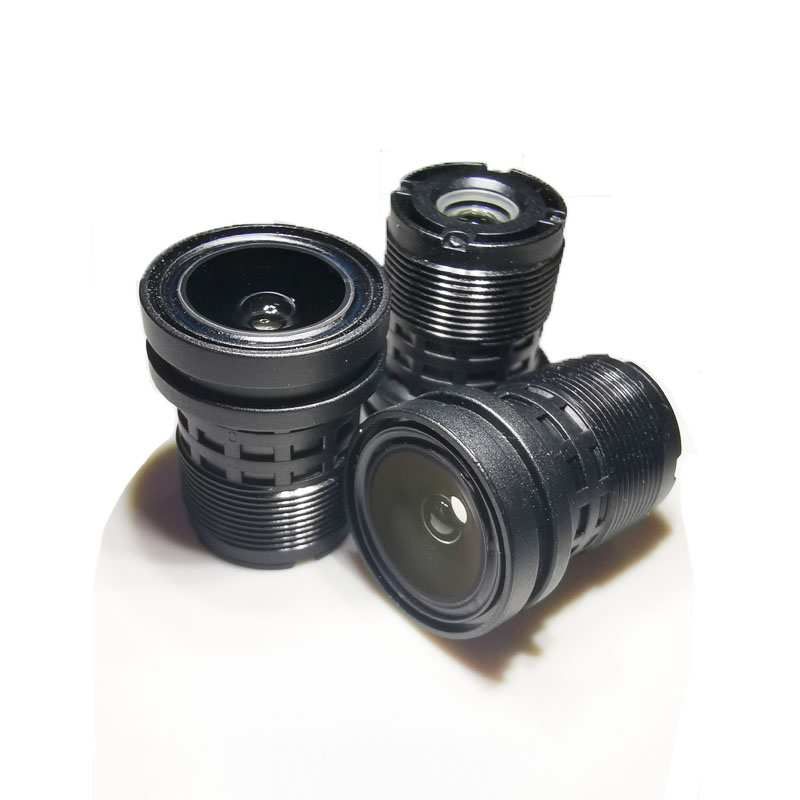
Table of Contents
- 1. What Are M12 Lenses?
- 2. How Do M12 Lenses Work?
- 3. Common Customer Pain Points
- 4. Key Specifications Explained
- 5. Types of M12 Lenses
- 6. How to Choose the Right M12 Lens
- 7. Installation and Optimization Tips
- 8. Frequently Asked Questions
- 9. Conclusion
1. What Are M12 Lenses?
M12 lenses are compact optical components designed with a 12mm thread diameter, commonly referred to as S-mount lenses. They are widely used in embedded vision systems due to their lightweight structure, affordability, and ease of integration.
These lenses are compatible with a wide range of image sensors and are frequently applied in surveillance cameras, automotive systems, drones, and industrial inspection equipment. Their modular design allows users to easily swap lenses to achieve different fields of view and focal characteristics.
2. How Do M12 Lenses Work?
M12 lenses function by focusing incoming light onto an image sensor, forming a clear image. The lens consists of multiple optical elements arranged to minimize distortion and maximize clarity.
- Light enters through the lens aperture
- Optical elements adjust focus and reduce aberrations
- The image is projected onto a sensor (CMOS or CCD)
- The sensor converts light into digital signals
The performance of an M12 lens depends heavily on its optical design, coating, and material quality.
3. Common Customer Pain Points
When selecting M12 lenses, customers often encounter several challenges that affect system performance:
- Image Distortion: Wide-angle lenses may cause barrel distortion
- Low-Light Performance: Insufficient aperture limits light intake
- Compatibility Issues: Mismatch between lens and sensor size
- Focus Adjustment: Manual tuning can be difficult in tight spaces
- Durability: Low-quality lenses degrade over time
Addressing these issues requires selecting the right specifications and working with experienced manufacturers such as Shanghai Silk Optical Technology Co. Ltd.
4. Key Specifications Explained
| Specification | Description |
| Focal Length | Determines field of view (e.g., 2.8mm wide-angle, 12mm narrow) |
| Aperture (F-Number) | Controls light intake and depth of field |
| Sensor Size Compatibility | Ensures proper image coverage without vignetting |
| Field of View | Defines how much area is captured |
| Distortion Level | Indicates image curvature, especially in wide lenses |
| Mount Type | M12 thread interface for easy installation |
| IR Cut/IR Lens | Supports day/night imaging applications |
Understanding these parameters is essential to ensure optimal system performance.
5. Types of M12 Lenses
M12 lenses come in various configurations depending on application needs:
- Wide-Angle Lenses: Ideal for surveillance and panoramic views
- Telephoto Lenses: Suitable for long-distance monitoring
- Low-Distortion Lenses: Used in machine vision systems
- IR Lenses: Designed for night vision applications
- Fixed Focus Lenses: Pre-set focal distance for stable imaging
Each type is optimized for specific use cases, making it important to match the lens to your application scenario.
6. How to Choose the Right M12 Lens
Selecting the right M12 lens involves evaluating both technical and environmental factors:
- Application Scenario: Surveillance, industrial, or automotive
- Lighting Conditions: Indoor, outdoor, or low-light
- Sensor Size: Ensure compatibility with the camera module
- Required Resolution: Match lens quality with sensor resolution
- Field of View: Wide vs. narrow depending on coverage needs
Working with a trusted supplier ensures access to high-quality optics and technical support.
7. Installation and Optimization Tips
Proper installation significantly impacts the performance of M12 lenses:
- Align the lens carefully with the sensor
- Adjust focus using threaded mount rotation
- Secure the lens to prevent vibration shifts
- Use appropriate lighting for best results
Routine inspection and cleaning also help maintain image clarity over time.
8. Frequently Asked Questions
Q1: Are M12 lenses interchangeable?
Yes, most M12 lenses are interchangeable as long as they share the same thread size and are compatible with the sensor.
Q2: What is the main advantage of M12 lenses?
Their compact size, affordability, and versatility make them ideal for embedded systems and space-constrained designs.
Q3: Can M12 lenses support high-resolution cameras?
Yes, high-quality M12 lenses can support HD and even multi-megapixel sensors when properly matched.
Q4: How do I reduce distortion?
Choose low-distortion lens designs or use image processing correction in software.
9. Conclusion
M12 lenses play a vital role in modern imaging systems by offering flexible, compact, and cost-effective optical solutions. By understanding their working principles, specifications, and application scenarios, users can significantly improve image quality and system efficiency.
Shanghai Silk Optical Technology Co. Ltd specializes in high-performance M12 lenses designed to meet diverse industry requirements with precision and reliability.
If you are looking to enhance your imaging system with the right optical solution, contact us today for expert guidance and customized product recommendations tailored to your needs.
