

How do Manufacturers Prevent Cracking When Stamping Mica?
2025-12-09
Stamping any type of engineered insulation material requires strict control over the raw sheet. When the goal is to form a stable Mica Part, the material must be conditioned so it can absorb pressure without breaking. At our factory, the process begins long before the tool touches the surface. We focus on moisture balance, density uniformity, and binder stability, because these factors decide how the sheet behaves under impact.
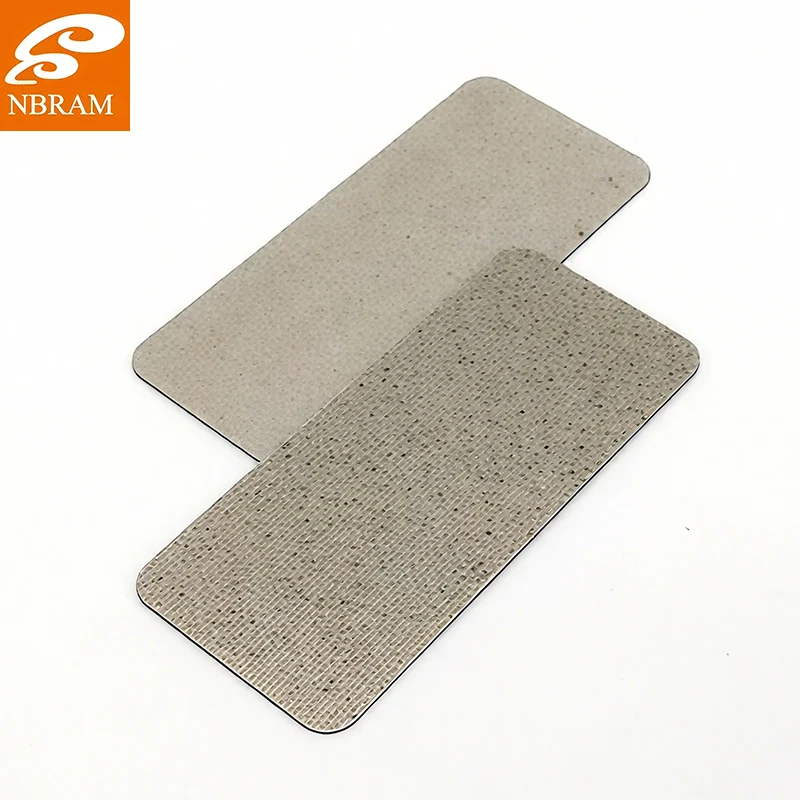
Why Do Some Mica Sheets Crack Under Stamping Pressure?
Cracking does not happen randomly. It is usually the result of stress concentration, uneven fiber orientation, or over-dry material conditions. This is why our engineers examine every incoming sheet before production. To maintain the consistency required for precision electrical components, our team performs routine profiling on thickness deviation, internal stress, and thermal resistance.
| Material Property | Technical Range | Purpose in Stamping |
| Sheet Density | 1.9 to 2.2 g/cm³ | Maintains impact resistance and prevents sudden cracking |
| Moisture Level | 0.5 to 1.2 percent | Improves flexibility during die stroke |
| Binder Distribution | Uniform across the sheet | Ensures stable deformation without edge splitting |
Our engineers at Ningbo Ram Electric Material Co., Ltd. rely on these metrics when preparing each batch. Controlling them allows our production team to keep a stable forming window suitable for electrical insulation stamping.
How Do Tooling Adjustments Reduce Cracks During the Stamping Cycle?
Tool geometry is another major factor. If the punch profile is too sharp or the die clearance too small, the Mica Part will not distribute force evenly. Our process engineers use stress simulation to understand how the material flows and where compression peaks occur.
In our factory, tool edges receive micro-radius treatment so the sheet’s fibers are guided instead of torn. Additionally, we adjust stroke speed to avoid shock loading, because sudden impact is one of the main causes of brittle failure. Operators are trained to monitor machine sound and vibration, which often indicate hidden stress zones inside the sheet.
Why Is Temperature Conditioning Important for Stamping Quality?
Thermal conditioning is a standard procedure in our workshop. Heating the sheet slightly below its maximum tolerance helps the material relax and reduces internal brittleness. During preparation, we bring the Mica Part to a stable state where the fibers can flex instead of fracture.
Temperature conditioning also stabilizes density variations caused by storage conditions. By controlling this pre-treatment step, our technicians ensure that the sheet reacts consistently during high-precision forming.
How Does Our Factory Validate Final Stamping Stability?
Quality consistency is built through verification. At Ningbo Ram Electric Material Co., Ltd., our quality team inspects every series of stamped components with optical measurement and deformation testing. This allows us to confirm that the Mica Part keeps its structural integrity even after repeated forming.
| Inspection Item | Test Method | Purpose |
| Edge Crack Detection | Visual and light-angle scanning | Identifies micro-cracks invisible to the naked eye |
| Dimensional Stability | Profile measurement | Ensures the part matches design tolerance |
| Compression Resistance | Load test | Verifies structural performance after stamping |
During these procedures, our technicians focus on long-term reliability because many electrical assemblies depend on the mica component to maintain insulation performance under heat and pressure.
How Do Engineers Predict Cracking Risk for Different Part Geometries?
Every geometry behaves differently. When the design includes sharp corners or narrow bridges, the stamping force becomes uneven. Our engineering team analyzes these shapes before production and adjusts the die to reduce stress concentration.
For complex shapes requiring multiple stages, we divide the process into pre-forming and final forming. This lets the Mica Part gradually adapt to deformation instead of taking full load at once. This approach is especially useful for insulation plates used in industrial heaters and motor assemblies.
How Do Storage Conditions Influence Stamping Performance?
Storage stability is often overlooked but highly important. If mica sheets absorb too much moisture, they swell and lose dimensional accuracy. If they become too dry, they turn brittle. At our facility, all materials are stored in humidity-controlled rooms to keep them in their ideal forming state.
The purpose is not only to protect the material but also to maintain repeatability across large production runs. With this level of control, the final Mica Part keeps a consistent density, color uniformity, and mechanical strength.
FAQ
How do manufacturers reduce micro-cracks when producing a Mica Part?
Micro-cracks are reduced by stabilizing moisture levels, applying controlled thermal conditioning, and using punch tools with optimized edges. Engineers also reduce stroke shock and monitor working pressure to avoid sudden stress buildup.
Why is sheet moisture important during stamping?
Moisture determines how flexible the sheet becomes under pressure. Balanced humidity allows the fibers to move smoothly, preventing edge fractures and split marks during the forming cycle.
How do factories maintain consistent quality across large stamping batches?
Factories maintain consistency through inspection routines, storage control, and machine calibration. At Ningbo Ram Electric Material Co., Ltd., our production line monitors thickness, internal stress, and dimensional drift on every batch to ensure stable quality.
Conclusion
Preventing cracking during mica stamping requires control of raw materials, humidity, thermal conditioning, tooling geometry, and inspection. With strong process discipline, our factory ensures that every Mica Part meets mechanical and electrical requirements for industrial applications. If you are sourcing stable and precisely stamped insulation components, our engineering team is ready to assist with custom solutions. Contact us today to discuss your specifications and production needs.
