

How Do PEX-AL-PEX Pipe Fittings Help Prevent Water Leakage?
2026-11-12
A building surveyor reviews a water damage claim in a newly completed apartment block. The leak originated at a joint in the hot water riser, not in the pipe itself. The pipe was intact, the fitting was intact, and the crimp ring was in place. The leak came from a joint where the pipe had not been inserted to the full depth, so the O-ring was sitting on the pipe edge instead of on the smooth pipe wall. The PEX-AL-PEX Pipe Fittings did not fail. The installation did. This guide explains how these fittings are designed to prevent leakage, and what must happen on site for the design to work.
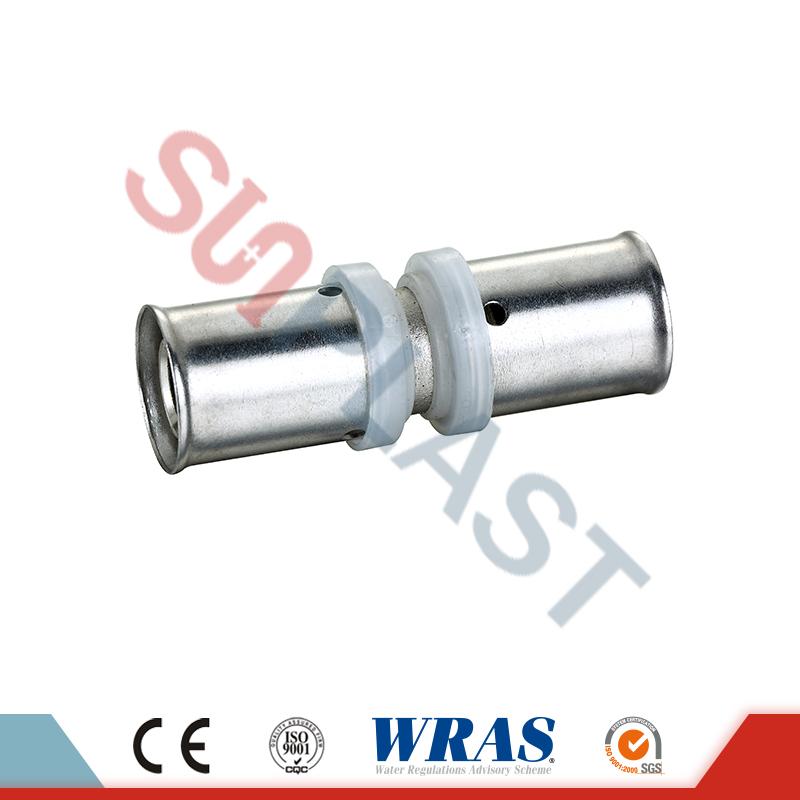
1. Why Does Water Leakage Usually Start at the Joint Rather Than in the Pipe?
A PEX-AL-PEX pipe is a continuous extrusion with an aluminum core bonded between two polyethylene layers. The pipe wall has no seams and no joints, so the probability of a leak in the pipe body is very low. The leakage risk concentrates at the connections, where the pipe is cut and joined to a fitting. There are three leakage paths at a connection. The first is between the pipe outer surface and the fitting body. The second is between the pipe inner surface and the fitting insert. The third is along the fitting thread or the transition to the next component. The PEX-AL-PEX Pipe Fittings is designed to close all three paths. In our factory, we manufacture fittings that are tested to 10 bar at 95 degrees Celsius for 10,000 hours. Ningbo Sunplast Pipe Co., Ltd. has been manufacturing PEX-AL-PEX systems for over 15 years.
The surveyor's case shows that the design can only work if the installation follows the design. A fitting that is correctly designed but incorrectly installed will leak. The rest of this guide explains both sides.
2. How Does the O-Ring and Insert Combination Seal the Pipe Wall?
The PEX-AL-PEX Pipe Fittings uses a barbed insert that slides inside the pipe and an O-ring that sits in a groove on the insert. When the pipe is pushed onto the insert, the pipe wall passes over the O-ring and compresses it against the insert groove. The compression creates a radial seal on the pipe inner surface. The barb on the insert grips the pipe and resists pull-out. The O-ring material is EPDM for potable water and FKM for higher temperature or chemical resistance. The table below shows the sealing components and their function.
| Component | Material | Function | Failure mode if incorrect |
| Insert with barb | Brass or stainless steel | Supports the pipe from inside and resists pull-out | Pipe slips off under pressure |
| O-ring | EPDM or FKM | Radial seal against the pipe inner wall | Leak at the insert-to-pipe interface |
| Compression sleeve | Brass or stainless steel | Compresses the pipe onto the insert | Insufficient compression, leak path |
| Insertion depth mark | Laser-etched line | Shows the correct pipe insertion depth | O-ring sits on pipe edge, leak |
In our factory, we test the O-ring compression and the pull-out force on every batch. The pull-out force must exceed 1,000 newtons for a 16 mm fitting. Sunplast provides the test report with each shipment.
3. Why Does the Crimp Sleeve Determine Whether the Joint Holds Under Pressure?
The crimp sleeve is the outer metal ring that is compressed by the press tool. The compression deforms the pipe wall onto the insert and locks the assembly. The crimp must be made with the correct tool and the correct jaw for the fitting size. An under-crimped joint will not compress the O-ring enough, and it will leak under pressure. An over-crimped joint will cut the pipe or crack the sleeve, and it will also leak. The table below shows the crimp parameters for common fitting sizes.
| Fitting size | Crimp diameter after pressing | Press force | Minimum pull-out force |
| 16 mm | 22.5 ± 0.2 mm | 32 kN | 1,000 N |
| 20 mm | 27.0 ± 0.2 mm | 38 kN | 1,400 N |
| 26 mm | 34.5 ± 0.3 mm | 48 kN | 2,200 N |
| 32 mm | 42.0 ± 0.3 mm | 58 kN | 3,000 N |
Plumbing engineer's note: The crimp diameter is the single most important measurable parameter for leak prevention. A joint that is crimped outside the tolerance band will either leak immediately or fail within a few thermal cycles. In our factory, we recommend that the installer measure the crimp diameter on the first three joints of each size and compare it with the gauge supplied with the tool. Ningbo Sunplast Pipe Co., Ltd. provides a crimp gauge and a calibration schedule with every press tool.
4. Why Does Insertion Depth Control Prevent the Most Common Installation Leak?
The most common cause of leakage in PEX-AL-PEX systems is incomplete insertion. If the pipe is not pushed fully onto the insert, the O-ring sits on the pipe edge or on the aluminum layer instead of on the smooth inner polyethylene surface. The seal is incomplete, and the joint leaks under pressure. The PEX-AL-PEX Pipe Fittings has a laser-etched insertion depth mark on the insert. The installer should push the pipe until the end of the pipe aligns with the mark. In our factory, we also supply a depth gauge that clips onto the pipe and shows the correct insertion. Ningbo Sunplast Pipe Co., Ltd. recommends that the installer mark the pipe with a pencil at the insertion depth before pushing it onto the fitting, and then verify that the mark is flush with the fitting shoulder after insertion.
The insertion depth is also important for the mechanical strength of the joint. A pipe that is inserted only halfway engages only half of the barb length, and the pull-out force is reduced. The joint may hold at low pressure but fail at the peak pressure of the system.
5. How Should Installers Verify That the Joint Will Not Leak?
The verification has three levels. The first is the visual check. The installer should confirm that the pipe is inserted to the depth mark, that the crimp sleeve is in the correct position, and that the press mark is visible on the sleeve. The second is the dimensional check. The installer should measure the crimp diameter with a gauge and compare it with the specification. The third is the pressure test. The system should be filled and pressurized to 1.5 times the working pressure and held for one hour. A drop in pressure indicates a leak. In our factory, we recommend that the pressure test be performed before the pipes are concealed in the wall or the floor. Ningbo Sunplast Pipe Co., Ltd. provides a pressure test kit and a test record sheet with each project.
We also recommend that the installer photograph each joint before concealment. The photograph provides a record of the insertion depth and the crimp position, and it can be used to trace a leak if one occurs later.
Frequently Asked Questions About PEX-AL-PEX Pipe Fittings and Water Leakage
Summary for Plumbing Engineers and Installers
PEX-AL-PEX Pipe Fittings help prevent water leakage by combining a barbed insert, an O-ring, and a crimp sleeve that seal the pipe wall at three points. The O-ring provides the radial seal, the barb resists pull-out, and the crimp sleeve locks the assembly. The design only works if the pipe is inserted to the full depth, the crimp is made with a calibrated tool, and the joint is pressure tested before concealment. The most common leak is not a fitting failure. It is an incomplete insertion. The most measurable quality indicator is the crimp diameter. Ningbo Sunplast Pipe Co., Ltd. has been manufacturing PEX-AL-PEX systems for over 15 years and provides full fitting, tool, and test support for our customers.
