

How Do You Calculate the Load Capacity of a Spring Hanger Support
2026-09-23
Selecting the right Spring Hanger Support is one of the most important decisions in piping system design. At Tianshun, we have supported engineers across countless projects in getting this calculation right, because an undersized or oversized support can lead to pipe deformation, nozzle overload, or premature failure. This guide walks through the professional method for determining load capacity step by step.
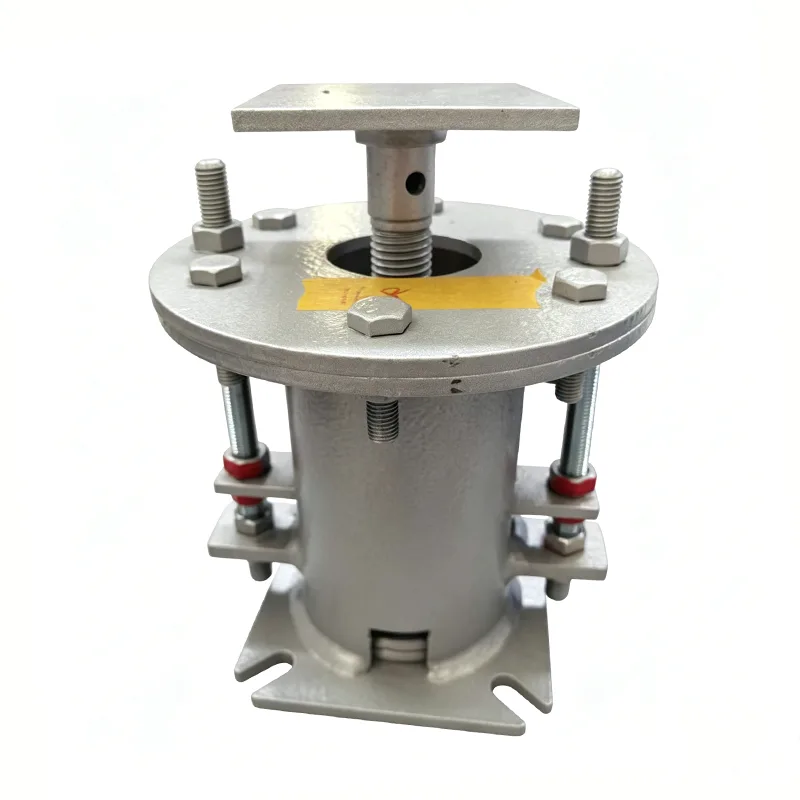
Understanding the Load a Spring Hanger Support Must Carry
A Spring Hanger Support must carry the operating load of the pipe while allowing controlled vertical movement. The calculation begins with identifying every load component acting on the support point.
| Load Component | Description | Typical Source |
|---|---|---|
| Pipe dead weight | Weight of pipe, fittings, valves | Material and schedule data |
| Insulation weight | Weight of thermal insulation | Insulation thickness and density |
| Fluid weight | Weight of conveyed medium | Process fluid density |
| Component weight | Valves, flanges, strainers | Manufacturer data |
| Thermal movement | Vertical displacement from expansion | Pipe stress analysis |
| Occasional loads | Wind, seismic, water hammer | Project design criteria |
Step-by-Step Calculation Method
-
Determine the supported length. Identify the span between adjacent supports based on pipe size and allowable stress.
-
Calculate total dead weight. Multiply the sum of pipe, insulation, fluid, and component weights by the supported length.
-
Apply the design multiplier. Most standards require a minimum factor, often 1.5, to account for variability.
-
Evaluate thermal travel. The Spring Hanger Support must handle the calculated vertical movement without exceeding its travel range.
-
Select the spring rate. Match the required load to a spring with an appropriate rate so load variation stays within acceptable limits, typically 25 percent.
-
Verify the cold and hot loads. Confirm the support performs correctly in both installed and operating conditions.
Key Formulas Used in Practice
-
Total Load (W) = Dead Weight per Unit Length × Supported Length × Design Factor
-
Load Variation (%) = (Hot Load − Cold Load) / Hot Load × 100
-
Required Spring Rate = Load Variation / Thermal Travel
These formulas form the backbone of every Spring Hanger Support sizing exercise at Tianshun.
Common Selection Criteria
| Parameter | Recommended Range | Notes |
|---|---|---|
| Load variation | ≤ 25% | Higher values cause stress issues |
| Travel range | Covers full thermal movement | Add margin for safety |
| Spring rate | Matched to load and travel | Avoid over-compression |
| Material | Per project specification | Consider corrosion resistance |
FAQ: Spring Hanger Support Common Questions
Q: What happens if the load capacity of a Spring Hanger Support is calculated incorrectly?
A: An incorrect calculation can cause the pipe to sag, overload connected equipment nozzles, or restrict thermal movement, which may lead to fatigue cracking and unplanned shutdowns.
Q: How do I know whether a variable spring or constant spring hanger is required?
A: A variable spring is suitable when load variation stays within 25 percent. A constant Spring Hanger Support is needed when thermal travel is large and load variation must remain nearly constant.
Q: Does pipe size alone determine the load capacity of a Spring Hanger Support?
A: No. Pipe size is only one factor. Insulation, fluid density, valve weight, support spacing, and thermal movement all influence the final load capacity calculation.
Why Partner with Tianshun
Tianshun provides engineered Spring Hanger Support solutions backed by detailed load calculations, material traceability, and project-specific documentation. Our team reviews every application to ensure the selected support matches actual operating conditions.
Contact us today to discuss your piping support requirements and receive a tailored Spring Hanger Support recommendation for your project.
