

How Do You Maintain a 58U Chemical Pump Mechanical Seal for Long Service Life
2026-11-05
A 58U Chemical Pump Mechanical Seal is a precision-engineered component, and its service life depends heavily on disciplined maintenance practices. Qixing has supported chemical plant operators for years, and the pattern is consistent: seals that are inspected, lubricated, and monitored properly last significantly longer than those left to run unattended. This guide outlines practical maintenance steps that protect your 58U Chemical Pump Mechanical Seal and reduce unplanned downtime.
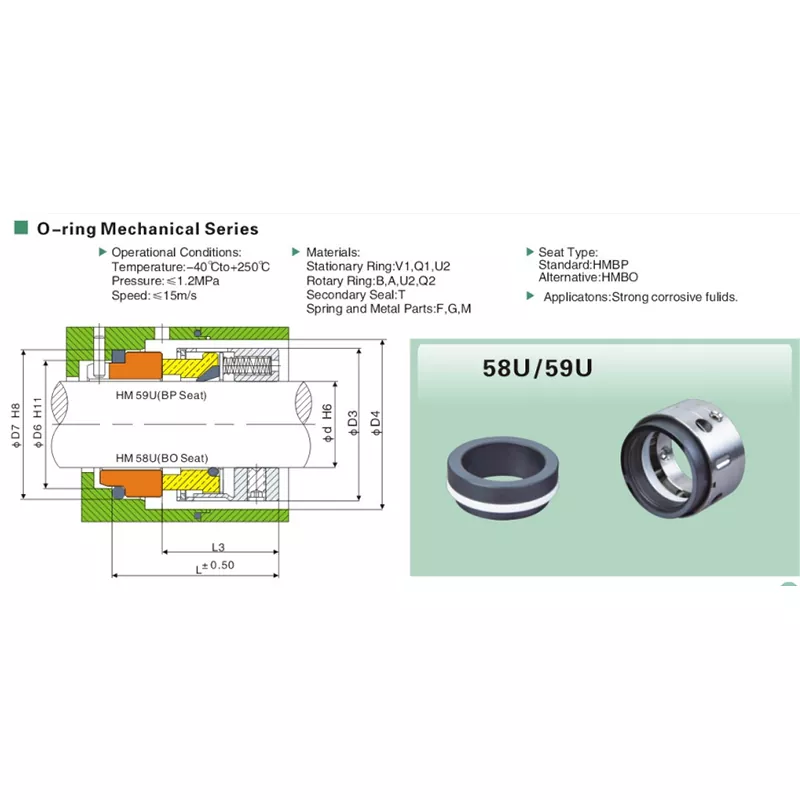
Core Maintenance Checklist
| Interval | Task | Purpose |
|---|---|---|
| Daily | Check for visible leakage and unusual noise | Early detection of seal face or gasket wear |
| Weekly | Verify flush/cooling flow and pressure | Prevents dry running and overheating |
| Monthly | Inspect seal chamber for deposits or corrosion | Avoids abrasive buildup on seal faces |
| Quarterly | Measure shaft runout and vibration | Detects misalignment affecting the 58U Chemical Pump Mechanical Seal |
| Annually | Full disassembly, face inspection, gasket replacement | Restores reliability before failure occurs |
Key Practices for Extended Service Life
-
Correct flush and cooling: Maintain the specified flush plan. Insufficient flow causes face overheating, while excessive pressure can distort the 58U Chemical Pump Mechanical Seal components.
-
Alignment control: Shaft misalignment is a leading cause of premature failure. Check coupling alignment after any pump maintenance.
-
Proper installation: Clean surfaces, correct spring compression, and undamaged O-rings are essential. Qixing recommends following the installation torque specifications precisely.
-
Chemical compatibility: Confirm that seal faces, elastomers, and metal parts suit the pumped medium. Incompatible materials swell or corrode, shortening life.
-
Avoid dry running: Never start the pump without liquid in the seal chamber. Dry running damages faces within seconds.
-
Vibration monitoring: Rising vibration often signals bearing wear or cavitation that stresses the 58U Chemical Pump Mechanical Seal.
Common Failure Causes and Remedies
| Failure Symptom | Likely Cause | Remedy |
|---|---|---|
| Persistent dripping | Worn or chipped seal faces | Replace face pair |
| Overheating | Insufficient flush flow | Restore flush plan |
| Elastomer swelling | Chemical incompatibility | Switch to compatible material |
| Uneven face wear | Shaft misalignment | Realign coupling |
| Spring blockage | Crystallized product | Clean seal chamber |
Frequently Asked Questions
How often should a 58U Chemical Pump Mechanical Seal be replaced? Replacement depends on operating conditions, but most chemical service seals are inspected annually and replaced every two to three years, or sooner if leakage or vibration increases.
What causes a 58U Chemical Pump Mechanical Seal to leak? Leakage usually results from worn seal faces, damaged O-rings, shaft misalignment, dry running, or chemical attack on elastomers, so identifying the root cause before replacement is essential.
Can a 58U Chemical Pump Mechanical Seal run dry? No, dry running generates rapid heat at the faces and causes immediate damage, so the seal chamber must always be primed and flushed before startup.
Which flush plan suits a 58U Chemical Pump Mechanical Seal? The correct plan depends on temperature, pressure, and fluid properties; Qixing technical staff can recommend the appropriate arrangement for your process.
Consistent inspection, correct installation, and material compatibility form the foundation of long seal life. For tailored maintenance guidance, spare parts, or a replacement 58U Chemical Pump Mechanical Seal, contact Qixing today and let our engineers help you extend equipment reliability.
